Quick Answer
Brand safe AI replies are automated responses to social media comments generated by an AI that strictly adheres to a company's predefined brand voice, tone, policies, and approved information. This is achieved through a combination of human-in-the-loop approval workflows, granular tone settings, policy guardrails, and a central knowledge base known as Brand Memory, ensuring every automated interaction is controlled, consistent, and authentic to the brand.
The Promise and Peril of AI Engagement
In the fast-paced world of social media, engagement is currency. Every comment is an opportunity—a chance to build community, answer a question, capture a lead, or delight a customer. But scaling this engagement is a monumental challenge. With hundreds or thousands of comments pouring in across multiple platforms, even the most dedicated social media teams can't keep up.
This is where AI-powered comment management platforms promise a revolution. The ability to instantly reply to every comment, 24/7, is a game-changer for brands striving for connection at scale. Yet, this promise comes with a significant fear: the rogue AI. We've all seen the headlines about chatbots gone wild, spewing nonsensical, offensive, or simply off-brand content. For a brand manager, the thought of an AI going off-script and damaging years of carefully cultivated brand equity is a nightmare.
The critical question isn't *if* you should use AI, but *how* you can harness its power safely. How do you ensure every automated response is a perfect reflection of your brand? How do you move from chaotic, uncontrolled automation to a strategic system of **brand safe AI replies**?
This guide provides the blueprint. We'll move beyond the hype and fear to explore the concrete workflows, governance structures, and technological guardrails that make brand-safe AI not just a possibility, but a strategic advantage. With a platform like Boostingr, which acts as an operating system for AI comment management, you can teach your brand's DNA to an AI once and engage everywhere, confidently and consistently.
Why Brand Safety in AI Replies is Non-Negotiable
The stakes for brand communication have never been higher. A single inappropriate or incorrect reply can be screenshotted and go viral in minutes, leading to a PR crisis, customer backlash, and a tangible loss of trust. When you delegate the task of replying to an AI, you are entrusting it with your brand's voice. Without robust safety measures, you're gambling with your reputation.
The risks of uncontrolled AI replies include:
* **Brand Voice Dilution:** Inconsistent tones, incorrect terminology, or a generic, robotic voice can erode the unique personality you've worked hard to build. * **Spreading Misinformation:** An AI without access to a verified knowledge base might invent answers, provide outdated product information, or misstate company policies, leading to customer confusion and frustration. * **Legal and Compliance Issues:** In regulated industries, an AI making unapproved claims or failing to include necessary disclaimers can create serious legal exposure. * **Customer Trust Erosion:** When customers receive a reply that is unhelpful, irrelevant, or insensitive, they don't blame the algorithm; they blame the brand. This damages the customer relationship and can drive them to competitors.
Conversely, the benefits of a well-managed, brand-safe AI reply strategy are transformative. By implementing the right controls, you can:
* **Scale Engagement Authentically:** Respond to a higher volume of comments with personalized, helpful, and on-brand messages, making every follower feel seen and heard. * **Maintain Consistency Across All Channels:** Ensure that whether a customer interacts with you on Instagram, Facebook, or YouTube, they receive the same high-quality, on-brand experience. * **Free Up Your Human Team:** Automate responses to common questions and positive feedback, allowing your social media managers to focus on high-value interactions, strategic planning, and complex customer issues. * **Improve Community Health:** By combining AI replies with intelligent moderation tools like AI spam comment detection and troll detection, you create a safer, more positive environment for your community to thrive.
Ultimately, brand safety isn't a feature; it's the foundation upon which all successful AI engagement strategies are built.
The Core Pillars of Brand Safe AI Replies
Achieving truly brand-safe AI engagement isn't about finding a magic prompt. It's about building a comprehensive system of governance and control. This system rests on four key pillars, working in concert to ensure every AI-generated reply is a perfect extension of your brand.
1. The Approval Workflow: Human-in-the-Loop Governance
The most crucial element for ensuring safety is the human-in-the-loop approval workflow. This pillar is all about creating a system for generating **approved AI replies**, where humans set the strategy and the AI executes within those boundaries. This isn't about manually approving every single comment; it's about establishing the rules of engagement upfront.
In a platform like Boostingr, this workflow looks like this:
- **Define Reply Scenarios:** You identify common comment types, such as product questions, praise, support requests, or lead inquiries.
- **Craft Reply Blueprints:** For each scenario, you or your team create a blueprint for the ideal response. This isn't just a single static template, but a set of instructions for the AI. For example: "Acknowledge their praise, thank them using one of these three phrases, and mention our commitment to quality."
- **AI Generates Variations:** The AI takes these blueprints and generates multiple reply variations that adhere to the instructions and your brand's overall tone.
- **Human Review and Approval:** A designated team member (e.g., a brand manager or legal counsel) reviews these AI-generated variations. They can approve them, reject them, or edit them to perfection.
- **Deployment:** Only the approved reply variations are added to the AI's active arsenal. The AI is now authorized to use these specific, pre-vetted replies when it identifies the corresponding comment scenario.
This process ensures that the AI's creative capacity is leveraged for variety and personalization, but its output is always constrained by human oversight and brand strategy.
2. Brand Memory: Teaching AI Your Brand's DNA
An AI that doesn't know your brand is a dangerous intern. An AI equipped with Brand Memory is your most knowledgeable employee. Brand Memory is a centralized, dynamic knowledge base that serves as the single source of truth for the AI. It's the definitive guide to your brand, and it's what separates a generic chatbot from a true brand ambassador.
A robust Brand Memory, as detailed in our definitive guide to Brand Memory for AI replies, contains:
* **Product & Service Information:** SKU numbers, product specifications, pricing, availability, and links to product pages. * **Company Policies:** Return policies, shipping details, terms of service, and customer support procedures. * **Campaign & Marketing Details:** Current promotions, campaign hashtags, key messaging points, and launch dates. * **Brand Voice & Tone Guidelines:** Specific words to use or avoid, rules on emoji and slang usage, and examples of on-brand and off-brand communication. * **Frequently Asked Questions:** A comprehensive library of answers to common customer inquiries.
When a comment comes in, the AI doesn't just guess the answer. It queries the Brand Memory to find the verified, up-to-date information needed to craft a helpful and accurate reply. This prevents the AI from hallucinating facts or providing outdated information, ensuring every reply is grounded in reality.
3. Granular Tone & Style Settings: Beyond 'Friendly' or 'Formal'
Early-generation AI tools offered rudimentary tone controls—often just a simple toggle between "professional" and "casual." This is insufficient for capturing the nuanced voice of a modern brand. True brand safety requires granular control over the stylistic elements of communication.
An advanced **brand safe AI reply bot** allows you to define your voice with precision:
* **Lexicon Control:** Create lists of preferred words (e.g., "community," "journey," "craftsmanship") and forbidden words (e.g., corporate jargon, competitor names, profanity). * **Emoji & Punctuation Rules:** Specify whether emojis are allowed, which ones are on-brand, and how frequently they can be used. Define rules for using exclamation points or other punctuation to manage excitement levels. * **Sentence Structure & Length:** Guide the AI to use shorter, punchier sentences for a high-energy brand, or more complex, detailed sentences for a technical or academic brand. * **Formality Level:** Use a sliding scale for formality that adapts based on context. For example, a more formal tone for a complaint and a more casual tone for a superfan.
These settings act as a stylistic corset for the AI, ensuring that even when generating novel sentences, the output always *feels* like it came from your brand.
4. Policy & Guardrail Enforcement: Building a Safe Playground for AI
This pillar is about defining what the AI *cannot* and *must* do. These are the hard-and-fast rules that prevent catastrophic errors. Guardrails are the emergency brakes and safety nets for your AI engagement strategy.
Essential guardrails include:
* **Topic Avoidance:** A list of sensitive or controversial topics the AI is forbidden from discussing (e.g., politics, religion, competitor critiques). * **Promise Prevention:** Rules that stop the AI from making specific promises it can't keep (e.g., "I guarantee delivery by tomorrow," "You will definitely win the giveaway"). * **Disclaimer Injection:** Automatic insertion of required legal or medical disclaimers on replies related to specific topics (e.g., health claims, financial advice, contest rules). * **Escalation Pathways:** Triggers that automatically route a comment to a human agent when certain keywords (e.g., "legal," "unsafe," "sue") or high-negative sentiment are detected. This ensures that the most critical conversations are always handled by a person.
By building this safe playground, you empower the AI to engage freely and creatively within its boundaries, knowing it's protected from making critical mistakes.
How Boostingr's Architecture Ensures Brand Safety
Understanding the pillars of brand safety is one thing; implementing them is another. This is where the architecture of your AI comment management platform is critical. Boostingr is designed from the ground up with a workflow-first approach to safety, ensuring that control and governance are woven into every feature.
Teach Once, Engage Everywhere: The Boostingr Philosophy
Managing brand consistency across Instagram, Facebook, TikTok, and YouTube can be a nightmare. Each platform has its own nuances and audience expectations. Boostingr's "Teach Once, Engage Everywhere" philosophy solves this. Your Brand Memory, tone settings, approval workflows, and policy guardrails are configured once in a central dashboard. Boostingr then applies this brand DNA intelligently across all your connected social accounts. This means the **safe AI comment replies** generated for an Instagram comment adhere to the same core principles as those for a YouTube comment, while still being contextually appropriate for the platform.
From Understanding People to Humanized Replies
A core tenet at Boostingr is that we don't just read comments; we understand people. This goes beyond simple keyword matching. Our AI uses advanced sentiment and intent detection to understand the underlying meaning and emotion behind a comment.
* **Sentiment Analysis:** Is the commenter happy, frustrated, or sarcastic? A brand-safe reply to "This is sick!" should be celebratory, while a reply to "I'm sick of waiting" requires empathy and a solution. * **Intent Detection:** What does the commenter want? Are they a potential customer asking a pre-purchase question (an opportunity for lead capture)? Are they an existing customer needing support? Are they simply sharing their love for the brand?
By first classifying the comment's intent, Boostingr ensures the AI's response is not just on-brand, but also contextually relevant and genuinely helpful. This ability to understand nuance is what elevates a reply from robotic to humanized.
The Workflow-First Approach to Safe AI Comment Replies
In Boostingr, a comment goes through a rigorous, multi-stage workflow before a reply is ever posted. This pipeline is the key to ensuring safety at scale.
- **Ingestion & Initial Classification:** The comment is ingested via the official social media APIs (like the Instagram Graph API). It's immediately analyzed for spam, trolling, or hate speech. Malicious comments are automatically hidden or flagged based on your AI comment moderation settings, preventing them from derailing the conversation.
- **Sentiment & Intent Analysis:** The comment is then analyzed for sentiment (positive, negative, neutral) and intent (question, praise, complaint, lead).
- **Routing:** Based on this analysis, the comment is routed down the appropriate path. A highly negative comment with sensitive keywords might be immediately escalated to a human. A lead-intent comment might trigger a specific lead capture workflow. A common question might be routed to the AI reply generator.
- **Brand-Safe AI Reply Generation:** If routed for an AI reply, the AI consults the Brand Memory for facts, applies the granular tone and style settings, and crafts a response within the policy guardrails.
- **Final Checks:** The generated reply is cross-referenced against the approved reply blueprints and final policy checks.
- **Action:** The AI-generated reply is posted, or if your workflow requires it, sent to a human for final approval before posting.
This systematic, step-by-step process minimizes risk at every stage, ensuring that by the time a reply is published, it has passed through multiple layers of brand safety checks.
Comparison Table: AI Reply Safety Features Across Platforms
Not all "AI reply" tools are created equal. The level of brand safety you can achieve depends heavily on the platform's underlying architecture. Here’s how different types of tools stack up:
| Feature | Basic Chatbot Builder (e.g., ManyChat) | Social Media Scheduler (e.g., Hootsuite, Sprout) | Advanced AI Comment Management (e.g., Boostingr) |
|---|---|---|---|
| **Primary Focus** | DM Automation, Keyword Triggers | Content Publishing, Inbox Management | Holistic Comment Moderation & Engagement |
| **Approval Workflows** | Limited or None | Manual reply only; no AI generation workflows | Yes, built-in for AI-generated reply variations |
| **Brand Memory** | No, relies on static flows/variables | No, relies on saved replies (static templates) | Yes, dynamic, centralized knowledge base |
| **Tone Control** | Very basic (e.g., simple prompts) | None (manual tone by user) | Yes, granular control over lexicon, emoji, style |
| **Policy Guardrails** | Limited to keyword blocking | None | Yes, topic avoidance, disclaimer injection, escalation |
| **Human-in-the-Loop** | Difficult to implement for public comments | Standard (all replies are manual) | Yes, flexible options for review or full automation |
| **Best For** | Simple, predictable DM funnels | Centralizing manual replies | Scaling **brand safe AI replies** with governance |
While tools like ManyChat are powerful for structured DM flows and schedulers are essential for content planning, only a dedicated AI comment management system like Boostingr provides the comprehensive suite of safety features needed to automate public-facing replies with confidence.
Practical Examples and Use Cases
Let's see how **brand safe AI replies** work in the real world.
**Use Case 1: The Ecommerce Brand**
* **Comment:** "This looks amazing! Does the blue jacket come in XS? And do you ship to Canada?" * **Unsafe AI Reply (No Brand Memory):** "Thanks! Yes, we have many sizes and ship to lots of places! Check our website." * **Brand Safe Boostingr Reply:**
- **Intent Detection:** Classifies as a 'Product Question' and 'Lead'.
- **Brand Memory Query:** The AI checks the Brand Memory for "blue jacket" and "shipping policy."
- **Reply Generation:** The AI finds that the blue jacket (SKU #123) is in stock in XS and that the brand ships to Canada for a flat rate. It uses an approved reply blueprint for product questions.
- **Final Reply:** "We're so glad you love it! 🙌 Yes, the 'Azure Sky Jacket' is available in XS. We do ship to Canada with a flat shipping rate. You can grab yours here: [link from Brand Memory]. Let us know if you have any other questions!"
**Use Case 2: The Creator**
* **Comment:** "OMG your last video was FIRE! You're my favorite creator!" * **Problem:** The creator gets 500 similar comments and can't reply to them all, but wants to show appreciation. * **Brand Safe Boostingr Reply:**
- **Intent Detection:** Classifies as 'Praise'.
- **Tone & Style:** The AI uses the creator's configured tone (e.g., lots of energy, use of specific slang like "let's gooo," frequent use of 🔥 and 🙏 emojis).
- **Reply Generation:** The AI pulls from a pool of 20 pre-approved 'Thank You' variations.
- **Final Reply (Variation 1):** "This means so much! Thank you for the support 🙏 LET'S GOOO!"
- **Final Reply (Variation 2):** "So happy you enjoyed it! Your comment totally made my day. 🔥"
**Use Case 3: The Enterprise Brand During a Crisis**
* **Scenario:** A shipping partner is experiencing major delays, and social posts are flooded with comments like, "Where is my order #XYZ123?" * **Unsafe AI Reply:** Hiding all comments or replying with a generic, unhelpful "We're looking into it." * **Brand Safe Boostingr Reply:**
- **Update Brand Memory:** The social team immediately updates the Brand Memory with a statement about the shipping partner's delays and a link to a status page.
- **Create New Workflow:** They set up a rule: if a comment contains "order" and "late" or a similar pattern, use the new 'Shipping Delay' reply blueprint.
- **Guardrail:** The AI is instructed *not* to promise specific delivery dates.
- **Final Reply:** "Hi [Username], we're so sorry for the delay. Our shipping partner is experiencing network-wide issues. We've posted the latest information here: [link]. We sincerely apologize for the frustration and are working to get your order to you ASAP."
In each case, the AI reply is safe, helpful, and perfectly aligned with the brand's strategy and current situation.
Checklist: Implementing Brand Safe AI Replies
Ready to build your own brand-safe AI strategy? Use this checklist to guide your implementation.
- [ ] **Define Your Brand Voice:** Document your brand's personality, tone, and style. What are your core characteristics (e.g., witty, empathetic, authoritative)?
- [ ] **Establish Your Lexicon:** Create lists of words/phrases to always use and words/phrases to never use.
- [ ] **Document Key Information:** Gather all essential information for your Brand Memory (products, policies, FAQs).
- [ ] **Map Your Comment Scenarios:** Identify the top 5-10 types of comments you receive (e.g., praise, question, complaint).
- [ ] **Design Your Approval Workflow:** Determine who is responsible for reviewing and approving AI-generated reply variations.
- [ ] **Configure Your Moderation Rules:** Set up rules for automatically hiding spam, hate speech, and troll comments to create a clean environment for your AI to work in.
- [ ] **Set Up Escalation Paths:** Define clear triggers (keywords, sentiment score) that automatically route a comment to a human team member.
- [ ] **Build Your First Reply Blueprints:** Start with your most common scenario (e.g., 'Praise') and create a blueprint for the AI.
- [ ] **Test in a Controlled Environment:** Before going live, review the AI's generated replies for your blueprints. Do they match your brand voice?
- [ ] **Launch and Monitor:** Go live with your first automated reply workflow. Closely monitor the AI's performance and public reception.
- [ ] **Iterate and Expand:** Use performance data to refine your settings. Gradually build out workflows for other comment scenarios. Your brand safety system should be a living, evolving part of your social strategy.
Original Diagrams
These original visuals explain the workflow in a faster, more defensible format than plain text alone and give the article first-party assets that are easier to understand and harder to copy.
Comment Processing Workflow
This diagram illustrates the end-to-end journey of a social media comment, from initial ingestion to analysis, AI reply generation, and the crucial human-in-the-loop approval step that ensures brand safety.
AI Decision Tree
See how the AI evaluates each comment, branching its logic based on sentiment, keywords, and user intent to decide whether to draft a reply, escalate to a human, or take another action.
Moderation Pipeline
This visual demonstrates the safety-first approach, where all comments pass through a series of automated checks for spam, profanity, and policy violations before the AI is permitted to engage.
Intent Classification Flow
Understanding user intent is key to a relevant reply. This diagram shows how the AI analyzes a comment to categorize it as a sales lead, support question, or simple feedback, informing the response type.
Brand Memory Diagram
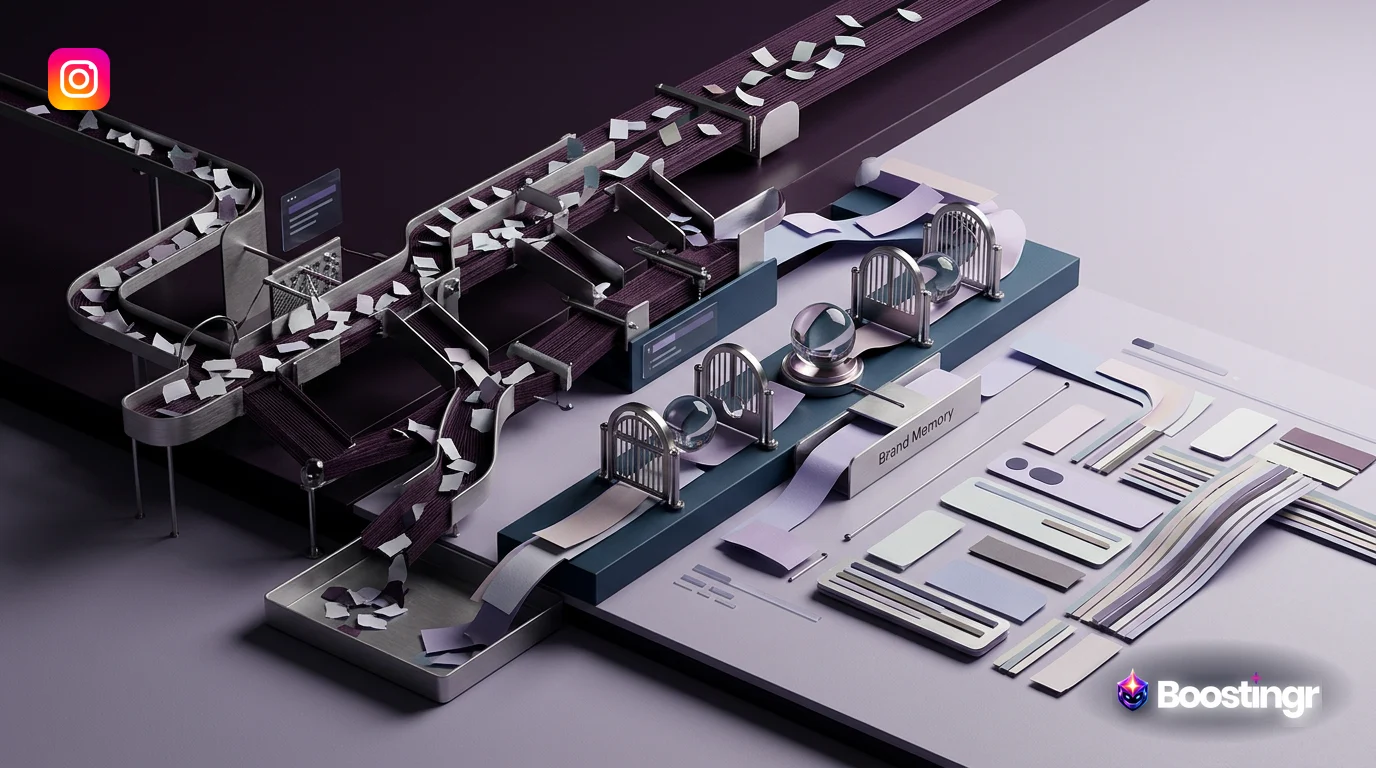
The AI's knowledge is not random; it's sourced from a central 'Brand Memory.' This diagram shows how approved information like tone guidelines, FAQs, and policies are stored and used to generate on-brand replies.
Key Takeaways
* **Safety is Foundational:** Brand safety isn't an add-on for AI replies; it's the core requirement for successful implementation. The goal is to scale authentic engagement without risking brand reputation. * **Control is Systematic, Not Manual:** True safety comes from a system of governance—approval workflows, Brand Memory, tone settings, and policy guardrails—not from manually checking every reply. * **Humans Guide, AI Executes:** The most effective model is human-in-the-loop, where brand managers set the strategy, rules, and approved content, and the AI executes within those safe boundaries. * **Context is Everything:** Advanced AI understands not just keywords, but sentiment and intent. This allows for replies that are not only on-brand but also genuinely helpful and contextually appropriate. * **The Right Platform Matters:** Achieving brand safety at scale requires a platform like Boostingr, built with a workflow-first architecture that prioritizes moderation, governance, and control.
By embracing a structured, strategic approach, brands can move past the fear of AI and unlock the immense potential of automated engagement, building stronger communities one **brand safe AI reply** at a time.
FAQs
**What are brand safe AI replies?** Brand safe AI replies are automated social media responses generated by an AI that is strictly programmed to follow a brand's specific voice, tone, messaging guidelines, and factual information. This is achieved through systems like Brand Memory and approval workflows, ensuring the AI acts as a controlled and consistent extension of the brand, rather than an unpredictable agent.
**How do you ensure an AI reply bot stays on brand?** You ensure a **brand safe AI reply bot** stays on brand by implementing a multi-layered control system. This includes: 1) A 'Brand Memory' knowledge base with all approved product/company info. 2) Granular tone and style settings that define the lexicon and voice. 3) Human-in-the-loop approval workflows for all reply templates. 4) Hard policy guardrails that prevent the AI from discussing forbidden topics or making unauthorized promises.
**Can AI replies really sound human?** Yes, AI replies can sound remarkably human when configured correctly. The key is moving beyond static templates. By using an AI that understands sentiment and intent, combined with a Brand Memory for context and varied, pre-approved reply blueprints, the system can generate responses that are not only on-brand and accurate but also empathetic and contextually aware, mimicking the nuance of a human conversation.
**What's the difference between a chatbot and a brand safe AI reply system?** A traditional chatbot typically operates on rigid, tree-based logic flows, primarily in a private DM environment (e.g., "If user says X, reply Y"). A brand-safe AI reply system, like Boostingr, is designed for the chaos of public comments. It uses sophisticated AI to understand the intent and sentiment of unstructured comments and generates dynamic, context-aware replies within a robust safety framework of approvals, guardrails, and brand knowledge.
**How are approved AI replies created and managed?** **Approved AI replies** are created through a collaborative process. A human (like a brand manager) defines a scenario (e.g., a customer asking about a feature) and writes a blueprint for the response. The AI then generates multiple variations of this reply. The human reviews, edits, and approves these variations. These approved replies are then stored for the AI to use when it identifies that specific scenario, ensuring all automated responses have been pre-vetted by a person.
**Is it safe to let an AI reply to negative comments?** It depends on the severity. For moderately negative comments (e.g., shipping complaints, minor product issues), a well-configured AI can safely provide an initial empathetic response and direct the user to a solution or support channel. For highly negative, sensitive, or abusive comments, a brand-safe system should automatically escalate the comment to a human team member for a personal touch, rather than attempting an automated reply.
**How does this work with official platform APIs?** Reliable platforms like Boostingr integrate directly with official, public APIs, such as the Facebook Graph API. This ensures all actions—reading comments, hiding comments, and posting replies—are done in compliance with the social media platform's terms of service. This is a critical factor for account safety and long-term stability, avoiding the risks associated with unofficial automation methods.
**How can I get started with brand safe AI replies?** The best way to start is by choosing a platform built for safety and control. Begin by documenting your brand voice and policies. Then, use a tool like Boostingr to build your Brand Memory and start with a simple workflow, like replying to positive comments. You can explore our platform's capabilities with a free trial or view our pricing plans to see how it fits your needs.
Evidence, Experience, and References
This article is based on Boostingr's direct experience in developing and implementing AI-powered comment management solutions for hundreds of brands, from fast-growing ecommerce stores to global enterprises. Our insights are derived from analyzing millions of comments and refining the workflows that ensure brand safety at scale.
**First-Party Observation 1:** We've observed that brands initially fear AI replies will sound robotic. However, after implementing Brand Memory and granular tone settings, their primary concern shifts from 'Is it safe?' to 'How can we leverage this to build even deeper community connections?' The AI becomes a tool for scaling humanity, not replacing it.
**First-Party Observation 2:** A common pattern we see with new clients is an over-reliance on hiding negative comments. Our data consistently shows that a well-crafted, brand-safe AI reply to a moderately negative comment (e.g., a shipping concern) can not only resolve the issue publicly but also increase overall positive sentiment on the post, demonstrating transparency and responsiveness.
We adhere to best practices for interacting with social platforms and creating high-quality, helpful content, as outlined in guidelines from sources like Google's Search Essentials.
About the Author
The Boostingr team is composed of social media strategists, AI engineers, and product developers dedicated to solving the most complex challenges in community management. With decades of combined experience in digital marketing and software development, we are passionate about building tools that empower brands to connect with their audiences safely and effectively. Our mission is to transform social media comments from a moderation burden into a valuable asset for intelligence and growth.
Last Updated
October 2023
Search Intent and Topic Map
This guide targets readers researching brand safe ai replies and maps the topic to practical evaluation and implementation decisions. Supporting concepts include brand safe ai reply bot, safe ai comment replies, approved ai replies, ai comment management, brand safe ai replies, comment moderation automation. These terms are used only where they clarify the reader's question, not as repeated ranking phrases.