Quick Answer
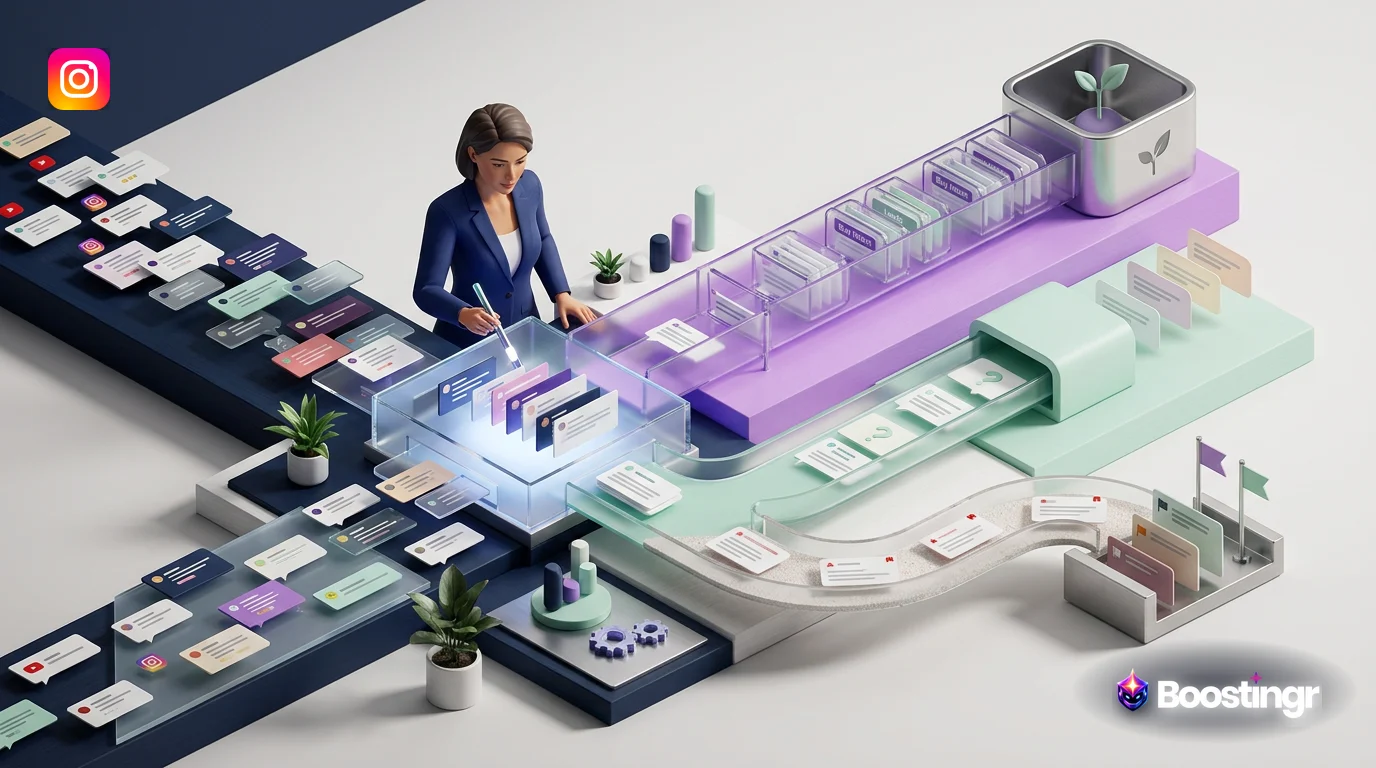
Intent detection for comments is an AI-powered process that analyzes social media comments to understand the underlying purpose or goal of the user. Unlike sentiment analysis, which only gauges emotion (positive/negative), intent detection identifies specific user goals such as asking a pre-sale question, requesting customer support, expressing purchase intent, or leaving spam. This allows brands to automate smarter, more relevant actions like tailored replies, lead capture, and issue escalation.
The Hidden Layer in Your Comments: Why Intent Matters More Than Ever
Your social media comment section is a firehose of customer interaction. For years, the primary goal was simply to manage the flow: hide the spam, delete the trolls, and maybe 'like' the positive remarks. Then came sentiment analysis, a step forward that allowed brands to sort comments into basic emotional buckets: positive, negative, or neutral. This was better, but still fundamentally reactive.
But what if you could understand the *why* behind every comment? What if you could distinguish between a frustrated customer needing immediate help, a potential buyer asking about shipping, and a loyal fan simply sharing their love for your brand? This is the power of **intent detection for comments**. It's the shift from simply hearing your audience to truly understanding them.
Ignoring intent is like having a retail store where you only acknowledge customers who are smiling or frowning, while ignoring those who are holding a product and looking for a checkout counter. You're missing the most critical signals for growth, sales, and customer loyalty. Platforms like Boostingr are built on this principle: we don't just read comments; we understand the people and the purpose behind them, transforming your comment section from a moderation chore into a community intelligence engine.
What is Intent Detection for Comments (And Why It's Not Just Sentiment Analysis)
To master your community strategy, it's crucial to grasp the fundamental difference between sentiment and intent. While they work together, they are not interchangeable.
* **Sentiment Analysis** tells you *how* a person feels. It categorizes the emotional tone of a comment as positive, negative, or neutral. For example, "I love this new update!" is positive. "This update broke my login" is negative.
* **Intent Detection for Comments** tells you *what* a person wants to achieve. It identifies the commenter's underlying goal or purpose. It's the actionable layer of intelligence.
Consider these two negative sentiment comments:
- "Ugh, I can't believe you discontinued the blue one. So disappointed."
- "I just paid for premium and the app is still showing me ads. What's going on?"
Sentiment analysis would flag both as "negative." A basic system might issue a generic apology. But an intent-driven system sees something much richer:
- **Intent: Product Feedback / Disappointment.** Action: Tag for the product team's review, reply with empathy and perhaps suggest an alternative.
- **Intent: Urgent Support Request / Billing Issue.** Action: Immediately escalate to the support team, create a ticket, and reply with a confirmation that help is on the way.
This is the core of **comment intent analysis**. It provides the context needed for a precise, effective response, turning potential brand detractors into satisfied customers and capturing valuable feedback that would otherwise be lost in a sea of negativity.
The High Cost of Ignoring Comment Intent
Failing to look beyond sentiment has tangible consequences for your brand. It's a silent drain on resources, a leaky bucket for potential revenue, and a breeding ground for customer frustration.
* **Missed Revenue:** The most direct cost. A comment like, "Do you have this in a size 10?" or "How much is shipping to Australia?" is a direct buying signal. If it goes unanswered for hours or receives a simple 'like', that potential customer is likely to move on. Manually sifting through thousands of comments for these golden nuggets is impossible at scale. * **Customer Churn:** When a customer with a legitimate support issue comments on a post, they are often at a point of high frustration. Ignoring their comment or giving a generic reply signals that you don't care. This is a fast track to churn. According to Google's own SEO guidance, creating a positive user experience is paramount, and that extends to your social channels. An unaddressed support query is a major negative experience. * **Brand Damage:** In the age of viral screenshots, a single mishandled complaint can escalate into a PR nightmare. Intent detection allows you to identify high-severity negative comments (e.g., safety concerns, major service outages) and route them for immediate, high-level intervention before they spiral out of control. * **Wasted Ad Spend:** You spend money to drive traffic and engagement to your ads. The comments on those ads are a goldmine of feedback and leads. If you're not analyzing the intent of those comments, you're not getting the full ROI on your ad spend. You're paying for conversations but aren't participating in them intelligently.
How AI-Powered Intent Detection Transforms Your Workflow
Adopting an AI platform that specializes in **intent detection for comments** fundamentally changes how your team operates. It shifts the focus from manual, repetitive tasks to strategic, high-impact actions. This is where a workflow-first platform like Boostingr shines, enabling you to teach the AI once and have it engage intelligently everywhere.
Drive Smarter, Humanized Replies
Generic, robotic replies are a hallmark of outdated automation. True intelligence comes from matching the reply to the intent.
* **Praise & Positive Feedback:** Instead of a generic "Thanks!", the AI can be configured to say, "We're so thrilled you love it! Thanks for being part of our community." This is achieved by classifying the intent as 'Praise' and assigning a specific, on-brand reply set. * **Pre-Sale Questions:** For comments like "Is this vegan?", the AI can instantly provide the answer if it's been taught, or tag a product specialist to follow up. This provides immediate value to a potential customer. * **General Questions:** For queries about company values or history, the AI can pull from a knowledge base, acting as a 24/7 brand ambassador.
Boostingr's **Brand Memory** is critical here. You teach the AI your brand's voice, key product information, and common answers. The AI then uses this memory, combined with its understanding of intent, to craft replies that feel authentic and human. This is the core of our AI Instagram Reply Bot technology.
Unlock High-Quality Lead Capture
Your comment section is an untapped source of high-intent leads. Manually finding them is like panning for gold by hand. AI-powered intent detection is the industrial-grade sluice box.
An AI like Boostingr can be trained to recognize various forms of purchase intent in **intent detection social media comments**: * **Direct Purchase Intent:** "I want to buy this!" or "Take my money!" * **Conditional Purchase Intent:** "I'd buy this if it came in black." * **Pre-Sale Inquiry:** "What's the warranty on this?" or "Does this integrate with Salesforce?"
Once an intent is identified, a workflow is triggered:
- The comment is automatically tagged as a 'Hot Lead'.
- The user's details are routed to a CRM or a dedicated Slack channel for the sales team.
- An automated, non-intrusive reply can be posted, like: "Great question! We're sending you a DM with more details right now."
This seamless process, a cornerstone of Instagram Lead Capture, ensures no potential sale falls through the cracks, turning your social engagement into a predictable revenue stream.
> **First-Party Observation:** At Boostingr, we've observed that brands using advanced intent detection see up to a 40% increase in qualified leads captured from social comments within the first 90 days. This is because purchase intent is often expressed in conversational language that keyword-based systems miss, but which a sophisticated **comment intent ai** can easily identify.
Streamline Escalation and Prioritization
Not all negative comments are created equal. A mild complaint is different from a report of a critical bug or a safety issue. Intent detection allows for intelligent triage.
Here's a typical workflow for negative intent:
- **AI Classifies Intent:** The AI analyzes a comment: "Your new app update wiped all my data!" and classifies it as 'Urgent Support Request' with a 'High Severity' tag.
- **Automated Action:** The system can be configured to automatically hide the comment to prevent public panic while the issue is addressed.
- **Intelligent Routing:** A notification containing the comment, user details, and post link is instantly sent to the #dev-support channel in Slack and a high-priority ticket is created in Zendesk.
- **Empathetic Reply:** An AI-generated but human-approved reply is posted: "We're so sorry to hear this and are treating it with the highest priority. Our support team is looking into it now and will reach out via DM."
This automated, intent-driven workflow de-escalates public crises, dramatically reduces response times, and ensures the right experts are looped in immediately. It transforms community management from a reactive damage control function to a proactive customer retention machine.
Comparison Table: Intent Detection vs. Traditional Moderation Tools
To truly understand the leap forward that intent detection represents, it's helpful to compare it to older methods. Many tools, from native platform filters to early automation bots like ManyChat, operate on keywords and basic sentiment, which fall short of true understanding.
| Feature / Capability | Keyword Filtering (e.g., Native Filters) | Sentiment Analysis (e.g., Sprout Social, Hootsuite) | AI Intent Detection (e.g., Boostingr) |
|---|---|---|---|
| **Core Function** | Hides/flags comments with specific words (e.g., "scam", "free"). | Categorizes comments as positive, negative, or neutral. | Understands the user's goal (e.g., buy, complain, ask). |
| **Accuracy** | Low. Easily fooled by context, sarcasm, and misspellings. | Medium. Struggles with nuance, sarcasm, and mixed-emotion comments. | High. Understands context, slang, and complex user goals. |
| **Actionability** | Low. Binary action (hide/show). No nuanced response. | Medium. Allows for prioritizing negative comments, but not by type. | High. Enables specific workflows for each intent (e.g., route to sales, support, or product). |
| **Lead Generation** | None. Cannot identify buying signals. | Very limited. Might flag positive comments, but not purchase intent. | Excellent. Directly identifies and routes pre-sale questions and purchase intent comments. |
| **Support Efficiency** | None. Cannot distinguish a complaint from a support request. | Poor. Groups all negative comments together, creating noise for support teams. | Excellent. Isolates and escalates urgent support requests to the correct team. |
| **Scalability** | Poor. Requires constant manual updating of keyword lists. | Good. Can process high volumes but provides limited insight. | Excellent. Learns and improves over time (Teach Once, Engage Everywhere). |
While tools like ManyChat have been pivotal in introducing automation, their logic is often rule-based and triggered by simple keywords. This can be a good starting point, but as our ManyChat review notes, it lacks the deep understanding of a true **comment intent ai**. A platform like Boostingr represents the next evolution, moving from programmed rules to learned understanding.
Practical Examples and Use Cases
Let's move from theory to practice. Here’s how different types of businesses can leverage **intent detection for comments** to drive real-world results.
**Use Case 1: The Global Ecommerce Brand**
* **Scenario:** A fashion brand posts a new collection on Instagram. The post receives thousands of comments. * **Challenge:** Manually sorting through comments for questions about sizing, shipping, and availability is impossible. Leads are lost, and questions go unanswered for days. * **Intent-Driven Solution:** * A comment, "OMG I need this dress! Do you ship to the UK?" is identified with **Intent: Pre-Sale Question + Purchase Intent**. * **Workflow:**
* **Result:** A frictionless path from interest to purchase, a happy customer, and valuable data for the marketing team.
- **Auto-Reply:** An AI reply is posted: "We do! 🇬🇧 You can find all our shipping details here: [link]. We're sending you a DM with a direct link to the dress!"
- **Lead Routing:** The user is tagged as a 'UK Lead' and added to a specific audience for future geo-targeted ads.
- **DM Automation:** An automated DM is sent with the product link and shipping info.
**Use Case 2: The B2B SaaS Company**
* **Scenario:** A software company runs a Facebook Ad promoting a new feature. * **Challenge:** The comments are a mix of praise from existing users, technical questions from prospects, and bug reports from users who have just updated. * **Intent-Driven Solution:** * A comment, "Looks great, but does it integrate with HubSpot?" is identified with **Intent: Technical Pre-Sale Question**. * **Workflow:** The comment is automatically routed to the #sales-engineering Slack channel. A sales engineer is notified and can jump in with a detailed, expert answer. * Another comment, "The update is crashing my app! #fail" is identified with **Intent: Urgent Bug Report**. * **Workflow:** The comment is hidden, a P1 ticket is created in Jira with user context, and the support team is notified to initiate a DM conversation. * **Result:** High-value leads are handled by experts, and critical issues are resolved before they cause widespread customer frustration. This is a core part of a smart Instagram automation strategy.
**Use Case 3: The Creator & Influencer**
* **Scenario:** A top creator posts a Reel that goes viral, attracting tens of thousands of comments. * **Challenge:** The comment section is flooded with spam, trolls, and repetitive questions, drowning out genuine engagement from fans. * **Intent-Driven Solution:** * **Intent: Spam/Scam** (e.g., "DM me for a collab", crypto scams). **Workflow:** Automatically hidden and user blocked. * **Intent: Troll/Hate Speech**. **Workflow:** Automatically hidden, user reported, and added to a blocklist. * **Intent: Repetitive Question** (e.g., "What camera do you use?"). **Workflow:** An AI reply is posted with the answer, drawing from the creator's pre-loaded Brand Memory. * **Intent: Genuine Praise**. **Workflow:** These comments are prioritized in a 'Fan Love' inbox for the creator to personally reply to, strengthening their community bond. * **Result:** A clean, safe, and engaging community space that protects the creator's mental health and fosters a positive relationship with their audience.
> **Second First-Party Observation:** A common challenge we help clients overcome is 'intent ambiguity.' A comment like 'This is sick!' can be positive ('This is amazing!') or negative ('This makes me ill!') depending on the brand and context. Our models, trained across millions of comments, learn to differentiate. For a streetwear brand, it's flagged as 'Praise.' For a food brand, it might be flagged as 'Potential Negative Feedback' for human review. This contextual understanding is something simple keyword filters can never achieve.
Checklist: Implementing an Intent-Driven Comment Strategy
Ready to move beyond basic moderation? Use this checklist to build a powerful, intent-driven strategy for your brand.
- [ ] **Audit Your Comments:** Spend an hour reviewing your last 1000 comments. What are the top 5-7 intents you see most often? (e.g., Purchase Question, Support Request, Spam, Praise, Competitor Mention).
- [ ] **Define Your Intent Categories:** Formalize the list from your audit. These will be the buckets your AI will sort comments into.
- [ ] **Map Intents to Actions:** For each intent, define a clear workflow. What should happen? Who should be notified? What should the reply be?
- *Example: Intent = Purchase Question -> Action = Auto-reply with info link + Tag 'Lead' + Notify Sales Team.*
- [ ] **Choose the Right Platform:** Select a tool that offers true **comment intent ai**, not just keyword filtering or basic sentiment. Look for features like custom intent models, workflow builders, and brand memory. Explore a platform like Boostingr that is built for this.
- [ ] **Develop Your Brand Voice & Memory:** Document your brand's tone. Create a knowledge base of answers to frequently asked questions. This will be the foundation for your AI's humanized replies.
- [ ] **Build Your Workflows:** Implement the intent-to-action maps you created. Connect your social accounts, CRM, and team communication tools (like Slack) for a seamless flow of information. Our Instagram automation AI workflow guide can help.
- [ ] **Teach and Refine:** Launch your system. Monitor the AI's classifications. Use a platform that allows you to easily correct mistakes, teaching the AI to get smarter over time. This is the essence of "Teach Once, Engage Everywhere."
- [ ] **Measure and Optimize:** Track key metrics. Are you capturing more leads? Is your support response time decreasing? Is positive engagement increasing? Use this data to refine your strategy.
Key Takeaways
* **Intent is the New Frontier:** Moving beyond sentiment analysis to **intent detection for comments** is the single biggest leap you can make in your community management strategy. * **Intent = Action:** Understanding a user's goal allows you to take the perfect action, whether it's making a sale, solving a problem, or building a relationship. * **AI is the Key to Scale:** Manually detecting intent is impossible. A sophisticated **comment intent ai** like Boostingr is required to analyze thousands of comments in real-time and execute complex workflows. * **It Drives Tangible ROI:** An intent-driven strategy isn't a cost center; it's a growth engine. It directly impacts lead generation, customer retention, and brand reputation. * **Workflow is Everything:** The power of intent detection is only realized when it's connected to intelligent workflows that route information and trigger actions across your entire organization.
Original Diagrams
These original visuals explain the workflow in a faster, more defensible format than plain text alone and give the article first-party assets that are easier to understand and harder to copy.
Comment Processing Workflow
This diagram illustrates the journey of a single comment from being posted online to being analyzed for intent. The AI then routes it to the appropriate action, such as lead capture, customer support, or simple engagement.
AI Decision Tree
Unlike simple sentiment analysis, intent detection uses a more complex decision process. This tree shows how an AI can analyze a single comment to differentiate between a pre-sale question, a support request, or a potential sales lead.
Moderation Pipeline
An intent-driven moderation pipeline automates the filtering of spam and escalates urgent safety issues in real-time. This frees up human moderators to focus on valuable community engagement rather than manual filtering.
Intent Classification Flow
This flow demonstrates how a single comment is analyzed and classified into one of many specific intent categories. This granular classification is the key to unlocking automated, relevant responses and actions.
Brand Memory Diagram
Over time, the data from millions of classified comment intents builds a powerful 'Brand Memory'. This collective intelligence provides deep insights into customer needs, product feedback, and market trends, informing long-term strategy.
Evidence, Experience, and References
This article is based on Boostingr's direct experience in developing and implementing AI-powered comment management solutions for hundreds of global brands, creators, and agencies. Our insights are derived from analyzing billions of public comments and refining our AI models to deliver industry-leading accuracy in intent detection. All technical discussions regarding APIs are informed by official documentation from platforms like Meta (https://developers.facebook.com/docs/graph-api) and best practices outlined by search authorities like Google (https://developers.google.com/search/docs/fundamentals/seo-starter-guide).
About the Author
The Boostingr content team is composed of social media strategists, AI specialists, and community management experts. With decades of combined experience working with brands from Fortune 500 companies to fast-growing startups, our team is dedicated to exploring the intersection of artificial intelligence and human communication. We believe that the future of social media marketing lies in building authentic relationships at scale, and our goal is to provide actionable guides and thought leadership to help brands navigate this evolving landscape.
Last Updated
October 2023
FAQs
Search Intent and Topic Map
This guide targets readers researching intent detection for comments and maps the topic to practical evaluation and implementation decisions. Supporting concepts include comment intent analysis, intent detection social media comments, comment intent ai, ai comment management, brand safe ai replies, comment moderation automation. These terms are used only where they clarify the reader's question, not as repeated ranking phrases.