Quick Answer
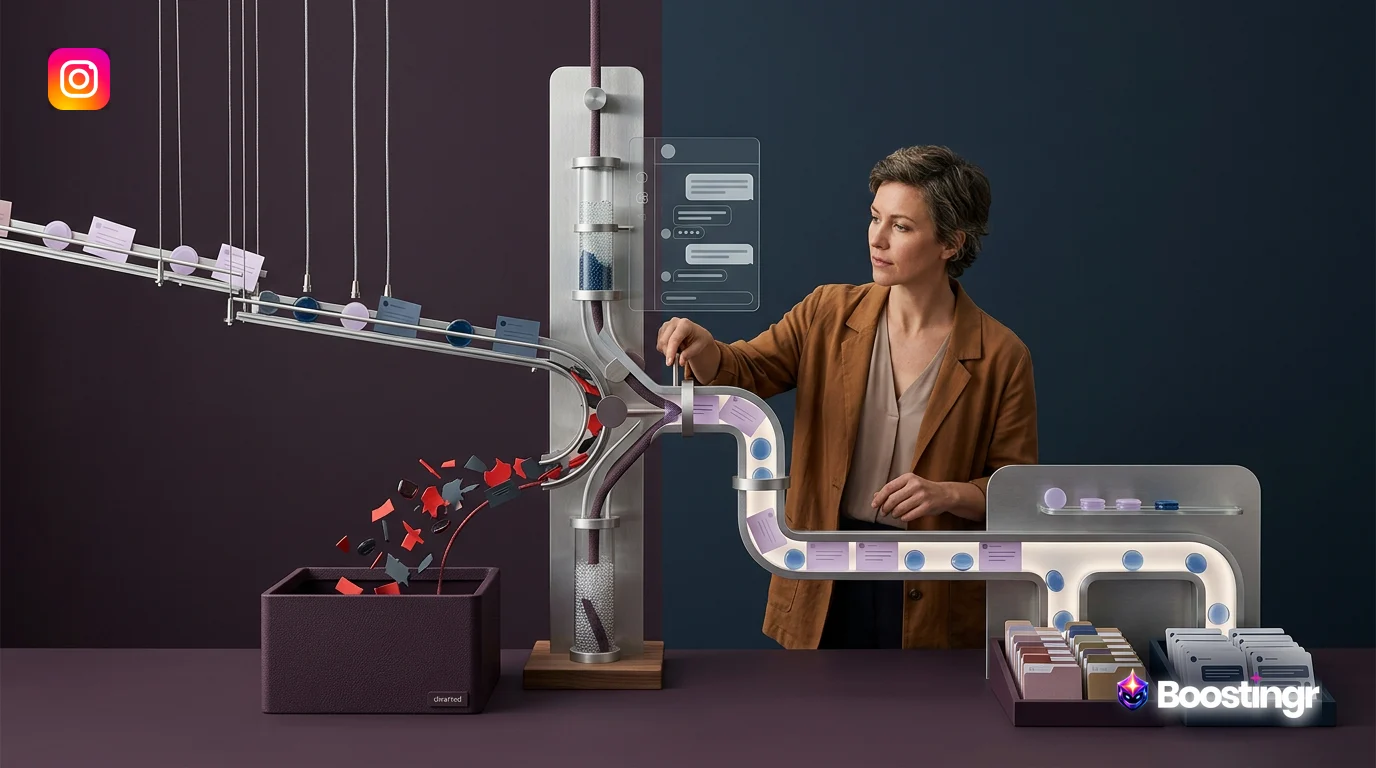
The best AI automation tool for 2026 is a specialized platform designed for a specific, high-value business function, rather than a general-purpose connector. For brands, creators, and agencies, this means a workflow-first AI system dedicated to managing social media comments—automating moderation, capturing leads, and extracting community intelligence from the conversational chaos that general tools and schedulers simply cannot handle.
The AI Automation Gold Rush: Are You Digging in the Right Place?
The year is 2026, and the term "AI automation" is no longer a futuristic buzzword; it's a budget line item. Every business leader, from startup founders to enterprise CMOs, is on a quest for the **best AI automation tool 2026** to secure a competitive edge. The market is a dizzying landscape of options, all promising to streamline workflows, skyrocket productivity, and unlock unprecedented efficiency. Countless articles feature powerful generalist platforms like Zapier and enterprise-grade AI agent builders from tech giants like Microsoft and AWS.
But these discussions share a critical blind spot. They are overwhelmingly focused on automating internal processes—syncing databases, generating marketing copy, or scheduling social media content. They completely miss the most volatile, high-stakes, and opportunity-rich environment your brand operates in daily: the social media comment section. This is where customers decide to buy, where brand crises ignite, and where your most valuable feedback is shared freely.
This guide provides a different, more profitable perspective. We'll navigate the landscape of AI automation, from broad business process automation to the emergence of sophisticated agentic workflows. More importantly, we will introduce the missing category that holds the key to protecting your brand, capturing hidden revenue, and understanding your customers on a profound level: AI for Social Comment & Community Intelligence. It's time to look beyond scheduling and discover the transformative power of post-publishing automation.
The Evolving Landscape of AI Automation in 2026
To understand where the market is going, we must first appreciate its rapid evolution. AI automation has matured from simple triggers to complex, intelligent systems capable of reasoning and independent action.
Phase 1: Task Automation (The Connectors)
This initial wave, pioneered by tools like IFTTT and early Zapier, was built on simple "if this, then that" (IFTTT) logic. It was revolutionary for connecting disparate apps to perform basic tasks, like saving a new email attachment to Dropbox. However, it lacked any real intelligence, context, or ability to handle nuance.
Phase 2: Workflow Automation (The Orchestrators)
Platforms like Make, Tray.io, and modern Zapier elevated the game by introducing multi-step workflows. This allowed for more complex chains of events, becoming the backbone of most business process automation (BPA) today. These tools are excellent for streamlining predictable data flows between well-defined systems, like routing a form submission through a CRM and into an email sequence.
Phase 3: Intelligent Process Automation (IPA) & Agentic Workflows (The Thinkers)
This is the frontier for 2026. Intelligent Process Automation (IPA) infuses workflows with AI and machine learning, enabling them to handle exceptions, make decisions, and understand unstructured data like text and images. The next leap is `agentic automation tools`. Instead of giving an AI a list of tasks, you give it a goal. An AI agent can then autonomously plan and execute the steps needed to achieve that goal. Concepts like `multi-agent orchestration`—where multiple specialized AI agents collaborate on a complex objective—are moving from theory to reality, particularly within `enterprise AI automation platforms` that demand robust `AI governance` and control.
This evolution has created distinct tool categories, each optimized for a different job:
- **General Business Process Automation (BPA):** The digital duct tape connecting your tech stack (e.g., Zapier, Microsoft Power Automate).
- **Marketing & Sales Automation:** Platforms focused on the customer journey through email, CRM, and lead scoring (e.g., HubSpot, Marketo).
- **AI Content & Code Generators:** Tools that create text, images, or code based on prompts (e.g., ChatGPT, Midjourney, GitHub Copilot).
As we'll demonstrate, none of these categories are engineered to withstand the pressures or capitalize on the opportunities of real-time, public-facing social conversations.
Why Most "Best AI Automation Tool" Lists Are Incomplete
Scan any article on the `best AI productivity tools` or `AI tools for social media marketing`, and you'll find a recurring, misleading pattern. The lists are dominated by two types of platforms that are fundamentally unsuited for the task of at-scale comment management.
- **Content Schedulers with AI Add-ons:** Tools like Hootsuite and Sprout Social are masters of planning and publishing content. Their AI features, however, are often "bolt-ons" designed for pre-publishing tasks: suggesting hashtags, finding the best time to post, or generating simple copy. They are content broadcast systems at their core.
- **General Process Automators:** Tools like Zapier are frequently mentioned for their ability to connect social media apps to other software. For example, "When you get a new mention on Twitter, add it to a Google Sheet." This is useful for data logging but is a passive, asynchronous action, not a real-time engagement solution.
Think of it this way: using a general automator for real-time comment moderation is like using the screwdriver on a Swiss Army knife to build a house. While technically possible for a single screw, it's the wrong tool for the job, hopelessly inefficient and dangerous at scale. The glaring gap in these lists is the **post-publishing workflow**. After you hit "publish," the real work begins. The comment section is where customers ask questions, prospects show purchase intent, trolls attack your brand, and your community provides invaluable feedback. Existing tool recommendations leave you to handle this chaotic, high-volume environment manually or with rudimentary keyword filters that fail spectacularly.
> **First-Party Observation:** At Boostingr, we've analyzed over a billion comments. We consistently see that brands relying on schedulers or general automators for comment management face a critical workflow breakdown. Their systems are designed to push content *out*, not to intelligently process conversations coming *in*. This results in missed leads, delayed support responses, and a comment section that is either a ghost town or a spam-filled liability that actively harms the brand.
The Critical, Overlooked Category: AI for Social Comment & Community Intelligence
This is the missing piece of the AI automation puzzle. A dedicated AI Comment Management platform isn't an add-on; it's a purpose-built operating system for your social conversations. It adopts a **workflow-first approach**, where AI is the core engine that drives every action, from moderation to lead capture to `AI-powered analytics`.
Unlike schedulers that help you talk *at* your audience, a platform like Boostingr helps you talk *with* them, at scale. It transforms your comment section from a moderation chore into your richest source of business intelligence and revenue. According to the Sprout Social Index, 55% of consumers now learn about new brands on social media, making it the top channel for discovery. The quality of the conversations happening on your posts is your most powerful first impression.
What True "Engagement Automation" Really Means
Superficial coverage of "engagement automation" often just means simplistic auto-replies. True, intelligent automation is a multi-layered process that understands context, intent, and brand voice. Here’s what it entails:
#### AI-Powered Spam and Troll Detection This is the first line of defense. It moves far beyond simple keyword blocklists, which are easily circumvented. Modern AI uses a combination of techniques to protect your brand: * **Behavioral Analysis:** The AI identifies accounts that spam hundreds of posts in minutes or use bot-like patterns, neutralizing them based on behavior, not just content. * **Semantic Understanding:** It understands the *meaning* behind the words, allowing it to detect sophisticated scams, hate speech, and policy violations that don't use obvious keywords. * **Pattern Recognition:** It identifies and hides emerging spam formats, like deceptive crypto scams or phishing links disguised as friendly questions, before they can proliferate across your posts.
#### Deep Intent Classification This is the heart of intelligent automation. The AI reads a comment and understands the *why* behind it. Each identified intent can trigger a unique, automated workflow. Key intents include: * **Purchase Intent:** "Where can I get this?", "How much?", "Link?" * **Customer Support:** "My order hasn't arrived", "This is broken", "How do I use this?" * **Negative Feedback:** "This broke after one use", "I'm disappointed in the quality." * **Positive Sentiment & Praise:** "I love this product!", "Best purchase ever!" * **Feature Request/Product Idea:** "You should make this in blue!" * **Competitive Mention:** "How does this compare to Brand X?"
Classifying these intents allows you to automatically route tasks—sales leads to a DM workflow, support issues to a helpdesk ticket, and feedback to a product insights dashboard.
#### Advanced Sentiment and Urgency Analysis Beyond just "positive, negative, neutral," the AI can detect nuanced emotions and urgency. It understands the difference between a low-priority negative comment ("I wish the packaging were different") and a high-priority, urgent negative comment ("My event is tomorrow and my order is lost, I'm furious!"). This allows you to prioritize your team's attention where it's needed most, turning potential brand disasters into heroic customer saves.
#### Brand-Safe, Context-Aware Replies This is the holy grail of `AI for customer support automation`. Using a concept called **Brand Memory**, the AI accesses a central, curated knowledge base about your brand. This knowledge base, a form of Retrieval-Augmented Generation (RAG), is populated with your brand's voice guide, product details, FAQs, and past successful replies. It grounds the AI in your brand's reality, allowing it to generate replies that are not only accurate but also perfectly aligned with your persona. This is how you achieve humanized engagement at machine scale. For a deep dive, read our playbook on brand-safe AI replies.
Comparison Table: General vs. Specialized AI Automation Tools
To make the right choice, you need to understand the fundamental differences between tool categories. The `best ai automation tool 2026` for your business depends entirely on the job you need to do.
| Feature | General Automation (e.g., Zapier) | Social Scheduler with AI (e.g., Sprout Social) | Specialized Comment Automation (e.g., Boostingr) |
|---|---|---|---|
| **Core Function** | Connect disparate apps and data | Plan, schedule, and publish content | Manage, moderate, and analyze social comments & DMs |
| **Primary Use Case** | Internal process automation (e.g., data entry) | Content marketing workflow | Post-publishing engagement & community management |
| **Handling of Social Comments** | Logs comments or triggers simple, non-contextual actions | Basic inbox for manual replies; rudimentary keyword filtering | Deeply classifies by intent, sentiment, and user; triggers complex, context-aware workflows |
| **Real-time Capability** | Asynchronous; often with 1-15 minute delays | Near real-time inbox, but AI features are not for instant moderation | Sub-second, real-time processing for moderation and replies |
| **Scalability Under Load** | Limited by plan tasks and API polling limits | Designed for human-scale response; can be overwhelmed by viral posts | Built to handle thousands of comments per minute on high-traffic posts |
| **Nuance & Context** | Low. Treats a comment as a simple text string. | Low to Medium. Provides some user history but lacks deep conversational understanding. | High. Understands intent, sarcasm, spam patterns, and brand voice through a dedicated AI model. |
| **ROI Focus** | Internal efficiency and time savings | Brand reach and content performance | Lead capture, brand safety, customer support efficiency, and community intelligence. |
AI Workflow Automation Tools: Choosing the Right Engine for the Job
With a clearer understanding of the categories, the decision of which `AI workflow automation tools` to invest in becomes a strategic one based on your specific pain points and business goals.
When to Use a General Automation Tool (like Zapier or Make)
These tools are the indispensable glue of the modern tech stack. They excel at creating predictable, linear workflows between systems that have clear APIs. Use them when: * You need to sync data between two or more cloud applications (e.g., when a deal is marked 'Closed-Won' in Salesforce, add the customer to a specific Mailchimp audience). * The workflow is internal and doesn't require nuanced interpretation of unstructured, public-facing data. * **Example:** When a new lead is captured in a Typeform, create a contact in your HubSpot CRM and send a notification to a specific Slack channel. This is a perfect example of `AI for business process automation` in a structured environment.
When to Use a Social Media Scheduler (like Hootsuite or Buffer)
These platforms are the command center for your content strategy, essential for any brand serious about its content marketing. Use them when: * Your primary goal is to plan, create, and schedule content across multiple social networks from a single dashboard. * You need analytics on post performance, reach, follower growth, and other pre-publishing metrics. * **Example:** Scheduling a month's worth of marketing content for Instagram, Facebook, and LinkedIn, complete with campaign tags and UTM parameters, all from a shared content calendar.
When You Need a Specialized Comment Automation Platform (like Boostingr)
This is the essential tool for any brand, creator, or agency with a significant social media presence that values community interaction and business outcomes. You need a specialized platform when: * You receive a high volume of comments that is impossible to manage manually, leading to missed opportunities and a messy brand image. * Your comment section is a critical channel for `AI for customer support automation`, sales, and brand perception. * You want to move from reactive moderation to proactive community building and intelligence gathering, turning conversational data into strategic insights. * **Example:** An e-commerce brand running Instagram ads needs to instantly hide spam, identify comments with purchase intent, and automatically send those users a DM with a product link, all while routing support questions to the right team and flagging negative feedback for review. This is `intelligent process automation` applied directly to the point of customer contact. Explore our Instagram automation use case to see it in action.
Practical Examples and Use Cases: Turning Comments into ROI
Theory is good, but tangible results are better. Here’s how advanced comment automation, powered by the `best ai automation tool 2026`, translates into measurable business outcomes.
Use Case 1: The Ecommerce Brand Maximizing Ad Spend
* **The Company:** 'Solstice Activewear', a D2C brand launching a new collection with a high-budget Instagram Reels ad campaign. * **The Problem:** The ad goes viral, attracting thousands of comments per hour. Sarah, their lone social media manager, is drowning. Buried within the spam and flame emojis are hundreds of comments like "I need this set!" and "Link?" Every minute she spends deleting spam is a minute a potential customer waits, their purchase intent fading. * **The Boostingr Workflow:**
* **The ROI:** Solstice Activewear captures high-intent leads in real-time, directly attributing revenue to their ad comments. They've turned a moderation nightmare into their most efficient sales machine. See how it works with our Instagram lead capture tool.
- **Instant Triage:** The AI instantly and automatically hides over 99% of spam and troll comments, keeping the comment section clean and on-topic.
- **Intent-Driven Sales:** It classifies comments like "Link?" and "How much is the blue one?" as **Purchase Intent**.
- **Automated Conversion:** This triggers a workflow: a public reply says, "So glad you love it! We've just sent a DM with all the details," and an automated DM is sent with a direct link to the specific product page.
Use Case 2: The Enterprise Protecting Brand Safety
* **The Company:** A global financial services firm launching a major campaign about retirement planning. * **The Problem:** The massive influx of attention brings praise, but also a coordinated wave of sophisticated phishing scams ("DM us your info for a free financial review!"), misinformation about the market, and abusive content that could trigger a brand safety crisis and erode trust. * **The Boostingr Workflow:**
* **The ROI:** The brand's reputation is protected during its most visible moment. The comment section remains a positive and on-brand space, reinforcing the campaign's message of trust and security. This is a core function of enterprise brand safety solutions.
- **Proactive Defense:** A pre-configured moderation pipeline, aligned with strict financial compliance and brand safety standards, goes live with the campaign.
- **Intelligent Shielding:** The AI uses behavioral and semantic analysis to identify and hide harmful content in milliseconds, far faster than any human team. It flags comments that are not explicitly policy-violating but are high-risk for human review, demonstrating strong `AI governance`.
- **Competitive Intelligence:** Comments mentioning competitors are automatically tagged and routed to the competitive intelligence team's dashboard for analysis.
Use Case 3: The Creator Building a Thriving Community
* **The Creator:** A popular tech YouTuber with millions of subscribers, overwhelmed with repetitive questions on their videos. * **The Problem:** They spend 15+ hours each week answering the same questions ("What camera do you use?", "What's the music?"), taking precious time away from engaging in deeper conversations, planning new content, and securing sponsorships. * **The Boostingr Workflow:**
* **The ROI:** The creator saves over 10 hours per week, which they reinvest into creating more content. Audience satisfaction increases due to quick, accurate answers, and the quality of community engagement deepens as the creator can now focus on comments that offer video suggestions, detailed feedback, and personal stories.
- **FAQ Identification:** The AI analyzes comment history and identifies the top 20 most frequently asked questions.
- **Brand Memory Training:** The creator provides the correct answers for these FAQs, which are loaded into the AI's Brand Memory.
- **Automated Assistance:** The AI uses an AI Instagram reply bot (which also works for YouTube) to provide pre-approved, helpful, and human-sounding answers to these repetitive questions.
> **First-Party Observation:** We've found that implementing an intent-based lead capture workflow can increase the conversion rate from social comments by over 300%. It's a direct line from a casual comment to a completed sale, a pathway that is almost impossible to forge manually at scale. Calculating the ROI of comment automation becomes a simple exercise in measuring captured revenue against saved time.
Mini Case Study: How a D2C Brand Increased Lead Capture by 300%
**Client:** "Aura Beauty," a direct-to-consumer skincare brand.
**Problem:** Aura Beauty's Instagram ads were performing well in terms of reach and engagement, but their small social media team was drowning in comments. They were spending 20+ hours per week manually deleting spam and trying to reply to hundreds of product questions. They knew they were missing sales, but couldn't quantify it or scale their response.
**Solution:** They implemented Boostingr as their central AI comment management system.
**The Workflow:**
* Comments with **Purchase Intent** (e.g., "how much is this?", "I need this serum") automatically triggered a public reply ("Sending you a DM now!") and a direct message with a link to the product page and a special 10% off code to encourage conversion. * **Customer Support** questions (e.g., "my package is late") were automatically tagged and sent to a dedicated channel in their support team's Slack, creating a trackable ticket and alerting the right person instantly. * **Positive Feedback** comments received an AI-generated, on-brand reply that was sent to a queue for one-click approval by the social media manager, allowing them to maintain a personal touch without the manual effort.
- **Instant Moderation:** Boostingr's AI was activated to instantly analyze and hide all spam, troll, and profane comments, immediately cleaning up their ad posts and protecting their brand image.
- **Intent-Based Routing:** The AI was trained to classify all remaining comments with high precision.
**The Results:** * **300% Increase in Lead Capture:** Within the first month, the number of qualified leads generated directly from Instagram comments tripled, as tracked by their UTM-coded links. * **95% Reduction in Manual Moderation:** The team's time spent on deleting spam fell from over 20 hours a week to less than one, freeing them to focus on creative strategy and community building. * **+2 Point Sentiment Score:** The Community Intelligence dashboard showed a measurable increase in positive sentiment, as customers received faster, more helpful responses, leading to higher customer satisfaction.
Aura Beauty transformed their comment section from a costly time-sink into their most efficient and profitable revenue-generating channel.
Original Diagrams
These original visuals explain the workflow in a faster, more defensible format than plain text alone and give the article first-party assets that are easier to understand and harder to copy.
Comment Processing Workflow
This diagram illustrates how a specialized AI tool processes every social media comment from initial capture through analysis to a specific, value-driven action. This automated workflow is a process general automation tools can't replicate at scale.
AI Decision Tree
See the AI's 'brain' in action with this decision tree, which shows the logical path from analyzing a comment's text to making a precise decision. This level of nuance is why specialized tools outperform general platforms for comment intelligence.
Moderation Pipeline
Our moderation pipeline visualizes how AI acts as a first line of defense for your brand's safety. It automatically filters out harmful content and spam, ensuring a safe community while flagging complex issues for human review.
Intent Classification Flow
This flow demonstrates how the AI deciphers the 'why' behind a comment, classifying it by user intent. This allows your team to automatically identify sales leads, support requests, and valuable feedback from the conversational noise.
Brand Memory Diagram
This diagram conceptualizes the AI's 'Brand Memory,' a dynamic knowledge base that learns from every interaction. This allows the system to provide more accurate, context-aware responses over time, unlike generic tools that start fresh with every task.
Checklist: Are You Ready for a Specialized AI Comment Automation Tool?
Answer these questions to determine if your brand has outgrown generic tools and is ready for a dedicated comment management platform. This is a move from a `no-code AI automation` hobbyist approach to a professional-grade solution.
- [ ] Do you receive more than 100 comments per day across your key social channels?
- [ ] Do you spend more than 5 hours per week manually hiding spam, deleting troll comments, or replying to repetitive questions?
- [ ] Are you concerned that you're missing sales opportunities from comments like "Where can I buy this?" or "How much?"
- [ ] Is protecting your brand's reputation from harmful, obscene, or hateful comments a top priority?
- [ ] Do you wish you could get structured data and insights from your community's conversations instead of just anecdotal evidence?
- [ ] Do your current tools (schedulers, general automators) feel clumsy and ineffective at handling the speed and nuance of social media conversations?
- [ ] Do you want to provide faster, more consistent customer support through your social channels without hiring a full-time team?
If you answered "yes" to two or more of these questions, it's time to stop patching leaks and invest in a proper foundation. Explore a specialized solution like Boostingr. It's not just another tool; it's a new operating system for community engagement and revenue.
Key Takeaways
As you evaluate your strategy for 2026, keep these core principles in mind:
* **Choose the Right Tool for the Job:** The `best ai automation tool 2026` is not a one-size-fits-all solution. General tools connect apps, schedulers publish content, and specialized tools master high-stakes functions like real-time comment management. * **Don't Ignore Post-Publishing:** Your job isn't done when you schedule a post. The comment section is where brand perception is built or broken, and where revenue is won or lost. * **Demand a Workflow-First Approach:** Don't settle for AI features bolted onto a scheduler. A true automation platform has AI at its core, driving intelligent workflows for moderation, engagement, and analysis. * **Redefine "Engagement Automation":** Move beyond simple auto-replies. True automation involves deep classification of intent and sentiment, robust moderation, and context-aware replies powered by Brand Memory. * **Connect Automation to ROI:** The value of comment automation isn't just saved time. It's in the tangible business outcomes: more leads captured, better brand safety, lower support costs, and invaluable community intelligence that informs your entire business strategy.
Evidence, Experience, and References
This article is based on Boostingr's experience developing a leading AI comment management platform and analyzing billions of public comments across major social networks. Our insights are derived from real-world data on how brands, creators, and agencies struggle with and succeed at scaling community engagement. We adhere to the guidelines and capabilities provided by social media platform APIs, such as the Facebook Graph API, to ensure our solutions are compliant and effective. All statistics are cited from credible sources like the Sprout Social Index. All recommendations align with SEO best practices as outlined in Google's own Search Essentials.
About the Author
The Boostingr team is composed of AI engineers, social media strategists, and brand experts dedicated to solving the most complex challenges in community management. We believe that the future of brand-building lies in authentic, scalable conversations, and we're building the AI-powered tools to make that future a reality. Our work is at the intersection of `marketing automation AI` and genuine human connection.
Last Updated
October 2023
FAQs
Search Intent and Topic Map
This guide targets readers researching best ai automation tool 2026 and maps the topic to practical evaluation and implementation decisions. Supporting concepts include AI workflow automation tools, enterprise AI automation platforms, AI for business process automation, no-code AI automation, AI tools for social media marketing, agentic automation tools, intelligent process automation, AI agent builders, marketing automation AI, AI-powered analytics, multi-agent orchestration, AI governance, AI for customer support automation, best AI productivity tools, ai comment management. These terms are used only where they clarify the reader's question, not as repeated ranking phrases.
Explore More Boostingr Resources
- Boostingr Pricing
- The Boostingr Blog
- AI Spam Detection: A Workflow Guide
- The Ultimate Guide to AI Comment Moderation
- Instagram Lead Capture from Comments
- AI-Powered Instagram Reply Bot
- Enterprise Brand Safety Solutions
- Calculating the ROI of Comment Automation
- Brand-Safe AI Replies: The Definitive Playbook
- Sign Up for Boostingr