Quick Answer
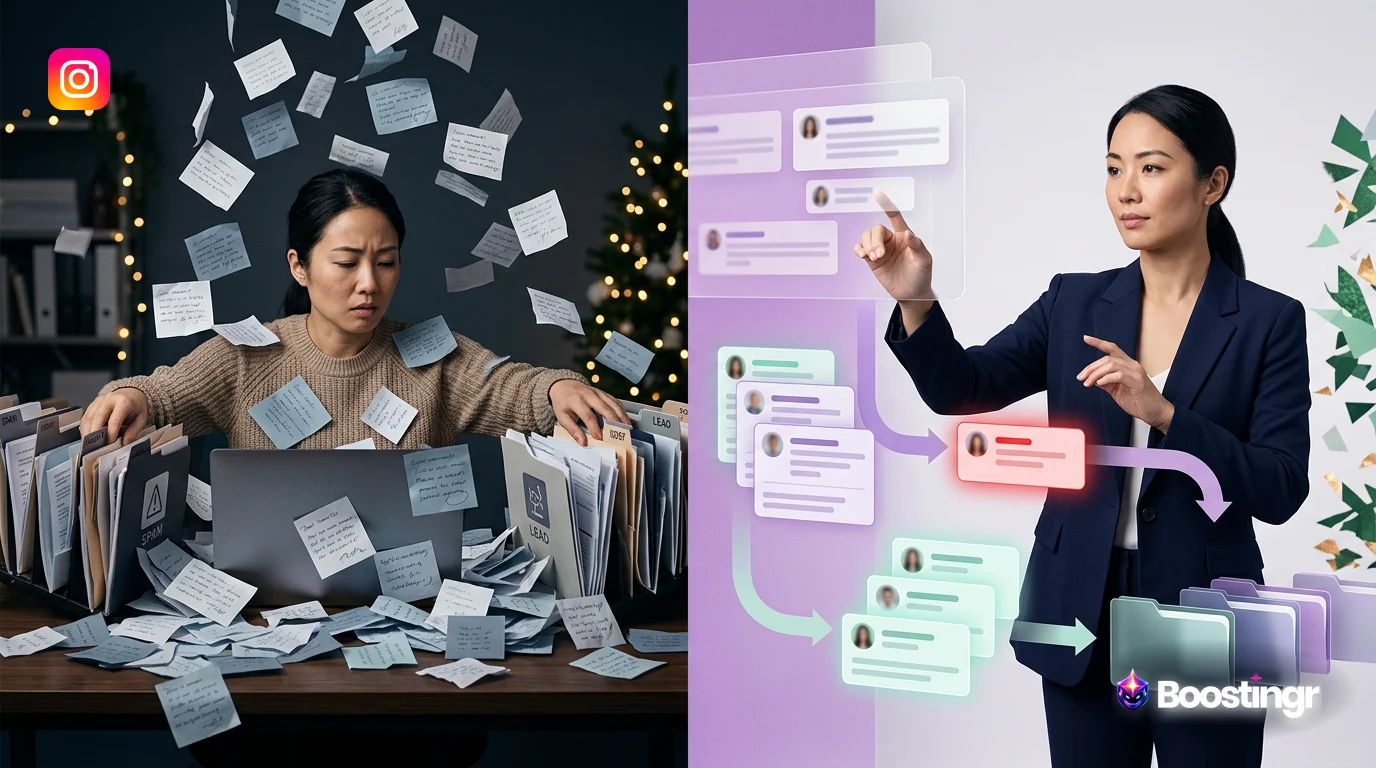
Intent detection for comments is an AI-powered process that analyzes social media comments to understand the underlying purpose or goal of the user. Unlike sentiment analysis, which only identifies if a comment is positive, negative, or neutral, intent detection determines *why* the user is commenting—whether it's to ask a question, express purchase interest, seek customer support, or provide feedback. This allows for more accurate, effective, and automated responses.
Why Sentiment Analysis Alone Is No Longer Sufficient
For years, sentiment analysis was the gold standard for social listening. Brands celebrated their ability to quantify comments as positive, negative, or neutral, using this data to gauge public perception. While a crucial first step, relying solely on sentiment analysis in today's complex digital landscape is like trying to navigate a city with a compass instead of a GPS. It gives you a general direction but misses all the critical turns.
Consider these common scenarios where sentiment analysis falls short:
* **The Neutral-but-Urgent Question:** A comment like, "Where can I buy this?" has neutral sentiment. A basic sentiment tool would classify it and move on. However, this is one of the highest-value comments a brand can receive. It signals clear purchase intent. Missing the intent means missing a sale. * **The Negative-but-Valuable Feedback:** A user comments, "I'm frustrated the app keeps crashing, but I love the new feature." A sentiment score might flag this as purely negative. But the *intent* is twofold: a support request and valuable product feedback. Treating it as just a negative comment means you miss the opportunity to both solve a problem and acknowledge positive feedback. * **The Positive-but-Actionable Suggestion:** "I love your products! I just wish this jacket came in blue." This is positive sentiment, but the core intent is a product suggestion. Aggregating this kind of feedback is a goldmine for product development teams, a nuance completely lost on sentiment-only tools.
Sentiment analysis for social media comments is a foundational layer, but it's just that—a foundation. To build a truly responsive and intelligent community management system, you need to understand the *why* behind the *what*. You need to understand intent.
What is Intent Detection for Comments? A Deeper Dive
**Intent detection for comments** goes beyond the surface-level emotion of a message to decipher the commenter's true objective. It's the digital equivalent of a skilled retail employee who understands that a customer browsing a rack isn't just "looking" (neutral sentiment), but is trying to find their size, check a price, or see if other colors are available (specific intents).
An advanced AI comment management platform like Boostingr doesn't just read words; it understands people. It analyzes the language, context, and even the emojis within a comment to classify it into a specific, actionable category. This transforms a chaotic wall of text into a structured, prioritized list of tasks.
Common intent categories include:
* **Purchase Intent:** Comments indicating a desire to buy ("How much?", "I need this!", "Link?"). * **Customer Support Inquiry:** Questions or issues related to a product or service after purchase ("How do I reset my password?", "My order hasn't arrived."). * **Pre-Sale Question:** Inquiries that precede a purchase decision ("Do you ship to Australia?", "Is this gluten-free?"). * **Product Feedback/Suggestion:** Opinions or ideas about your products ("This would be better with a zipper.", "Please make more of the limited edition!"). * **General Praise/Advocacy:** Positive comments without a specific question ("Best brand ever!", "I love everything you make."). * **Competitive Mention:** Comments that reference a competitor ("This is way better than Brand X.", "How does this compare to the new one from Brand Y?"). * **Spam/Troll:** Unwanted, malicious, or off-topic comments that require moderation. This is itself an intent that needs a specific workflow.
By classifying comments this way, you can stop reacting to your community and start proactively engaging with it, armed with the knowledge of what each person actually wants.
The Core Workflow: From Comment to Actionable Intelligence
A robust strategy for **intent detection for comments** is built on a clear, automated workflow. It’s a system that turns raw data into precise actions, ensuring no opportunity is missed and no customer is ignored. At Boostingr, we see this as an operating system for community intelligence.
Here’s the breakdown of the workflow:
Step 1: Ingestion & Unification
Before any analysis can happen, you need a single source of truth. Comments are scattered across Facebook posts, Instagram Reels, YouTube videos, and paid ads. The first step is to pull all these disparate conversations into a unified platform. This eliminates the need for social media managers to constantly switch between native apps and ensures consistent moderation and engagement everywhere.
Step 2: AI Classification (The Intent Engine)
This is where the magic happens. Once a comment is ingested, it's fed through a sophisticated AI engine that performs **comment intent analysis**. This multi-layered analysis includes:
* **Spam & Troll Detection:** The first filter removes or flags obvious spam and harmful content, protecting your community. This uses systems far more advanced than simple keyword blocklists, as detailed in our guide to AI spam comment detection. * **Sentiment Analysis:** A baseline understanding of the comment's emotional tone is established. * **Intent Detection:** The core process. The **comment intent AI** uses Natural Language Understanding (NLU) to determine the user's primary goal, classifying it into categories like 'Purchase Intent' or 'Customer Support'.
Step 3: Routing & Prioritization
With the intent classified, the system knows exactly what to do. This isn't a one-size-fits-all inbox; it's an intelligent routing system. The comment is automatically sent down the correct path based on pre-configured rules:
* **Purchase Intent:** Route to the Instagram lead capture workflow. * **Customer Support Inquiry:** Escalate to the support team's queue or create a ticket in an integrated helpdesk like Zendesk or Gorgias. * **Praise/Advocacy:** Route to an AI Instagram reply bot configured to generate on-brand, humanized thank you messages. * **Negative Feedback/Crisis:** Escalate immediately to a human manager for review and intervention.
Step 4: Action & Engagement
This is where intent is converted into a tangible business outcome. The action taken is perfectly tailored to the user's original goal:
* **Replies:** For praise or simple questions, a brand-safe AI can generate a response that aligns with your brand voice, thanks to Boostingr's `Brand Memory`. It learns your tone, policies, and product details. * **Lead Capture:** For purchase intent, the workflow can automatically reply in the comments and send a DM with a direct product link, discount code, or a question to qualify the lead further. * **Escalation:** For support issues, the right team member is notified with all the context—the original comment, user profile, and conversation history—allowing them to resolve the issue quickly and efficiently.
Step 5: Learning & Optimization
An intelligent system is one that learns. Every interaction provides a new data point. When a manager manually re-classifies a comment or edits an AI-suggested reply, the system learns. This is the core of Boostingr's "Teach once, engage everywhere" philosophy. The AI gets smarter about your specific brand, audience, and products over time. Furthermore, analytics dashboards provide macro-level insights, revealing trends in customer needs, product feedback, and purchase intent across all your channels.
Comparison Table: Intent Detection vs. Traditional Moderation
To fully grasp the leap forward that intent detection represents, it's helpful to compare it to older methods. Traditional moderation, whether manual, keyword-based, or even sentiment-based, operates with a fraction of the context.
| Feature | Keyword-Based Rules | Sentiment Analysis | Intent Detection (with Boostingr) |
|---|---|---|---|
| **Accuracy** | Low. Easily fooled by slang, typos, and context. Flags "I love this piece of shiitake mushroom pizza" as profane. | Medium. Good for general mood but misses nuance. Classifies "Where can I buy this?" as neutral. | High. Understands context, sarcasm, and user goals, leading to precise classification. |
| **Actionability** | Limited to "hide" or "delete." Cannot trigger positive workflows. | Limited. Can prioritize negative comments for review, but doesn't specify the *type* of action needed. | Extremely high. Each intent maps directly to a specific business workflow (e.g., sales, support, marketing). |
| **Lead Generation** | None. Cannot identify purchase intent. | None. Cannot distinguish a sales question from general positive sentiment. | Core function. Automatically identifies, engages, and captures users with purchase intent. |
| **Customer Support** | Poor. Might hide a legitimate complaint by mistake. | Inefficient. Lumps all negative comments together, whether it's a major outage or a minor gripe. | Efficient. Automatically routes technical issues, order problems, and general questions to the right teams. |
| **Scalability** | Poor. Requires constant manual updating of keyword lists. | Medium. Scales for analysis but not for nuanced action. | Excellent. AI-powered workflows handle thousands of comments, only escalating exceptions to humans. |
| **Brand Safety** | Brittle. Can silence your own community by hiding legitimate comments with flagged keywords. | Better, but can miss subtle trolling or sarcasm that AI needs to be trained to detect. | Robust. Combines troll detection, spam filtering, and intent analysis for comprehensive protection. |
Practical Examples and Use Cases
Theory is one thing, but the real power of **intent detection for comments** is in its practical application. Here's how different types of businesses leverage this technology to drive growth.
Use Case 1: The Fast-Growing Ecommerce Brand
* **Scenario:** A D2C brand launches a new collection on Instagram. The announcement Reel goes viral, and the comments section explodes. * **The Comments:** * "OMG I need this dress! Do you ship to Canada?" * "price????" * "Is the fabric sustainable?" * "Just bought it! So excited!" * **The Intent-Powered Workflow:**
- **"Ship to Canada?" (Purchase Intent + Pre-Sale Question):** Boostingr's AI identifies both intents. It triggers an automated public reply: "We do! 🇨🇦" and simultaneously sends a DM with a direct link to the dress and information about international shipping. The user is tagged as a 'Hot Lead' in the system.
- **"price????" (Purchase Intent):** The AI replies publicly, "We've sent the details to your DMs!" and privately messages the user the price and a link to the product page.
- **"Is the fabric sustainable?" (Pre-Sale Question + Brand Value Inquiry):** The AI, using its `Brand Memory` which has been fed the brand's FAQ on sustainability, provides a detailed answer in the DMs and a public reply saying, "Great question! We've sent you more info on our sustainable practices."
- **"Just bought it!" (Advocacy):** The AI identifies this as post-purchase praise and queues up a unique, human-sounding reply like, "Amazing! We can't wait for you to get it. Be sure to tag us in your photos!" This fosters community and generates user-generated content.
Use Case 2: The Global SaaS Company
* **Scenario:** A B2B software company runs a Facebook ad campaign for a new feature. * **The Comments:** * "We're having trouble integrating the API. The docs aren't clear on auth tokens." * "How does this compare to what CompetitorX offers?" * "This looks great, can my 10-person team get a demo?" * **The Intent-Powered Workflow:**
- **API Issue (Technical Support Intent):** The AI immediately flags this as a high-priority support request. It automatically creates a ticket in the company's Jira instance, including the user's name, a link to the comment, and the comment text. It also posts a public reply: "Thanks for flagging this. Our support team is looking into it and will reach out to help you directly."
- **Competitive Mention (Consideration Intent):** The AI identifies the competitor and the comparative intent. It notifies the sales and marketing teams via a dedicated Slack channel. This allows them to quickly craft a strategic response highlighting their unique value proposition.
- **Demo Request (Sales Intent):** This is a direct sales lead. The workflow triggers an AI-powered DM to the user: "We'd love to show you! What's the best email for our team to send a calendar link to?" Once the email is provided, the lead is automatically created in their CRM (e.g., Salesforce).
How AI Understands Intent: The Technology Behind the Magic
It can seem like magic, but the ability of AI to understand human intent is grounded in decades of computer science research, now accelerated by modern computing power. The core technologies are Natural Language Processing (NLP) and its subfield, Natural Language Understanding (NLU).
* **NLP** allows computers to process and analyze large amounts of natural language data—the text of the comments themselves. * **NLU** is the next step, enabling the computer to comprehend the meaning and intent behind that text. This is what separates a simple keyword-matcher from a true intent detection engine.
Modern platforms like Boostingr leverage fine-tuned Large Language Models (LLMs) to power their NLU capabilities. While general-purpose models like GPT-4 are powerful, they often lack the specific context needed for the fast-paced, slang-filled world of social media. That's why specialized models are crucial for accurately understanding **intent detection social media comments**.
> **Boostingr Observation:** We've observed that generic LLMs often struggle with the slang, emojis, and lack of context common in social media comments. Our models are specifically fine-tuned on billions of public comments, allowing them to understand that 'where 2 cop?' is high purchase intent, not a question about law enforcement. This domain-specific training is the key to achieving over 95% accuracy in intent classification.
This process is further enhanced by `Brand Memory`. This is a proprietary Boostingr feature where the AI builds a knowledge base specific to your brand. It learns your product names, common customer issues, brand voice guidelines, and past conversation resolutions. This allows the **comment intent AI** to not just understand the general intent, but to understand it within the unique context of your business, leading to hyper-relevant and effective actions.
Implementing an Intent Detection Workflow with Boostingr
Getting started with a sophisticated intent detection system is more straightforward than you might think. It's not about hiring a team of data scientists; it's about configuring a smart platform. Boostingr is designed as a workflow-first system, making implementation a logical, step-by-step process.
Checklist: Your Path to Intent-Driven Engagement
Follow this checklist to transition from reactive moderation to proactive, intent-driven community management.
- [ ] **Connect Your Channels:** The first step is to unify your digital presence. Connect all your social accounts—Instagram, Facebook, YouTube, TikTok—to your Boostingr dashboard. This creates the single source of truth for all incoming comments.
- [ ] **Define Your Intent Categories:** Start with Boostingr's pre-built, industry-tested intent categories (Purchase, Support, etc.). Then, customize them to fit your business. A restaurant might add an "Order/Reservation" intent, while a software company might add a "Bug Report" intent.
- [ ] **Configure Your Routing Rules:** This is where you build your automated brain. Using a simple interface, create `if/then` rules. For example: `IF intent is 'Purchase Intent' AND channel is 'Instagram Ads' THEN trigger 'Lead Capture DM Flow'`. `IF intent is 'Support Request' AND sentiment is 'Negative' THEN escalate to 'Tier 2 Support Queue' and notify #crisis-channel on Slack`.
- [ ] **Establish Your Brand Voice:** Teach the AI how to sound like you. Use the Brand Safe AI Replies framework to provide examples of your tone, define what not to say, and upload key brand documents. This `Brand Memory` ensures every automated reply is perfectly on-brand.
- [ ] **Set Up Escalation Paths:** Define what happens when a human needs to get involved. Connect Boostingr to your helpdesk (Zendesk, Gorgias), CRM (Salesforce), or internal communication tools (Slack, Microsoft Teams) to ensure seamless handoffs.
- [ ] **Activate and Monitor:** Turn on your workflows. In the beginning, you might run the AI in a "suggestion mode" where it proposes actions for a human to approve. This helps build trust and fine-tune the system.
- [ ] **Review and Refine:** Use the analytics dashboard to monitor trends. Are you getting more support questions than you thought? Is one ad campaign generating a huge amount of purchase intent? Use these insights to inform your content strategy and continuously refine your AI's rules and responses.
Mini Case Study: How a D2C Fashion Brand Increased Leads by 35%
**The Challenge:** *Aura Apparel*, a direct-to-consumer fashion brand, was a victim of its own success. Their Instagram content was driving massive engagement, but their two-person social media team was drowning in comments. They spent hours each day manually replying to "Price?", "Link?", and "Do you have this in black?" They knew they were missing sales and frustrating potential customers with slow response times.
**The Solution:** Aura Apparel implemented Boostingr, shifting their focus from manual replies to building an automated **intent detection for comments** workflow.
**The Workflow in Action:**
- **Purchase Intent Detection:** Boostingr was configured to identify all variations of purchase intent. Comments like "I need this," "how much," and even just tagging a friend were classified as sales opportunities.
- **Automated Lead Capture:** When purchase intent was detected, the system would automatically perform two actions: (1) Post a public reply like, "Sent you a DM! ✨" to create social proof, and (2) Send a personalized DM to the user with the product price, a direct shopping link, and a small, time-sensitive discount code to encourage immediate conversion.
- **Intelligent Question Answering:** For pre-sale questions about sizing, materials, or shipping, Boostingr's `Brand Memory` (trained on their product catalog and FAQ page) would provide instant, accurate answers in DMs, freeing up the human team.
**The Results:**
Within the first month of using Boostingr's intent-driven workflow, Aura Apparel achieved remarkable results:
* **35% Increase in Qualified Leads** generated directly from Instagram comments. * **80% Reduction in Manual Response Time**, allowing their social media team to focus on high-value strategy and content creation. * **5-Minute Average Response Time** for all sales-related inquiries, dramatically improving the customer experience.
This case study illustrates a fundamental truth: your comment section isn't just a place for conversation; it's a high-intent revenue channel waiting to be unlocked.
> **Boostingr Observation:** Our data consistently shows that comments with clear purchase intent that receive a reply within 5 minutes are over 50% more likely to convert than those answered an hour later. Manual workflows simply can't match this speed, which is why an automated intent-to-action workflow is critical for revenue generation from social. This isn't just about efficiency; it's about maximizing ROI on your content and ad spend.
Original Diagrams
These original visuals explain the workflow in a faster, more defensible format than plain text alone and give the article first-party assets that are easier to understand and harder to copy.
Comment Processing Workflow
This diagram illustrates the journey of a single comment from its initial post on a platform like Instagram, through AI analysis, to a final, categorized, and actionable insight. It shows how raw data is transformed into strategic intelligence.
AI Decision Tree
This simplified decision tree shows how an AI model might distinguish between different user intents. It starts with a single comment and branches out based on linguistic cues to classify it as a question, purchase intent, or feedback.
Moderation Pipeline
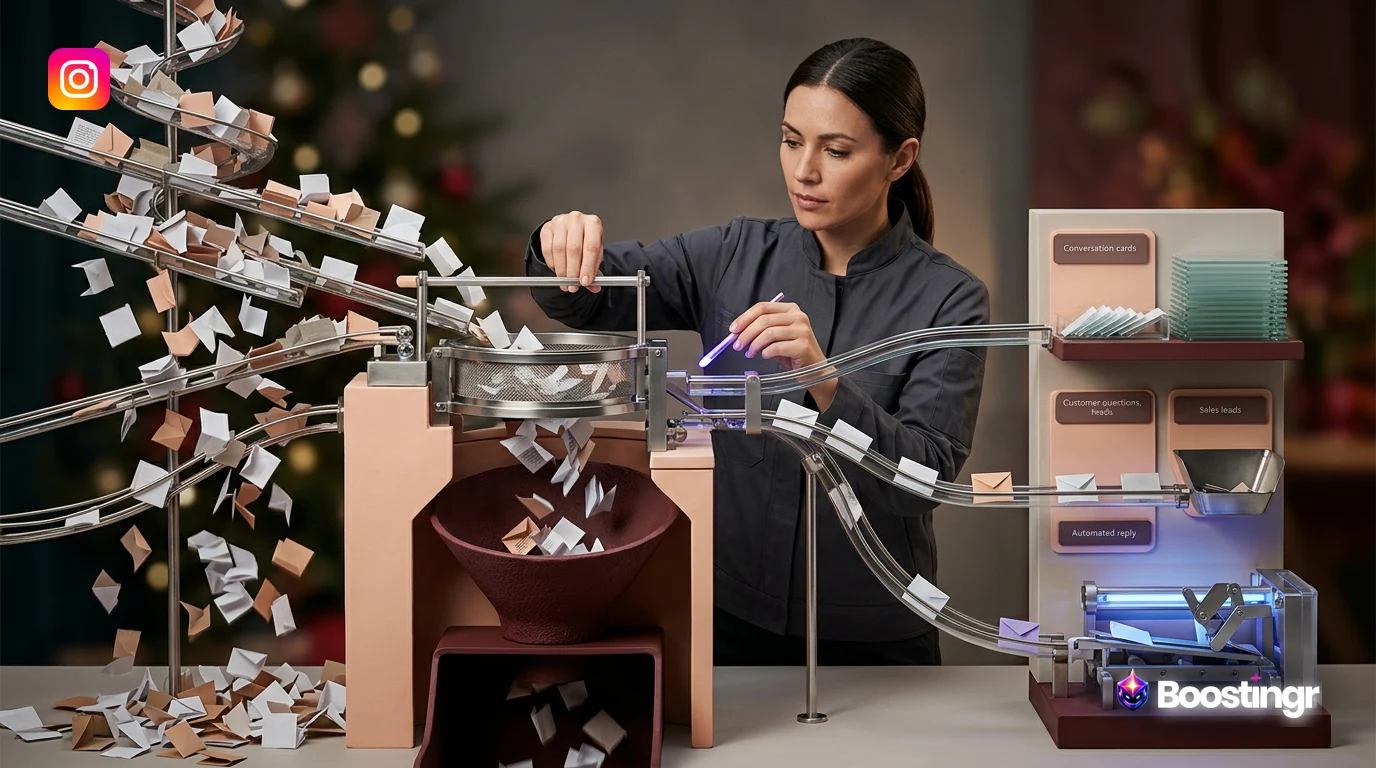
See how intent detection creates a smart moderation pipeline, automatically flagging harmful content for immediate review while routing standard inquiries to the appropriate teams. This prioritizes human attention where it's needed most.
Intent Classification Flow
Unlike sentiment analysis which sorts comments into simple positive or negative buckets, intent detection provides a richer classification. This flow shows a single comment being analyzed for multiple layers like purchase interest and support requests.
Brand Memory Diagram
Each classified comment contributes to a dynamic 'brand memory,' a structured knowledge base of customer feedback, questions, and interests. This collective intelligence helps the brand track trends and understand its community over time.
Key Takeaways
As you rethink your approach to community management, keep these core principles in mind:
* **Intent is Deeper Than Sentiment:** Moving beyond positive/negative to understand *why* a user is commenting is the key to unlocking strategic value. * **Workflows Connect Intent to Outcomes:** A successful strategy isn't just about classification; it's about building automated workflows that connect each intent to a specific business goal, such as generating a lead, solving a support ticket, or gathering product feedback. * **AI is Essential for Scale:** It is impossible to manually detect intent and execute workflows at the speed and scale required by modern social media. An AI platform like Boostingr is the essential operating system for this process. * **The Goal is Understanding People:** The ultimate aim of **intent detection for comments** is to create more human, responsive, and valuable interactions. It allows brands to listen and act at scale, turning their comment sections from a liability to their greatest asset. * **Continuous Learning is Key:** The best systems, powered by concepts like `Brand Memory`, learn from every interaction, becoming smarter and more aligned with your brand over time.
FAQs
**How is intent detection different from sentiment analysis?** Sentiment analysis determines the emotional tone of a comment (positive, negative, neutral). Intent detection goes deeper to understand the user's goal or *why* they are commenting (e.g., to buy something, ask for help, or give feedback). A comment like "Where can I buy this?" has neutral sentiment but high purchase intent.
**What types of intent can be detected in comments?** Common intents include Purchase Intent, Customer Support Inquiries, Pre-Sale Questions, Product Feedback, General Praise, Spam, and Competitive Mentions. Advanced platforms like Boostingr allow you to create custom intent categories specific to your business needs.
**Can AI really understand sarcasm and slang in comments?** Yes, but it requires specialized AI. Generic models may struggle, but a **comment intent AI** that has been fine-tuned on billions of real-world social media comments can accurately interpret sarcasm, slang, emojis, and context-dependent language to correctly classify intent.
**How does intent detection help with lead capture?** By automatically identifying comments that signal purchase intent (e.g., "How much?", "I need this!"), an intent detection system can trigger a lead capture workflow. This often involves an automated DM with a product link, a discount code, or a question to qualify the lead, converting a casual comment into a measurable sales opportunity.
**Is setting up an intent detection system difficult?** No. Modern platforms like Boostingr are designed with a workflow-first, no-code interface. You connect your social accounts, customize pre-built intent categories, and define your action rules using simple `if/then` logic. The process is about strategic configuration, not complex coding.
**What is comment intent AI?** Comment intent AI refers to the specific artificial intelligence models and algorithms designed to analyze the text of a social media comment and determine the underlying purpose or goal of the commenter. It's a specialized application of Natural Language Understanding (NLU) tailored for the unique language of social media.
**How does this integrate with other tools like my CRM or helpdesk?** Leading platforms like Boostingr offer robust integrations. When a support intent is detected, it can automatically create a ticket in Zendesk, Gorgias, or Jira. When a sales lead is identified, it can create a new contact or deal in Salesforce or HubSpot, ensuring the intelligence gathered from comments flows directly into your existing business systems.
**Does intent detection work for ads and organic posts?** Yes, a comprehensive system works across all your content. It unifies comments from organic posts (Reels, feed posts) and paid social ads into a single workflow. This is crucial, as comments on ads often have very high purchase intent and require the fastest possible response.
Evidence, Experience, and References
This guide is based on Boostingr's experience in building and deploying AI-powered comment management systems for hundreds of global brands. Our platform processes millions of comments weekly, providing us with a unique and extensive dataset for understanding the nuances of digital communication. The principles and workflows described here are not theoretical; they are tested and proven strategies that drive measurable results in engagement, lead generation, and brand safety.
Our technology is built upon established principles in computer science and leverages official APIs for data access and action.
* **Facebook Graph API:** https://developers.facebook.com/docs/graph-api * **Google Search Engine Optimization (SEO) Starter Guide:** https://developers.google.com/search/docs/fundamentals/seo-starter-guide
About the Author
The Boostingr team is composed of AI researchers, software engineers, and veteran social media strategists. We are passionate about building technology that helps brands connect with their communities in more meaningful ways. Our focus is on transforming chaotic comment sections into sources of actionable intelligence and growth.
Last Updated
October 2023
Search Intent and Topic Map
This guide targets readers researching intent detection for comments and maps the topic to practical evaluation and implementation decisions. Supporting concepts include comment intent analysis, intent detection social media comments, comment intent ai, ai comment management, brand safe ai replies, comment moderation automation. These terms are used only where they clarify the reader's question, not as repeated ranking phrases.