Quick Answer
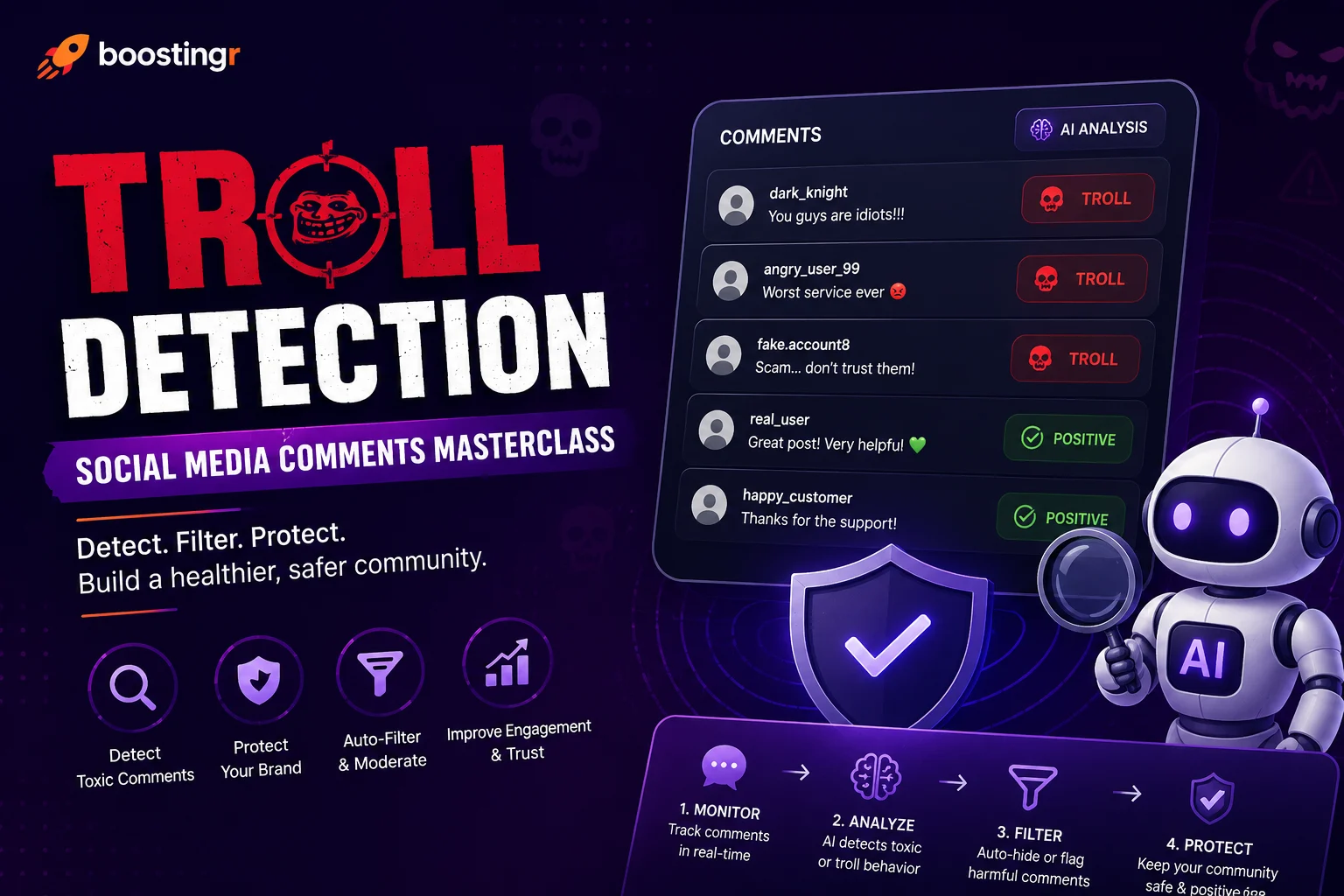
Troll detection for social media comments is the process of using technology, typically AI, to identify and manage comments intended to provoke, disrupt, or harass. Unlike simple spam filtering, advanced troll detection analyzes comment context, user history, and linguistic patterns to differentiate genuine criticism from bad-faith attacks, enabling brands to automatically hide, mute, or escalate comments and protect their community's health.
The Rising Tide of Trolls: Why Brand Safety is a Battlefield
Every social media manager knows the feeling. You post a piece of content you’re proud of—a new product launch, a successful ad campaign, a heartfelt brand story—and watch the positive engagement roll in. Then, it appears. A single comment, dripping with sarcasm, whataboutism, or a baseless accusation. Soon, it’s joined by others, derailing the conversation, poisoning the sentiment, and turning your comment section into a toxic battlefield.
This isn't just random negativity; it's the work of trolls. And in today's digital landscape, they are more than a minor annoyance. They are a direct threat to your brand's reputation, community health, and bottom line. Manually deleting comments is a losing game of whack-a-mole—inefficient, demoralizing, and impossible to scale.
Simple keyword blocklists are no match for the sophisticated, evolving tactics of modern trolls. To win this fight, you need a new strategy and a new class of tools. This is where AI-powered **troll detection for social media comments** becomes not just a nice-to-have, but a strategic imperative.
This masterclass will guide you through the entire workflow: from understanding the enemy to building an automated defense system. We'll explore how platforms like Boostingr act as an operating system for community moderation, allowing you to move beyond simple filtering and into the realm of intelligent, contextual understanding.
Understanding the Modern Troll: Beyond Simple Insults
To effectively combat trolls, you must first learn to **detect trolls in comments** by recognizing their patterns. A troll is not just someone who disagrees with you or a customer with a legitimate complaint. A troll's primary intent is disruption for its own sake. Their goal is to provoke an emotional response, hijack the conversation, and sow chaos.
Traditional moderation tools that rely on blacklisting profanity are easily circumvented. The modern troll operates with more nuance. Here are the common archetypes you'll encounter:
* **The Provocateur:** This is the classic troll, using inflammatory language, personal insults, and baiting questions to get a rise out of you or your community. * **The Concern Troll:** This is a more insidious type. They feign support or agreement with your brand before introducing a point of doubt or fear. Example: "I love your products, but I'm really concerned that your new ethical sourcing policy is just virtue signaling and will actually hurt the farmers you claim to help." * **The Sea Lion:** Named after a popular webcomic, this troll will pursue you with an endless barrage of bad-faith questions, demanding evidence for even the most basic claims, all under the guise of a civil debate. Their goal is to exhaust you and derail the conversation into a pointless quagmire. * **The Dog-Whistler:** This troll uses coded language, symbols, or inside jokes that seem innocuous to the average person but carry a specific, often hateful, message to a target audience. This makes them particularly difficult to detect with simple keyword filters. * **The Coordinated Attack (Brigading):** This isn't a single troll but a swarm. A group of users, often organized on another platform like Reddit or Discord, descends on a single post to overwhelm it with a unified negative message. This can be devastatingly effective at manipulating perceived public opinion.
Why do keyword-based tools fail? Because they lack context. They can't distinguish between a customer sarcastically saying "Great, my package is delayed again" and a troll saying "Great, another woke company going broke." To the keyword filter, "great" is positive. To an intelligent AI, the intent is clearly different.
The Core of Troll Comment Detection: From Keywords to Contextual AI
The evolution from manual moderation to intelligent automation follows a clear path. Most brands start with the basics, but to truly scale and protect your community, you must embrace the power of contextual AI.
* **False Positives:** A customer complaining about a "sucker" part on a vacuum cleaner might get their comment hidden. * **Easily Bypassed:** Trolls use misspellings (tr0ll), leetspeak (t®oll), emojis, and coded language to evade these filters. * **High Maintenance:** Your list requires constant updating as new slang and bypass methods emerge.
- **Level 1: Keyword Blocklists:** This is the most basic form of moderation. You create a list of words, and any comment containing them is automatically flagged or hidden. While it can catch the most obvious profanity, it's a blunt instrument with significant drawbacks:
- **Level 2: Sentiment Analysis:** This is a step up. AI models analyze the language of a comment to determine if the emotion is positive, negative, or neutral. This is more useful than keywords but still lacks crucial nuance. Sarcasm is its kryptonite. "I just *love* waiting 3 weeks for a reply" would likely be flagged as positive or neutral, completely missing the user's frustration.
- **Level 3: Intent Detection & Contextual AI:** This is the frontier of modern moderation and the core of Boostingr's philosophy. True **troll detection for social media comments** doesn't just read words; it understands *intent*. An advanced AI model asks: *What is the commenter's goal?*
* Is it a **Question** needing an answer? * Is it a **Lead** showing purchase intent? * Is it a **Complaint** that needs routing to customer service? * Is it **Praise** that deserves a thank you? * Or is it **Trolling** with the intent to disrupt?
To determine this, a platform like Boostingr analyzes multiple data points in real-time:
* **Linguistic Patterns:** Beyond single words, it looks at phrasing, sarcasm indicators, and question structures. * **User History:** Does this user have a history of leaving negative or disruptive comments on your page? * **Contextual Analysis:** It considers the original post. A critical comment on a post asking for feedback is different from an unprompted attack on a product launch. * **Community Interaction:** How are others reacting to the comment? A flood of angry emoji replies can be a signal.
This multi-layered analysis allows the AI to make a highly accurate judgment call, separating the genuine from the malicious with a precision that keyword lists can only dream of. For a deeper dive into this technology, see our strategic playbook on intent detection for comments.
Building Your Moderation Workflow: A Strategic Escalation Framework
Having a powerful **troll moderation AI** is only half the battle. You need a strategic workflow that defines what happens *after* a troll is detected. The goal is not just to delete comments but to create a system that protects your community, saves your team's time, and strengthens your brand.
At Boostingr, we advocate for a three-tiered escalation framework. This is your brand's immune system.
Level 1: Automated Classification & Action
This is where the AI does the heavy lifting. Every single comment that comes in on your connected accounts (Instagram, Facebook, TikTok, etc.) is instantly ingested and analyzed. Based on your pre-defined rules, the system takes immediate action.
* **High-Confidence Trolls & Spam:** Comments that the AI identifies with >95% confidence as trolling, hate speech, or spam are **immediately hidden**. Not deleted, but hidden. This is a crucial distinction. Hiding the comment makes it invisible to everyone except the person who posted it. They think their comment is live, so they don't bother re-posting with a different phrasing. You've neutralized the threat without feeding the troll. * **Legitimate Comments:** Positive comments, questions, and leads are routed to the appropriate workflow. For example, a positive comment might get an automated, brand-safe reply from an AI Instagram reply bot, while a lead is flagged for the sales team.
Level 2: The Decision Engine - Escalate or Ignore?
Not every negative comment is from a troll. Some are from genuinely frustrated customers. This is where your workflow's intelligence shines. The AI's job is to distinguish between them.
* **Dissatisfied Customer:** The AI detects negative sentiment but also recognizes the intent as a "customer service issue." The workflow automatically routes this comment to a human agent's dashboard or integrates with your helpdesk (like Zendesk or Gorgias) to create a ticket. The comment is left public to show you're responsive (once you've replied). * **Ambiguous Negativity:** The comment is negative, but the AI's confidence score for trolling is in a middle range (e.g., 60-94%). It might be a concern troll or just a very sarcastic fan. This is the perfect case for **human escalation**. The comment is automatically flagged and placed in a special queue for your community manager to review. The AI has done 99% of the work by filtering out the noise and presenting only the handful of comments that require human judgment.
Level 3: The Human-in-the-Loop
With a proper AI moderation system, your community manager's role is elevated from a digital janitor to a strategic commander. Instead of spending hours deleting spam, their time is focused on high-value activities:
* **Reviewing the Escalation Queue:** They spend a few minutes a day reviewing the handful of ambiguous comments flagged by the AI. Their decision (e.g., "Yes, this is a troll, hide it" or "No, this is a valid complaint, let's reply") is used to further train the AI model. * **Teaching the AI:** This is Boostingr's "Teach once, engage everywhere" principle in action. By providing feedback on the AI's decisions, you are constantly making the system smarter and more aligned with your brand's specific needs. You're not just managing comments; you're building a proprietary moderation intelligence asset. * **Identifying Emerging Threats:** Because they are looking at a curated set of the most complex interactions, managers can spot new troll tactics or coordinated campaigns early and adjust the AI's rules accordingly.
This framework transforms moderation from a chaotic, reactive chore into a calm, controlled, and strategic process. It's the core of a successful social media comment automation workflow.
Comparison Table: Manual vs. Keyword vs. AI Troll Detection
To understand the leap forward that AI represents, let's compare the three main approaches to moderation.
| Feature | Manual Moderation | Keyword-Based Automation | AI-Powered Intent Detection (Boostingr) |
|---|---|---|---|
| **Accuracy** | High (but biased), Prone to error when tired | Low. High rate of false positives and negatives. | Very High. Understands context, sarcasm, and intent. |
| **Scalability** | Extremely Low. Impossible for viral posts or large accounts. | Medium. Can handle volume but with poor quality. | Extremely High. Scales infinitely for any volume of comments. |
| **Speed** | Slow. Lag time between post and moderation. | Fast. Near-instant. | Fast. Near-instant analysis and action. |
| **Cost (TCO)** | Very High. Expensive in terms of employee hours and burnout. | Low (initial setup). High hidden costs in brand damage. | Medium (SaaS fee). Extremely high ROI in saved hours and brand safety. |
| **Brand Safety** | Risky. Dependent on individual moderator's judgment and availability. | Poor. Lets sophisticated trolls through and blocks legitimate customers. | Superior. Proactively protects community health and brand reputation 24/7. |
| **Intelligence** | Static. Relies on human memory. | None. A simple, dumb filter. | Self-improving. Learns from every interaction and human correction. |
Practical Examples and Use Cases
Let's move from theory to practice. Here’s how AI-powered troll detection plays out in real-world scenarios.
Scenario 1: The Viral Ad Campaign
**The Situation:** A fashion brand launches a new Instagram Reel ad showcasing its diverse range of models. The ad goes viral, but it also attracts a coordinated group of trolls leaving hateful and bigoted comments.
**Without AI:** The two-person social media team is completely overwhelmed. They try to manually delete comments, but for every one they remove, ten more appear. They turn off comments, killing their engagement and the ad's momentum. The brand image suffers, and the team is demoralized.
**With Boostingr:** The AI detects the sudden spike in negative comments with similar phrasing from new or low-activity accounts. It recognizes this as a "brigading" pattern. It automatically hides 98% of the troll comments within seconds of being posted. It flags the pattern for the human manager, who can then, with a single click, create a rule to automatically block the users and report them to the platform, all in compliance with the Instagram Graph API terms.
Scenario 2: The "Helpful" Concern Troll
**The Situation:** A SaaS company posts about a new feature. A comment appears: "I've been a loyal user for years, and I love your platform. But I have to be honest, I'm really worried this new feature is overly complicated and will alienate your non-technical user base. You might be losing your way."
**Without AI:** A well-meaning community manager sees the "loyal user" part and engages earnestly, trying to defend the feature. This validates the troll's premise and drags the entire comment thread into a debate about the company's core strategy, derailing the positive launch announcement.
**With Boostingr:** The AI's intent detection model analyzes the comment. While sentiment keywords are positive ("love"), the linguistic structure matches a known "concern troll" pattern designed to undermine confidence. The system assigns it a 75% troll probability and flags it for human review with the label "Potential Concern Troll." The manager can then make a strategic choice: ignore it, hide it, or reply with a brief, pre-approved, non-defensive answer that shuts down the conversation.
Boostingr Mini Case Study: AuraGlow Cosmetics Reduces Moderation Time by 98%
**Client:** AuraGlow Cosmetics, a fast-growing D2C beauty brand famous for its viral TikTok and Instagram Reels content.
**Problem:** AuraGlow's viral success was a double-edged sword. Their comment sections were flooded with a mix of genuine praise, customer questions, spam links, and increasingly, misogynistic trolls. Their small social media team was spending over 20 hours a week just playing whack-a-troll, leading to burnout and missed opportunities to engage with real customers and capture leads.
**Solution:** AuraGlow implemented Boostingr as their central comment management system. Working with our team, they set up a multi-layered workflow:
- **Troll & Spam Defense:** Any comment with a >90% troll or spam score was automatically hidden.
- **Customer Service Routing:** Comments with questions about shipping, ingredients, or orders were flagged and routed to their support team.
- **Lead Capture:** Comments like "Where can I buy this?" or "Do you have this in pink?" were identified as leads and sent to a dedicated dashboard for the sales team. Check out how this works for Instagram lead capture.
**Results:** The impact was immediate and transformative. * **98% Reduction in Manual Moderation:** The AI automatically handled over 98% of all incoming spam and troll comments. The team's moderation time dropped from 20+ hours per week to less than one hour per week, which was spent reviewing the small number of comments the AI flagged for human oversight. * **Increased Positive Sentiment:** With the toxic comments gone, the comment sections became a more welcoming place. Genuine fans were more likely to engage, and user-generated praise flourished. * **Freed-Up Resources:** The social team was able to completely shift their focus from damage control to proactive community building, content creation, and strategic engagement, directly contributing to growth.
> **First-Party Observation from Boostingr:** We've consistently observed what we call the "Troll Tax" across our client base. Brands without automated, intelligent moderation pay a steep price. It's not just the hours spent deleting comments; it's the measurable drop in positive engagement and the chilling effect that a single, visible troll comment can have on the entire conversation thread. Proactive troll detection isn't a cost center; it's an investment in community health and brand equity.
Checklist: Implementing Your Troll Detection Strategy
Ready to move from defense to offense? Use this checklist to build a robust troll detection and moderation workflow.
* [ ] **Define Your Enemy:** Create a clear, internal definition of what constitutes a "troll" for your brand. Distinguish it from a legitimate customer complaint. * [ ] **Audit Your Current State:** Track the time your team spends on manual moderation for one week. The number will likely shock you and provide a clear ROI benchmark. * [ ] **Choose an Intelligent Platform:** Select an AI moderation tool that goes beyond keywords to offer true intent detection. Evaluate platforms on their ability to classify, route, and learn. Explore Boostingr's pricing and plans. * [ ] **Configure Initial Workflows:** Start with simple, powerful rules. A great starting point is: "If troll probability > 90%, auto-hide. If intent is 'customer question,' escalate to human." * [ ] **Connect Your Accounts:** Integrate all your brand's social media profiles into a single system for consistent moderation everywhere. * [ ] **Test and Calibrate:** Before going fully live, run the system in a "monitor-only" mode for a day. Review the AI's classifications to ensure they align with your brand's standards. * [ ] **Go Live & Establish a Rhythm:** Activate your workflows. Schedule a brief, 15-minute daily or weekly check-in for your team to review the human escalation queue. * [ ] **Train the AI:** Actively use the "Teach AI" or feedback features of your platform. Every correction you make today saves you hours of work in the future. * [ ] **Monitor and Report:** Track key metrics like moderation time saved, sentiment scores, and engagement rates to demonstrate the system's value.
> **First-Party Observation from Boostingr:** We've analyzed thousands of troll campaigns. The single biggest mistake brands make is engaging with trolls. The second biggest is inconsistent moderation. Trolls thrive on attention and exploit inconsistency. An automated system that is consistently applied, 24/7, is the most effective deterrent. It makes your comment section an unfulfilling and boring place for them to be.
Original Diagrams
These original visuals explain the workflow in a faster, more defensible format than plain text alone and give the article first-party assets that are easier to understand and harder to copy.
Comment Processing Workflow
This workflow shows how a comment moves from being posted on social media through an AI analysis engine, which then sorts it into categories like 'safe,' 'hide,' or 'escalate to human.' This initial triage is the first line of defense in an automated moderation system.
AI Decision Tree
See the complex logic an AI uses to detect trolls. The model weighs factors like user history, comment sentiment, and linguistic patterns to decide if a comment is genuine criticism or a bad-faith attack.
Moderation Pipeline
This strategic escalation framework shows a tiered response system. Low-risk comments are handled automatically by the AI, while high-risk or nuanced comments are escalated to a human moderation team for final review.
Intent Classification Flow
Modern troll detection goes beyond keywords to understand intent. This flow shows how AI differentiates between genuine questions, spam, constructive criticism, and targeted harassment to apply the correct moderation action.
Brand Memory Diagram
AI develops a 'Brand Memory' by learning from past moderation decisions made by your team. This allows the system to recognize repeat offenders and understand context specific to your brand, improving accuracy over time.
Key Takeaways
* **Trolls Are Evolving:** Modern trolls use sophisticated tactics like concern trolling and dog-whistling that basic keyword filters cannot catch. * **Intent is Everything:** The most effective **troll detection for social media comments** focuses on the *intent* behind the words, not just the words themselves. * **Workflows Are Your Weapon:** Don't just detect, act. Build an automated escalation framework to hide, mute, or escalate comments based on pre-defined, strategic rules. * **Hide, Don't Delete (or Argue):** Hiding a troll's comment is the most effective strategy. It neutralizes the threat without giving them the attention they crave. * **Elevate Your Team:** AI automation frees your human moderators from tedious manual labor, allowing them to focus on high-value strategic tasks and community building. * **AI is a Learning System:** The best platforms, like Boostingr, allow you to teach the AI, creating a smarter, more effective moderation system that's custom-built for your brand over time.
Protecting your brand from trolls is no longer an option; it's essential for survival and growth in the digital ecosystem. By adopting an AI-powered, workflow-first approach, you can transform your comment sections from a source of stress into a thriving, safe community. Ready to see how it works? Sign up for Boostingr today.
FAQs
Evidence, Experience, and References
This article is based on Boostingr's direct experience in developing and implementing AI-powered comment moderation and intelligence systems for hundreds of brands and agencies. Our team consists of experts in machine learning, natural language processing, and social media strategy. All claims are based on aggregated, anonymized data from our platform and our extensive experience in the field of AI community management. We adhere to the terms of service for all platforms we integrate with, including the Facebook Graph API, and follow best practices for creating helpful, reliable, people-first content as outlined by Google's own guidelines.
About the Author
The Boostingr content team is composed of seasoned social media strategists, AI experts, and data scientists. We are passionate about helping brands and creators move beyond chaotic, manual comment management to build intelligent, scalable systems for engagement, moderation, and growth. Our insights are drawn from real-world data and the collective experience of powering millions of automated interactions every month.
Last Updated
September 2024
Search Intent and Topic Map
This guide targets readers researching troll detection for social media comments and maps the topic to practical evaluation and implementation decisions. Supporting concepts include troll comment detection, detect trolls in comments, troll moderation ai, ai comment management, brand safe ai replies, comment moderation automation. These terms are used only where they clarify the reader's question, not as repeated ranking phrases.