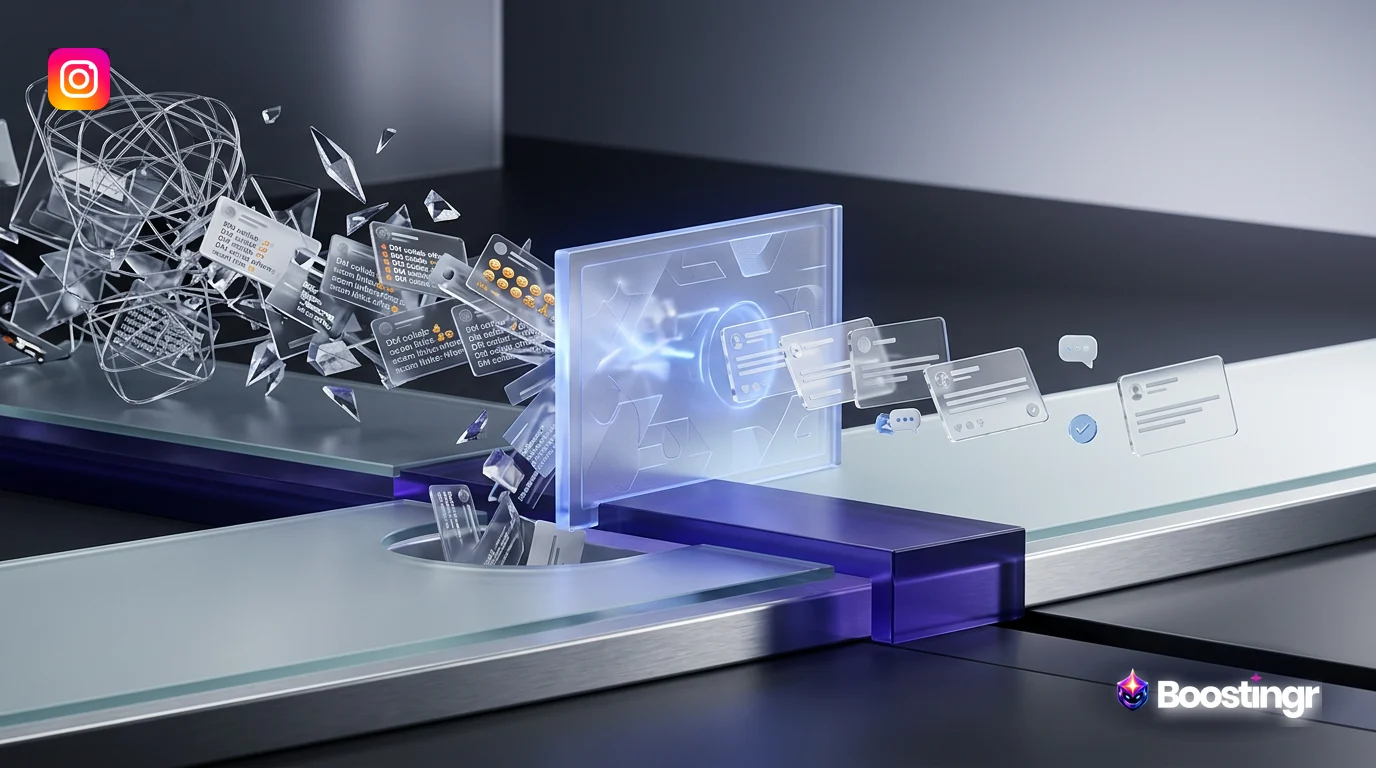
Quick Answer
Automation is the use of technology to perform tasks that once required human input, aiming to boost efficiency and accuracy. For marketers, this has evolved from basic workflow automation (like scheduling posts) to intelligent, AI-powered systems that can understand, classify, and respond to complex user-generated content like social media comments, turning chaotic engagement into a strategic asset.
What is Automation? A Foundational Overview
The term **automation** often conjures images of robotic arms on an assembly line or complex software running in a data center. While not incorrect, this view is incomplete. At its core, automation is the principle of using technology to execute recurring tasks or processes in a business where manual effort can be replaced. The primary goals are to increase efficiency, reduce errors, minimize costs, and, most importantly, free up human workers to focus on more strategic, creative, and high-value activities.
Major technology authorities define it similarly. IBM describes automation as a broad term for technology applications where human input is minimized. [1] Salesforce emphasizes its role in streamlining repetitive tasks to enhance business efficiency and improve the customer experience. [8] This fundamental concept has been applied across nearly every industry, but its application has become far more nuanced and powerful with the advent of artificial intelligence.
Historically, the conversation was dominated by industrial automation. Today, the focus has shifted dramatically to digital processes. We see it in IT, finance, and human resources. However, one of the most dynamic and challenging frontiers for automation is in customer-facing roles—specifically, for marketers, community managers, and social media teams who are on the front lines of digital communication.
This guide will demystify automation for the modern marketer. We'll move beyond the generic definitions and IT-centric examples to explore what automation means in the context of social media, user-generated content, and intelligent community management. We will explore how the technology has evolved from rigid, rule-based systems to intelligent, AI-driven platforms that can navigate the unpredictable world of online conversation.
The Core Types of Automation: From Factory Floors to Digital Frontlines
To truly grasp the opportunity for marketers, it's essential to understand the different categories of automation that dominate the business landscape. While they may seem distinct, they often work together in a layered strategy, especially with the rise of AI. Understanding these types helps clarify where traditional automation ends and where intelligent communication automation begins.
Industrial Automation
This is the classic form of automation, focused on physical processes in manufacturing and production. It involves the use of robots, control systems, and machinery to perform tasks like assembly, welding, and packaging. While it's the oldest and most recognized type, its principles of efficiency and error reduction are universal.
Business Process Automation (BPA)
Business Process Automation (BPA) focuses on orchestrating and streamlining entire business workflows, which often involve multiple steps, systems, and departments. Unlike simpler task automation, BPA is about managing the end-to-end process. According to IBM, it's a key strategy for digital transformation, managed through dedicated software. [2]
* **Traditional Example:** Automating the employee onboarding process. When a new hire is marked as "hired" in the HR system, BPA can trigger a series of actions: create their user accounts in IT systems, enroll them in benefits, and schedule orientation meetings. * **Marketing Example:** A multi-channel lead nurturing sequence. When a user downloads an ebook, BPA can trigger an email sequence, add them to a retargeting audience on social media, and schedule a follow-up task for a sales representative in the CRM if the user visits the pricing page.
Robotic Process Automation (RPA)
RPA uses software "bots" to mimic human actions and interact with digital systems through the user interface. Think of an RPA bot as a digital worker that can log into applications, copy and paste data, fill out forms, and move files. It's excellent for automating legacy systems that don't have modern APIs.
* **Traditional Example:** A bot that scrapes data from an invoice PDF, logs into an accounting application, and enters the data into the correct fields. * **Marketing Limitation:** An RPA bot could be programmed to log into a social media account and delete comments containing a specific keyword. However, it cannot understand context. It would delete "this product is the bomb!" just as it would a genuine bomb threat, making it too rigid and risky for nuanced communication tasks.
IT and Cloud Automation
Primarily focused on the management of IT infrastructure, IT automation involves using software to provision servers, deploy applications, configure networks, and manage cloud resources. As Red Hat notes, this type of automation is foundational for modern, scalable IT operations, especially in complex cloud environments. [9] For marketers, this is the behind-the-scenes automation that ensures the apps and platforms they rely on are running smoothly, but it doesn't directly touch their daily engagement workflows.
The Shift to Intelligent Automation: Where AI Changes the Game
The types of automation listed above are largely rule-based. They follow a pre-defined script: "If X happens, do Y." This is incredibly effective for predictable, structured tasks. But what happens when the task is unpredictable, dynamic, and requires understanding, context, and judgment? This is the challenge of managing social media comments, and it's where **Intelligent Automation (IA)** comes in.
Intelligent Automation, sometimes called hyperautomation, combines traditional automation techniques like BPA and RPA with artificial intelligence (AI) technologies, particularly machine learning (ML) and natural language processing (NLP). This infusion of AI creates a system that doesn't just follow rules—it makes decisions.
**First-party observation:** At Boostingr, we've observed that many brands initially think of 'automation' as simple keyword-based auto-replies. They quickly discover these rigid rules fail in the dynamic, nuanced world of social media comments, often causing more harm than good by appearing robotic or tone-deaf. The shift to intelligent automation is not just about efficiency; it's about maintaining brand integrity in public conversations.
Here’s the critical difference: * **Basic Automation:** Follows explicit, static rules. For example, a basic workflow might be set to automatically reply "Thanks for your comment!" to any comment on an Instagram post. It treats every comment identically. * **Intelligent Automation:** Uses AI to analyze data and make a judgment call. An intelligent system reads the same Instagram comment, uses NLP to understand its sentiment and intent (is it a question, a complaint, a sales lead, or spam?), and then decides on the *best* action. It might answer a common question, hide a spam comment, or flag a serious complaint for immediate human attention.
This ability to understand and decide is what makes **AI in automation** a revolutionary force for marketers.
Comparison Table: Basic Workflow Automation vs. Intelligent AI Automation
To make the distinction clearer, let's compare basic workflow automation tools with an intelligent AI automation platform like Boostingr in the context of social media management.
| Feature | Basic Workflow Automation (e.g., Zapier, IFTTT, Basic Schedulers) | Intelligent AI Automation (e.g., Boostingr) |
|---|---|---|
| **Task Type** | Linear, rule-based tasks based on simple triggers (e.g., "If new comment, post a reply"). | Dynamic, context-aware tasks based on analysis (e.g., "If new comment is a sales lead, reply with a link and notify the sales team"). |
| **Adaptability** | Static. Rules must be manually updated. Cannot adapt to new slang, sarcasm, or evolving spam techniques. | Adaptive. Learns from new data and human feedback to improve its understanding of intent, sentiment, and context over time. |
| **Data Handling** | Treats data as a simple trigger. A comment is just a piece of text. | Analyzes data for deeper meaning. A comment is analyzed for sentiment, intent, toxicity, and potential as a sales lead. |
| **Decision Making** | Follows a pre-defined, binary path ("If this, then that"). | Executes a complex decision tree based on multiple factors. It can prioritize, classify, and route tasks intelligently. |
| **Social Media Example** | Automatically posting a generic "Thanks!" reply to every comment on a post. | Analyzing each comment to hide spam, auto-reply to FAQs with a humanized answer, flag negative sentiment for review, and identify purchase intent. |
Automation for Customer-Facing Roles: A New Frontier for Marketers
For too long, the benefits of automation have been framed around back-office functions, IT, and manufacturing. This overlooks the immense pressure and repetitive strain on customer-facing teams. Marketers, community managers, and social media managers are drowning in a sea of digital noise. The sheer volume of comments, messages, and mentions across platforms like Instagram, Facebook, and YouTube has made manual management an impossible task.
This is not just about being busy. It's about significant business risks and missed opportunities: * **Brand Reputation Damage:** Unanswered negative comments or an influx of spam and trolls can quickly erode brand trust. * **Missed Revenue:** Sales leads asking buying questions ("Where can I get this?") are lost in the flood of other comments. * **Poor Customer Experience:** Legitimate customer support issues go unnoticed, leading to public frustration. * **Lack of Insight:** Valuable feedback, ideas, and market intelligence are buried in thousands of unanalyzed comments.
This is the problem that intelligent communication automation solves. It's not about replacing the community manager; it's about equipping them with a system that handles the noise so they can focus on building genuine relationships. Platforms like Boostingr act as an operating system for community engagement, transforming chaotic comment sections from a moderation chore into a source of **community intelligence**.
Practical Examples and Use Cases: Automation in Social Media Management
Let's move from theory to practice. Here’s how intelligent **automation** transforms the daily workflows of a social media team.
Use Case 1: AI Comment Moderation at Scale
* **The Problem:** A brand posts a video that goes viral. It attracts thousands of comments, but a significant portion are spam links, hateful speech, or comments from trolls trying to hijack the conversation. A human moderator can't keep up, and the comment section becomes toxic, harming the brand and alienating genuine fans. * **Basic Automation's Failure:** A simple keyword blocklist is easily circumvented. Spammers use special characters (e.g., "fr33 m0ney"), and trolls use nuanced language that doesn't contain obvious profanity. * **Intelligent Automation's Solution:** An AI-powered system like Boostingr analyzes every comment in real-time. It uses NLP models trained on billions of data points to understand the *intent* behind the words. It automatically hides spam, troll comments, and hate speech with over 99% accuracy, while flagging borderline comments for a human to review. This ensures a safe and positive community space 24/7. Learn more in our strategic guide to AI comment moderation.
Use Case 2: Humanized, Intelligent AI Replies
* **The Problem:** A brand wants to boost engagement by replying to comments, but with thousands coming in, it's impossible. They need a way to acknowledge followers without sounding like a broken record. * **Basic Automation's Failure:** A one-size-fits-all auto-reply like "Thanks for commenting!" is quickly identified as robotic and can even cheapen the brand's image. * **Intelligent Automation's Solution:** Boostingr's AI analyzes the comment's intent. For a simple compliment ("Love this!"), it can generate a varied, positive acknowledgment. For a frequently asked question ("Is this available in blue?"), it can provide a direct, accurate answer. It does this by leveraging **Brand Memory**—a knowledge base you train with your brand's voice, product details, and FAQs. The AI uses this memory to craft replies that are not only correct but also perfectly on-brand. Explore how an AI Instagram reply bot can achieve this.
Use Case 3: Automated Lead Capture from Comments
* **The Problem:** An e-commerce brand posts a new product. The comments are flooded with a mix of praise, questions, and—most importantly—buying signals like "How much is this?" and "I need this! Where can I buy it?" Manually sifting through comments to find these leads is slow, and by the time a social media manager responds, the customer's interest may have faded. * **Basic Automation's Failure:** A keyword alert for "how much" is unreliable. It misses intent-driven phrases like "take my money" and can be triggered by irrelevant conversations. * **Intelligent Automation's Solution:** The AI is specifically trained to recognize purchase intent in dozens of forms. When it detects a lead, it can trigger a workflow: automatically reply to the comment with a direct link to the product page, and simultaneously send a notification to the sales team with the user's details. This closes the loop between social engagement and sales in real-time. See how to master Instagram lead capture with AI.
Mini Case Study: Boostingr in Action
A leading e-commerce fashion brand using Boostingr automated the classification of over 50,000 monthly comments across their Instagram and Facebook pages. This allowed their two-person social media team to shift from spending 20 hours per week on manual moderation to just 3 hours on strategic review and engagement. More importantly, by using AI to identify and prioritize comments with purchase intent, they directly attributed a 15% increase in social-driven traffic to their product pages within the first three months.
How Intelligent Automation for Comments Works: The Boostingr Workflow
Understanding the power of intelligent automation is one thing; seeing how it works is another. An advanced platform like Boostingr isn't a simple "on/off" switch. It's a sophisticated workflow engine designed for the complexities of human conversation.
**Second-party observation:** We've seen that the most successful brands on social media aren't the ones who post the most, but the ones who engage the most effectively. Intelligent automation is the only scalable way to manage this engagement, turning comment sections from a liability into a source of community intelligence and revenue.
The process can be broken down into five key stages:
* **Sentiment Analysis:** Is the comment positive, negative, or neutral? * **Intent Detection:** What is the user's goal? Is it a sales lead, a customer support question, spam, a troll, or general feedback? * **Spam & Troll Detection:** Does the comment exhibit patterns of spam, hate speech, or trolling?
* Spam comments are automatically hidden. * Comments with high-negative sentiment are flagged and routed to a crisis management queue for immediate human review. * Common questions are answered automatically using the Brand Memory. * Sales leads are replied to and sent to the sales team's inbox.
- **Connect & Ingest:** You securely connect your social media accounts (e.g., via the official Instagram Graph API). The system immediately begins ingesting all incoming comments in real-time.
- **AI Analysis & Classification:** This is the core of the intelligence. For every single comment, the AI performs multiple analyses simultaneously:
- **Intelligent Routing & Action:** Based on the AI's classification, the system executes your pre-defined (but highly flexible) workflows. This is where you set the rules of engagement.
- **Human-in-the-Loop & Learning:** The system is not a black box. Your team has a centralized dashboard to review the AI's actions. If the AI hides a comment that was actually sarcastic praise, a human can unhide it with one click. This action provides feedback to the AI model, which learns and refines its understanding. This is the essence of Boostingr's "Teach once, engage everywhere" philosophy.
- **Reporting & Intelligence:** All this data is aggregated into actionable insights. You can see trends in sentiment, the most common questions people ask, the percentage of spam you're blocking, and the number of leads you've captured. This transforms your comment section from a chore into a powerful data source for your entire business.
This entire process represents a shift from basic social media tools to a true AI community management system.
Checklist: Is Your Brand Ready for Intelligent Comment Automation?
Wondering if this level of automation is right for you? Go through this checklist. If you find yourself nodding along, it's time to explore a smarter solution.
- [ ] **Volume:** Do you receive more than 100 comments per day across your social channels?
- [ ] **Manual Labor:** Does your team spend more than 5 hours per week manually deleting spam, hiding negative comments, or replying to basic questions?
- [ ] **Missed Opportunities:** Do you worry that you're missing potential sales leads or urgent customer service issues buried in your comments?
- [ ] **Engagement Scalability:** Is your engagement rate suffering because you simply don't have the bandwidth to reply to a meaningful portion of your audience?
- [ ] **Brand Safety:** Have you ever had a post's comment section derailed by trolls, spam, or negativity, forcing you to turn comments off?
- [ ] **Data Void:** Do you struggle to extract meaningful, quantitative insights from your comment data beyond a few anecdotes?
- [ ] **Team Burnout:** Is your social media or community team feeling overwhelmed and bogged down by repetitive moderation tasks?
If you checked three or more of these boxes, your brand has likely outgrown manual management and basic tools. It's time to leverage intelligent **automation** to protect your brand and unlock new growth. You can start by exploring a solution like Boostingr.
Key Takeaways
- **Automation is More Than Robots:** The definition of automation has expanded far beyond the factory floor. It is now a critical strategic tool for any business function dealing with repetitive digital tasks, especially marketing.
- **Intelligence is the Differentiator:** Basic, rule-based automation is useful for simple workflows but fails in dynamic environments. Intelligent Automation, powered by AI, can understand context, sentiment, and intent, making it essential for managing human communication.
- **UGC is the Prime Use Case:** The massive volume and unpredictable nature of user-generated content (comments, reviews) make it an ideal candidate for intelligent automation. Manual management is no longer scalable or effective.
- **From Chore to Strategy:** AI-powered comment automation transforms community management from a defensive, reactive chore into a proactive, strategic function that drives sales, improves customer satisfaction, and provides valuable market intelligence.
- **The Future is a Partnership:** The goal of this technology is not to replace marketers but to augment them. By automating the repetitive and scalable tasks, AI frees up human experts to focus on strategy, creativity, and building high-value relationships.
Original Diagrams
These original visuals explain the workflow in a faster, more defensible format than plain text alone and give the article first-party assets that are easier to understand and harder to copy.
Comment Processing Workflow
This workflow illustrates how AI automation ingests a social media comment, analyzes it, and routes it for an appropriate action, such as a direct reply or moderation. It's the foundational process for turning raw engagement into structured, actionable data.
AI Decision Tree
An AI uses a decision tree to analyze a comment's characteristics, such as sentiment and intent, to determine the correct response path. This branching logic allows automation to handle complex scenarios with nuance, far beyond simple keyword matching.
Moderation Pipeline
This pipeline demonstrates how intelligent automation acts as a first line of defense, automatically identifying and filtering out spam or inappropriate content. This ensures a safe community environment without constant manual oversight.
Intent Classification Flow
Automation goes beyond sentiment to classify the underlying intent of a comment, distinguishing between a potential sales lead and a customer support query. This flow shows how comments are sorted into strategic buckets, allowing marketers to prioritize effectively.
Brand Memory Diagram
This diagram conceptualizes how an AI system develops a 'brand memory,' learning from a central knowledge base of brand guidelines and product information. This allows the automation to generate responses that are accurate and aligned with the brand's unique voice.
FAQs
**What is the main difference between automation and intelligent automation?** Automation follows pre-programmed, static rules to perform repetitive tasks (e.g., "If a comment contains 'free,' hide it"). Intelligent automation uses artificial intelligence (AI) to analyze context, make decisions, and learn over time. It can understand that "I'm free this weekend" is different from a "free iPhone" spam link, allowing it to handle dynamic tasks like comment moderation with much greater accuracy.
**Can automation replace my social media manager?** No, intelligent automation is designed to augment, not replace, a social media manager. It handles the overwhelming, repetitive tasks like filtering spam and answering common questions at scale. This frees up the human manager to focus on higher-value activities like creating strategy, building relationships with key influencers, analyzing trends, and handling sensitive customer interactions that require human empathy.
**Is comment automation safe for my brand's reputation?** Basic, rule-based comment automation can be risky, as it can misinterpret context and reply inappropriately, making the brand look robotic or tone-deaf. However, intelligent AI automation like Boostingr is designed for brand safety. It uses sophisticated sentiment and intent analysis to act correctly, and includes a "human-in-the-loop" system, allowing your team to review actions and train the AI, ensuring it always aligns with your brand's voice and policies.
**What types of automation are most useful for marketing?** For marketers, the most useful types of automation are Business Process Automation (BPA) for creating multi-step campaign workflows (like email nurturing) and, increasingly, Intelligent Automation for managing customer interactions. Specifically, AI-powered automation for social media comment moderation, lead detection, and sentiment analysis provides the most significant ROI by saving time, protecting the brand, and uncovering revenue opportunities.
**How does AI automation handle spam and trolls in comments?** AI automation uses Natural Language Processing (NLP) and machine learning models trained on billions of examples of spam, hate speech, and trolling behavior. It goes beyond simple keywords to recognize patterns, malicious links, toxic language, and bot-like activity. This allows it to identify and hide harmful content in real-time with a high degree of accuracy, keeping the community safe.
**What is an example of business process automation (BPA) for a marketing team?** An excellent example of BPA for marketing is an automated webinar workflow. When a user registers for a webinar (trigger), the BPA system can automatically send a confirmation email, add them to the CRM, schedule a series of reminder emails, and after the webinar, send a follow-up email with a recording to attendees and a different "sorry we missed you" email to no-shows.
**How is RPA different from AI-powered comment management?** Robotic Process Automation (RPA) involves bots that mimic human clicks and keystrokes on a user interface; it doesn't understand the content it's interacting with. An RPA bot could be told to delete any comment with the word "sucks," but it has no real intelligence. AI-powered comment management, like Boostingr, uses deep learning to *understand* the comment's meaning, intent, and sentiment, allowing it to make nuanced decisions far beyond the scope of RPA.
Evidence, Experience, and References
This article is based on Boostingr's direct experience in developing and implementing AI-powered comment management solutions for hundreds of brands, from small businesses to global enterprises. Our insights are derived from analyzing billions of comments and observing the practical challenges and successes of social media teams. The information is grounded in established concepts from authoritative sources in the technology industry.
**References:**
- IBM. "What Is Automation?" (https://www.ibm.com/topics/automation)
- IBM. "What is business process automation?" (https://www.ibm.com/topics/business-process-automation)
- Salesforce. "What is Automation? Glossary & Definitions" (https://www.salesforce.com/glossary/automation/)
- Red Hat. "Understanding automation" (https://www.redhat.com/en/topics/automation/understanding-automation)
- Mulesoft. "What is Automation? Essential Guide" (https://www.mulesoft.com/resources/api/what-is-automation)
- Facebook for Developers. "Instagram Graph API" (https://developers.facebook.com/docs/instagram-platform/instagram-graph-api)
About the Author
The Boostingr content team is composed of experts in AI, machine learning, and social media strategy. With years of experience helping brands navigate the complexities of digital engagement, our team is dedicated to providing actionable insights that bridge the gap between advanced technology and real-world marketing challenges.
Last Updated
June 2024
Authority References
Search Intent and Topic Map
This guide targets readers researching automation and maps the topic to practical evaluation and implementation decisions. Supporting concepts include what is automation, types of automation, business process automation (BPA), robotic process automation (RPA), IT automation, workflow automation, automation examples, intelligent automation, industrial automation, automation software, benefits of automation, AI in automation, process mining, cloud automation, ai comment management. These terms are used only where they clarify the reader's question, not as repeated ranking phrases.