Quick Answer
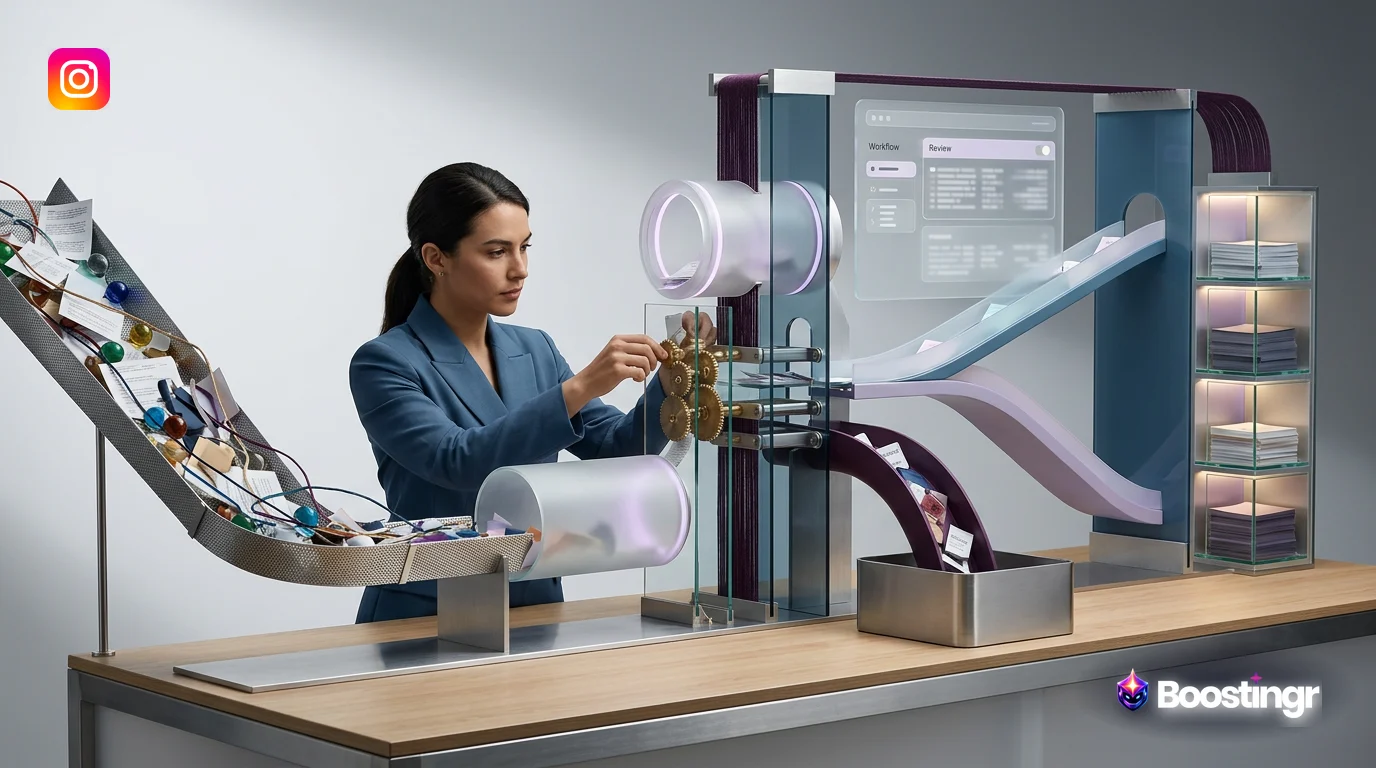
AI comment moderation for brands is an advanced system that uses artificial intelligence to automatically classify, route, and manage social media comments based on predefined rules and workflows. It goes beyond simple keyword filtering to understand user intent, sentiment, and context, enabling brand teams to protect brand safety, capture leads, and manage community engagement at scale through automated routing and human-in-the-loop review processes.
The Unseen Cost of Comment Chaos for Brands
Your brand invests heavily in creating compelling content, launching targeted ad campaigns, and building a community. But with every successful post comes an avalanche of comments. For brand teams, this is a double-edged sword. On one side, it's a sign of engagement. On the other, it's a chaotic, high-stakes environment where brand reputation, customer relationships, and potential revenue hang in the balance.
Manually sifting through hundreds or thousands of comments is no longer a viable strategy. It’s slow, prone to human error, and impossible to scale. A single missed negative comment can spiral into a PR crisis. A potential lead asking a buying question gets buried under spam. A customer seeking support feels ignored. This isn't just a moderation problem; it's a business process problem.
This is where **AI comment moderation for brands** transforms from a defensive tool into a strategic growth engine. It’s not about silencing your audience; it’s about understanding them at scale and building intelligent workflows that turn comment chaos into control, insight, and opportunity. Platforms like Boostingr act as the central operating system for this new approach, enabling teams to teach the AI once and engage everywhere with consistency and intelligence.
Why Traditional Comment Moderation Fails Modern Brands
For years, the standard toolkit for **comment moderation for brands** consisted of two things: manual labor and basic keyword blocklists. While better than nothing, these methods are fundamentally broken for the scale and complexity of today's social media landscape.
* **Inability to Scale:** A social media manager can handle a few dozen comments an hour. A successful ad campaign can generate thousands in the same timeframe. The math simply doesn't work. Important comments are missed, and response times plummet. * **Inconsistency and Bias:** Manual moderation is subjective. What one team member deems inappropriate, another might ignore. This leads to inconsistent enforcement of community guidelines and a fragmented brand presence. * **Lack of Nuance:** Keyword filters are notoriously clumsy. They block legitimate comments that happen to contain a flagged word (e.g., blocking "sucks" and missing a comment like "It sucks that I didn't discover this brand sooner!"). They are completely blind to sarcasm, context, and, most importantly, user intent. * **Reactive, Not Proactive:** Traditional methods are purely defensive. They focus on hiding or deleting negative content after it's already been seen. They do nothing to identify opportunities, route questions to the right people, or generate insights from the conversation. * **Workflow Black Hole:** There is no workflow. Comments sit in a massive, undifferentiated pile. There's no automated way to route a support issue to Zendesk, a sales lead to Salesforce, or a glowing testimonial to the marketing team's Slack channel.
This outdated approach leaves brand teams overwhelmed and forces them to treat their comment sections as a liability to be contained rather than an asset to be cultivated.
The Core Pillars of AI Comment Moderation for Brands
True **AI comment moderation for brands** is a multi-layered system designed for the complex needs of marketing, sales, and support teams. It's built on a foundation of understanding, workflow automation, and governance. Boostingr orchestrates these pillars into a cohesive system that doesn't just read comments, it understands the people behind them.
1. Intelligent Classification: Beyond Spam and Trolls
The first step is to understand what a comment *means*. This goes far beyond a simple positive/negative sentiment score. Modern AI uses advanced models to perform deep classification:
* **Intent Detection:** This is the game-changer. The AI can identify the user's goal. Are they asking a pre-sale question (**Purchase Intent**), expressing frustration with a product (**Support Intent**), praising the brand (**Positive Feedback**), or asking to partner (**Business Inquiry**)? Understanding intent is the key to unlocking workflows. Learn more about how this works in our guide to intent detection for comments. * **Spam & Troll Detection:** AI models are trained on millions of examples to identify sophisticated spam, scams, and trolling behavior that keyword filters miss. This keeps the community safe and conversations productive. * **Sentiment Analysis:** A nuanced understanding of emotion allows the system to prioritize highly negative comments for immediate review or flag exceptionally positive ones for community engagement.
2. Automated Rules & Routing Engine
Once a comment is classified, the workflow begins. This is where brand teams can reclaim their time and ensure every comment gets the right attention from the right person, automatically.
* **Automated Hiding/Deletion:** For comments classified with high confidence as spam, hate speech, or severe policy violations, the system can instantly hide them, providing robust **brand safety comment moderation**. * **Smart Routing:** This is the heart of the workflow. You can create rules like: * **IF** `Intent` is `Purchase Intent` **AND** `Sentiment` is `Positive`, **THEN** route to the `Sales Team` queue and notify the `#sales-leads` Slack channel. * **IF** `Intent` is `Support Intent` **AND** `Sentiment` is `Negative`, **THEN** create a ticket in Zendesk and assign it to the `Tier 1 Support` team. * **IF** `Intent` is `Positive Feedback`, **THEN** route to the `Community Manager` queue for a personalized reply.
3. Human-in-the-Loop Review Workflows
AI is powerful, but accountability is critical. A robust platform doesn't aim to replace humans but to empower them. This is achieved through structured review queues.
* **Triage & Prioritization:** Instead of a single chaotic feed, your team gets prioritized queues. The support team sees only support issues; the sales team sees only leads. This creates focus and efficiency. * **Review & Approve:** For sensitive actions, like AI-generated replies, you can implement an approval workflow. The AI suggests a reply based on its training, and a team member gives the final approval before it's posted. This ensures 100% brand safety and control. * **Feedback Loop:** When a moderator corrects an AI classification or edits a suggested reply, that feedback is used to retrain and improve the model over time. The system gets smarter with every interaction.
4. Brand-Safe AI Replies with Governance
Responding at scale is the final piece of the puzzle. But how do you ensure thousands of AI-generated replies sound like your brand? The answer is governance through `Brand Memory`.
* **Brand Memory:** This is a centralized knowledge base you teach the AI. It includes your brand voice guidelines, product details, FAQ answers, and past approved interactions. When generating a reply, the AI consults this memory to stay perfectly on-brand. * **Teach Once, Engage Everywhere:** With a system like Boostingr, you establish your Brand Memory once. That single source of truth is then used to power humanized, brand-tone replies across all your connected accounts—Instagram, Facebook, YouTube, and more. This solves the massive challenge of maintaining brand consistency across channels and teams.
Practical Examples and Use Cases
Let's see how this works in the real world for different types of brands.
**Use Case 1: The Global Ecommerce Brand**
* **Challenge:** A new product launch ad on Instagram receives 5,000 comments in 24 hours. They are a mix of spam, questions about international shipping, complaints about stock, and purchase inquiries. * **AI Moderation Workflow:**
- **Spam/Bot comments** are automatically hidden.
- Comments like "Do you ship to Australia?" (`Intent: Pre-Sale Question`) are routed to a queue where the AI drafts a reply using information from the `Brand Memory` about shipping policies. A community manager approves the replies in bulk.
- Comments like "Where can I buy the red one?" (`Intent: Purchase Intent`) are identified as high-value. The system automatically replies with a link to the product page and DMs the user, creating a lead record in the CRM. This is a core function of an intelligent Instagram lead capture tool.
- Comments like "My order from last week is missing!" (`Intent: Support Issue`) are automatically routed to the customer support team's helpdesk software, creating a ticket with the user's details.
**Use Case 2: The B2B SaaS Company**
* **Challenge:** The company posts a new case study on LinkedIn and Facebook, generating comments from potential customers, existing users, and industry experts. * **AI Moderation Workflow:**
- Comments like "This looks interesting, can it integrate with HubSpot?" (`Intent: Technical Question`) are routed to the pre-sales engineering team.
- Comments from existing customers like "We love using this feature!" (`Intent: Positive Feedback`) are routed to the marketing team to request a formal testimonial.
- Comments like "We're looking for a solution like this, can someone reach out?" (`Intent: Demo Request`) are immediately flagged as a hot lead, routed to the BDR team, and an alert is sent to a dedicated Slack channel.
Building Your AI Moderation Workflow with Boostingr: A Step-by-Step Guide
Implementing a sophisticated **brand comment moderation** strategy is a structured process. With Boostingr, you're not just buying a tool; you're deploying an operating system for your community.
- **Connect Your Social Accounts:** Securely connect your Instagram, Facebook, YouTube, and other social profiles through their official APIs, like the Instagram Graph API.
- **Establish Your Brand Memory:** This is the foundational step. You'll work with the system to teach it your brand's unique voice, tone, product information, and answers to common questions. This ensures all future AI interactions are perfectly aligned with your brand identity.
- **Define Classification & Routing Rules:** Using a simple interface, you'll set up the "if-then" logic that powers your workflow. For example: "IF a comment on an ad post contains `Purchase Intent`, THEN route it to the 'Sales Leads' queue."
- **Configure Escalation Paths & Integrations:** Decide what happens after routing. Does a lead get sent to Salesforce? Does a support issue create a Zendesk ticket? Does a negative comment trigger a Slack alert to the PR team? You build the pathways that fit your existing tech stack.
- **Set Up Review & Approval Queues:** Assign team members to specific queues (e.g., Jane manages 'Support,' John manages 'Sales Leads'). Decide which actions require manual approval, giving you complete control over what gets published.
- **Deploy, Monitor, and Iterate:** Activate your workflows. Use the central dashboard to monitor the AI's performance, review decisions, and provide feedback. The system continuously learns and improves, becoming a more valuable asset over time.
> **First-Party Observation:** We've seen that many large brands first adopt Boostingr for defensive reasons, primarily for **brand safety comment moderation** on high-volume ad campaigns. However, within weeks, their focus shifts. They discover the immense value in routing and responding to positive and neutral comments. The ROI quickly moves from 'risk mitigation' to 'revenue generation' as they begin to systematically capture leads and insights they were previously ignoring.
Comparison Table
How does a dedicated AI comment management platform like Boostingr compare to the moderation features found in traditional all-in-one social media management suites or simple chatbot builders?
| Feature | Boostingr (AI Comment OS) | Traditional SMM Suites (e.g., Sprout, Hootsuite) | Chatbot Builders (e.g., ManyChat) |
|---|---|---|---|
| **Core Function** | Deep Comment Understanding & Workflow Automation | Content Scheduling & Unified Inbox | DM Automation & Keyword Replies |
| **Intent Detection** | Advanced (Purchase, Support, Spam, etc.) | Basic Sentiment (Positive/Negative) or None | Keyword-based, limited to DMs |
| **Custom Workflows** | Highly customizable rule & routing engine | Limited inbox filtering and tagging | Simple "if keyword, then reply" logic |
| **Human Review Queues** | Dedicated queues for teams (Sales, Support) | Unified inbox, requires manual filtering | Not a primary feature for comments |
| **Brand Memory** | Centralized AI brain for on-brand replies | No equivalent feature | Basic saved replies, no dynamic learning |
| **AI Reply Generation** | Context-aware, on-brand drafts for approval | Canned responses or basic AI suggestions | Primarily rule-based DM flows |
| **Lead Capture from Comments** | Natively designed to identify and route leads | Manual process of tagging/assigning | Primarily focused on DM lead capture |
Checklist: Is Your Brand Ready for AI Comment Moderation?
If you answer "yes" to three or more of these questions, it's time to move beyond manual moderation and explore an AI-powered workflow.
- [ ] Does your brand manage two or more active social media accounts?
- [ ] Do you collectively receive more than 500 comments per month across your profiles?
- [ ] Is protecting your brand's reputation from harmful or spammy comments a top priority?
- [ ] Do you run paid social media ad campaigns that generate significant comment volume?
- [ ] Do you suspect your team is missing potential sales leads or customer support issues in the comments?
- [ ] Does your team spend more than 5 hours per week manually hiding, deleting, or replying to comments?
- [ ] Is maintaining a consistent brand voice across all replies a challenge for your team?
- [ ] Do you lack a clear, efficient process for routing comments to the correct internal teams (sales, support, marketing)?
Original Diagrams
These original visuals explain the workflow in a faster, more defensible format than plain text alone and give the article first-party assets that are easier to understand and harder to copy.
Comment Processing Workflow
This workflow shows how AI ingests comments from social platforms, classifies them based on predefined rules, and routes them for automated action or human review. It's the foundational process for managing engagement at scale.
AI Decision Tree
See the logical path an AI takes to moderate a single comment. It checks for spam, then sentiment, then specific keywords or intents, branching at each step to determine the correct action like 'hide' or 'escalate'.
Moderation Pipeline
This pipeline visualizes the end-to-end process, from initial AI triage to the human-in-the-loop review stage. It highlights how automated systems and human moderators collaborate to ensure accuracy and protect brand safety.
Intent Classification Flow
AI goes beyond simple keyword filtering by understanding the user's intent. This flow shows how a comment is analyzed and categorized as a potential sales lead, a customer support issue, or general feedback.
Brand Memory Diagram
Effective AI moderation learns and adapts from every interaction. This diagram shows how the system builds a 'brand memory' from past moderation decisions and user history to make smarter, more context-aware judgments.
Key Takeaways
* **AI comment moderation for brands** is a strategic necessity, not a luxury. It's about building intelligent workflows, not just filtering keywords. * Traditional manual moderation is inefficient, unscalable, and exposes your brand to risk and missed opportunities. * The core components of a modern system are **intelligent classification (intent), automated routing, human-in-the-loop review, and brand-safe AI replies**. * By implementing rules and workflows, you can automatically route leads to sales, issues to support, and praise to community managers. * Platforms like Boostingr act as a central operating system, using a `Brand Memory` to ensure all engagement is consistent and on-brand across all channels. * The goal is not to replace your team but to augment them, freeing them from repetitive tasks to focus on high-value strategic engagement.
Ready to transform your comment section from a chaotic liability into a strategic asset? Explore Boostingr's pricing plans or sign up for free to see the power of workflow-first AI comment management.
Evidence, Experience, and References
This article is based on Boostingr's direct experience in developing and deploying AI-powered comment management solutions for hundreds of brands, from fast-growing ecommerce stores to global enterprises. Our system is built upon official, stable, and secure platform APIs, including the Meta Graph API, ensuring compliance and reliability. Our insights are drawn from analyzing billions of comments and helping brand teams build effective, scalable moderation and engagement workflows. For more information on best practices, we recommend consulting official documentation from platforms like Google's SEO Starter Guide for content visibility.
About the Author
The Boostingr team is composed of experts in artificial intelligence, machine learning, and social media strategy. With years of experience building solutions for community management, brand safety, and social commerce, our focus is on creating practical, workflow-first tools that empower brand teams to turn social engagement into measurable business growth.
Last Updated
September 2024
FAQs
Search Intent and Topic Map
This guide targets readers researching ai comment moderation for brands and maps the topic to practical evaluation and implementation decisions. Supporting concepts include comment moderation for brands, brand comment moderation, brand safety comment moderation, ai comment management, brand safe ai replies, comment moderation automation. These terms are used only where they clarify the reader's question, not as repeated ranking phrases.