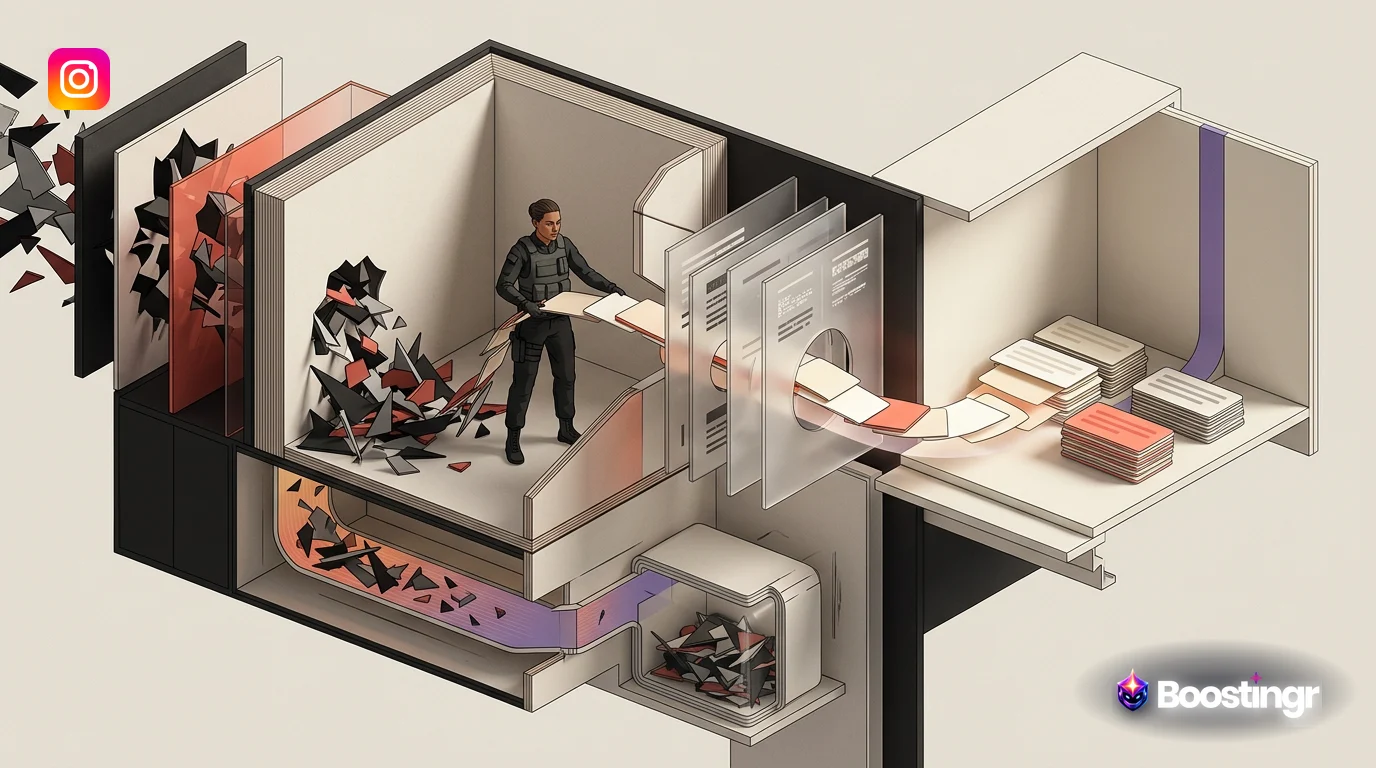
Quick Answer
Troll detection for social media comments is the process of identifying and managing users who engage in deliberately disruptive, insincere, or malicious behavior. Unlike basic spam or profanity filtering, advanced AI troll detection analyzes context, user behavior patterns, and conversational nuance to distinguish bad-faith actors from genuine critics, thereby protecting community health and brand reputation without suppressing valuable customer feedback.
Introduction
In the sprawling digital town squares of social media, your brand's comment sections are its front porch. It's where you greet customers, answer questions, and build a community. But this porch is vulnerable. Trolls—users who post inflammatory, off-topic, or insincere comments—can quickly turn a vibrant community space into a toxic battlefield. They poison conversations, deter genuine engagement, and tarnish your brand's reputation.
The old methods of defense are failing. Manual moderation is a Sisyphean task, and simple keyword filters are easily outsmarted by the evolving language of online antagonism. A troll doesn't need to use a slur to cause damage; they can do it with sarcasm, bad-faith questions, and coordinated derailing. This is where the game has changed.
This guide moves beyond the simplistic "ban hammer" approach. We will explore a strategic, workflow-first methodology for AI-powered troll detection. We'll delve into how modern AI can understand the subtle art of trolling, differentiate it from legitimate criticism, and empower your brand to build a resilient, safe, and thriving online community. It's time to stop just reacting to trolls and start strategically outsmarting them.
Why This Topic Matters
Understanding and implementing effective troll detection is no longer a niche concern for community managers; it's a core business imperative. The health of your online community directly impacts brand perception, customer loyalty, and even your bottom line. Ignoring the threat of sophisticated trolling is akin to leaving your digital storefront unlocked.
The Evolving Nature of Trolling
The stereotypical image of a troll is someone hurling insults and profanity. While that still exists, the modern troll is far more insidious. They have diversified their tactics:
* **Concern Trolling:** Phrasing disruptive criticism as feigned concern. (e.g., "I'm just *worried* that your new feature will alienate your loyal user base. Are you sure you've thought this through?") * **Bad-Faith Arguments:** Engaging in endless, circular debates with no intention of reaching a resolution, designed solely to exhaust your team and derail the conversation. * **Derailing:** Systematically changing the subject of a post to something controversial or irrelevant to disrupt the intended discussion. * **Coordinated Inauthentic Behavior (CIB):** Groups of users or bots working together to amplify a negative message, create a false consensus, or harass a target.
These methods bypass traditional keyword filters, which are blind to intent and context. They require a more intelligent line of defense.
The Business Impact of Unchecked Trolling
The costs of a poorly moderated comment section are steep and multifaceted:
* **Brand Reputation Damage:** A comment section filled with negativity, arguments, and off-topic vitriol creates a powerful negative social proof, suggesting your brand is controversial, incompetent, or untrustworthy. * **Decreased User Engagement:** Potential customers and positive community members are often driven away by toxic environments. They self-censor or leave the conversation altogether, leading to a community dominated by the loudest, most negative voices. * **Wasted Ad Spend:** Trolls love to target paid ads. When your ad's comment section becomes a cesspool, you are effectively paying for a platform that actively damages your brand image, leading to a severely diminished return on investment (ROI). * **Moderator Burnout:** Relying solely on human moderators to handle a constant barrage of sophisticated trolling is a recipe for burnout. The psychological toll of navigating this negativity is significant and can lead to high turnover in a crucial role. According to a Pew Research Center study, a significant portion of internet users have witnessed or experienced severe online harassment, a category that includes trolling.
The Limitations of Manual Moderation and Keyword Filters
While necessary, manual moderation and basic automation are insufficient on their own.
* **Scalability:** A single viral post can generate thousands of comments in hours. No human team can keep up with that volume in real-time, 24/7. * **Context Blindness:** Keyword filters are rigid. They might block the word "sucks" but miss a sarcastic comment like, "Wow, another *brilliant* move from this company." Worse, they can create false positives, hiding a comment like, "This vacuum sucks up everything! It's amazing!" * **Reactive Nature:** By the time a human moderator sees and removes a trolling comment, the damage is often done. The comment has been seen, the argument has started, and the tone of the conversation has been set.
An AI-powered approach, integrated into a smart workflow, addresses these limitations by providing scalable, context-aware, and proactive protection.
Comparison Table
| Feature / Capability | Manual Moderation | Keyword-Based Automation | AI-Powered Troll Detection (e.g., Boostingr) |
|---|---|---|---|
| **Scalability** | Low. Directly tied to headcount and hours. | High. Can process unlimited volume. | High. Can process unlimited volume in real-time. |
| **Accuracy (Context)** | High (when focused), but prone to human error/bias. | Very Low. Cannot understand sarcasm, irony, or context. | High. Understands semantic meaning, intent, and nuance. |
| **Speed of Action** | Slow. Dependent on moderator availability and queue size. | Instant. | Instant. Actions are taken in milliseconds. |
| **Cost** | High. Ongoing salary and overhead costs. | Low. Often included in other platforms or as a basic feature. | Medium. Subscription-based, but offers high ROI through brand safety. |
| **Moderator Well-being** | Low. High risk of burnout and exposure to toxic content. | High. No direct human exposure. | High. Filters out the worst content, allowing humans to focus on high-value engagement. |
| **Proactive vs. Reactive** | Reactive. Acts after a comment has been posted and seen. | Proactive/Reactive. Can hide instantly but based on rigid, easily-bypassed rules. | Proactive. Identifies and acts on trolling behavior as it happens, based on predictive models. |
| **Learning & Adaptation** | Slow. Relies on training and updating guidelines for human teams. | None. Rules must be manually updated to catch new terms. | High. Models continuously learn from new data and moderator feedback. |
Original Diagrams
These original visuals explain the workflow in a faster, more defensible format than plain text alone and give the article first-party assets that are easier to understand and harder to copy.
Comment Processing Workflow
This diagram illustrates the journey of a user's comment from submission to final action. The AI system analyzes the comment's content, context, and the user's history before recommending a moderation action.
AI Decision Tree
This decision tree shows the complex logic an AI uses to differentiate between a troll and a genuine user. It weighs factors like sarcasm, user posting frequency, and conversational context to make a nuanced judgment.
Moderation Pipeline
This pipeline demonstrates how AI and human moderators work together for effective content moderation. The AI acts as a first-pass filter, escalating ambiguous cases to a human for the final decision, ensuring both speed and accuracy.
Intent Classification Flow
AI troll detection goes beyond keywords to understand the user's intent. This flow shows how the system classifies a comment as a genuine question, constructive criticism, or a bad-faith attack.
Brand Memory Diagram
An advanced AI develops a 'brand memory,' learning from past interactions and moderation decisions. This allows it to understand context specific to your community, like inside jokes or recurring issues, for more accurate troll detection.
Practical Examples and Use Cases
Theory is one thing; practical application is another. Here’s how AI troll detection works in real-world scenarios to protect brands and communities.
Use Case 1: Protecting Ad Spend for an Ecommerce Brand
* **Scenario:** A fashion brand runs a major Instagram ad campaign for its new sustainable clothing line. The ad gains traction, but a handful of accounts begin to spam the comments with off-topic political arguments and accusations of "greenwashing" without any specific evidence. * **Without AI Detection:** The comment section quickly devolves into a political battleground. Potential customers are turned off by the negativity. The brand's social media manager spends hours manually deleting comments, but new ones appear just as fast. The ad's ROI plummets as the brand pays to promote a toxic conversation. * **With AI Detection:** The AI system, like Boostingr, identifies the behavior. It recognizes that these comments are not genuine critiques but are off-topic and designed to derail the conversation. It also detects the coordinated nature of the posts. The system automatically hides these comments in real-time and flags the user accounts for review. The ad's comment section remains focused on the product, protecting the customer experience and the ad budget.
Use Case 2: Nurturing a Creator's Community
* **Scenario:** A popular finance YouTuber posts a video about long-term investment strategies. A "concern troll" repeatedly comments with seemingly innocent but undermining questions like, "Are you sure this is safe for beginners? I heard from a friend that this strategy is very risky. I'm just worried people will lose money because of you." * **Without AI Detection:** The creator or their moderators might initially engage, trying to be helpful. They soon realize the user isn't looking for answers but is trying to sow fear, uncertainty, and doubt (FUD). This drains time and energy and can genuinely scare off less-confident community members. * **With AI Detection:** The AI analyzes the user's pattern. It sees the repeated, disingenuous questioning style across multiple comments and posts. While a single comment might seem harmless, the pattern is a clear indicator of concern trolling. The system flags the user and their comments, allowing the creator to ignore or block them, preserving the positive and educational atmosphere of their community.
> **First-Party Observation from Boostingr:** We've observed that coordinated troll attacks often use subtle variations of the same message to evade simple duplicate filters. Our AI analyzes semantic similarity, not just exact text, allowing us to group and action these 'comment swarms' far more effectively than rule-based systems. This is crucial during PR crises or when a post on a sensitive topic goes viral.
The Nuances of Troll Detection: Beyond Simple Negativity
The true power of AI in this domain lies in its ability to navigate the gray areas of human communication. This is where it graduates from a simple filter to an intelligent moderation partner.
#### Differentiating Trolls from Genuine Criticism
This is the holy grail of moderation. A customer complaining about a broken product is not a troll; they are providing valuable (if negative) feedback. An AI system makes this distinction by analyzing several factors:
* **Specificity:** A critic will usually provide specific details ("My package arrived damaged, and the lid was broken"). A troll is often vague and resorts to ad hominem attacks ("Your company is a joke and you don't care about customers"). * **User History:** Does this user have a history of constructive engagement, or do they only appear to post negative, low-effort comments? * **Intent:** AI can be trained to recognize the intent behind a comment. Is it a request for support, a product complaint, or an attempt to provoke a reaction? AI models can classify these intents to route them appropriately.
#### Understanding Sarcasm and Irony
Modern Large Language Models (LLMs) have become remarkably adept at understanding sarcasm. They don't just look at words in isolation; they analyze the relationship between words, the context of the conversation, and common linguistic patterns. When a user comments, "Oh, *fantastic*, my order is delayed again. Just love that for me," an advanced AI can correctly interpret this as negative and sarcastic, whereas a keyword-based system might get confused by the word "fantastic."
#### Identifying 'Concern Trolling' and Bad-Faith Arguments
As in the creator example, concern trolling is about intent, not just words. AI systems detect this by identifying patterns that are mathematically unlikely to be genuine. A user who exclusively asks leading, negative questions without ever engaging with the answers is exhibiting a clear behavioral pattern. The AI learns to associate this pattern with bad-faith engagement, even if every individual comment appears civil on the surface.
> **First-Party Observation from Boostingr:** A key learning from our platform is that a user's comment history is a powerful predictor of trolling behavior. A single negative comment might be genuine feedback, but a pattern of consistently negative, low-effort, or disruptive comments across multiple posts is a strong signal of a troll. Our system weights user history in its classification, providing a more holistic and accurate judgment than single-comment analysis ever could.
Implementing an AI Troll Detection Strategy
Deploying an AI troll detection system is a strategic project, not just a software installation. Following a structured approach ensures success.
#### Step 1: Define Your Community Guidelines
Your AI is a tool to enforce your rules. If your rules are vague, the enforcement will be inconsistent. Clearly define what constitutes trolling, harassment, and off-topic content *for your brand*. These guidelines will be the foundation for configuring your AI's behavior.
#### Step 2: Choose the Right Technology Stack
Not all AI is created equal. The built-in moderation tools on social platforms are a starting point, but they are often basic keyword and block lists. For a truly strategic approach, you need a specialized AI platform like Boostingr that offers:
* **Behavioral Analysis:** Goes beyond words to understand user patterns. * **Intent Classification:** Sorts comments by purpose (e.g., lead, complaint, troll). * **Workflow Automation:** Allows you to define custom rules for what happens when a troll is detected. Learn more about AI comment moderation workflows.
#### Step 3: Configure Your Workflows
This is where strategy comes to life. Decide on the rules of engagement. For example:
* **High-Confidence Troll Comment:** Automatically hide the comment and add the user to a watchlist. * **Medium-Confidence Troll Comment:** Flag the comment for human review in a priority queue. * **Coordinated Attack Detected:** Automatically hide all associated comments and temporarily restrict posting from new accounts.
Your workflow should be a dynamic system, not a static set of rules.
#### Step 4: Establish a Human-in-the-Loop Process
AI is not about replacing humans but augmenting them. Your community managers are still essential. The AI should handle the 90% of high-volume, obvious cases, freeing up human experts to:
* Review edge cases and ambiguous comments. * Engage with high-value positive and negative feedback. * Provide feedback to the AI to improve its accuracy over time. * Focus on proactive community-building initiatives.
#### Step 5: Monitor, Analyze, and Refine
A good AI platform provides analytics on the types of comments being hidden, the users being flagged, and the overall health of your comment sections. Use this community intelligence to understand trends, identify emerging threats, and refine both your AI workflows and your overall community strategy.
Checklist: Implementing AI Troll Detection
Use this checklist to guide your implementation of a strategic troll detection system.
- [ ] **Define Governance:** We have clearly documented community guidelines that define trolling, harassment, and other undesirable behaviors.
- [ ] **Assess Current State:** We have audited our current moderation process (manual, keyword-based) and identified its limitations in scalability, speed, and accuracy.
- [ ] **Research Technology:** We have evaluated specialized AI moderation tools that offer behavioral analysis and workflow automation, not just keyword filtering.
- [ ] **Design Workflows:** We have mapped out specific automated actions for different scenarios (e.g., auto-hide high-confidence trolls, flag medium-confidence for review).
- [ ] **Integrate Human Review:** We have a clear process for our human team to review AI-flagged content and provide feedback to the system.
- [ ] **Establish KPIs:** We have defined key performance indicators to measure success, such as reduction in toxic comments, time saved on manual moderation, and sentiment score of comment sections.
- [ ] **Plan for Onboarding:** We have a plan to train our team on the new tool and workflow.
- [ ] **Schedule Regular Audits:** We have a recurring meeting (e.g., monthly) to review analytics, discuss edge cases, and refine our AI moderation strategy.
Key Takeaways
* **Trolling has evolved:** Modern trolls use subtle tactics like concern trolling and derailing that bypass simple keyword filters. * **The cost of inaction is high:** Unchecked trolling damages brand reputation, drives away positive engagement, and wastes marketing spend. * **AI is a strategic necessity:** AI-powered detection offers the scale, speed, and contextual understanding needed to combat modern trolling effectively. * **Distinguishing trolls from critics is crucial:** Advanced AI analyzes user history, specificity, and intent to protect genuine feedback while removing bad-faith actors. * **A workflow-first approach is key:** The technology is only as good as the strategy behind it. Define your rules, automate actions, and keep a human in the loop for strategic oversight. * **AI augments, not replaces, humans:** The goal is to free up your valuable human moderators from the drudgery of toxic content to focus on high-value community building.
FAQs
1. What is the difference between troll detection and spam detection?
Spam detection focuses on identifying unsolicited, irrelevant, or malicious links and repetitive, low-quality messages (e.g., "buy followers here"). Troll detection is more nuanced; it focuses on identifying user *behavior* that is deliberately disruptive, provocative, or insincere, even if the comment itself contains no links or obvious spam keywords. Learn more about AI spam comment detection.
2. Can AI completely replace human moderators for troll detection?
No, and it shouldn't. The best approach is a partnership. AI can handle the vast majority (80-95%) of clear-cut cases at scale, 24/7. This frees up human moderators to handle complex edge cases, review AI decisions, engage with customers, and focus on proactive community strategy. The AI acts as a powerful, tireless assistant to your human team.
3. How does AI learn to identify new types of trolling?
AI models, particularly those based on machine learning, learn in a few ways. They are trained on massive datasets of labeled conversations, allowing them to recognize patterns. More importantly, they improve through a "human-in-the-loop" feedback system. When a human moderator corrects an AI's decision (e.g., marks a hidden comment as "not a troll"), that data is used to retrain and refine the model, helping it adapt to new slang, new trolling tactics, and cultural nuances.
4. Will AI troll detection censor legitimate negative feedback?
A well-designed AI system is specifically trained to distinguish between trolling and genuine criticism. It does this by looking for signals of good faith vs. bad faith. A genuine critic is typically specific and focused on an issue, while a troll is often vague, resorts to personal attacks, or aims to derail the conversation. By focusing on behavior and intent, the AI can protect brand safety while preserving the crucial channel of customer feedback.
5. How much does AI troll detection for social media cost?
Costs vary depending on the provider and the volume of comments. Basic keyword filters are often free or cheap. Advanced AI platforms like Boostingr are typically sold as a monthly or annual subscription (SaaS). While it's an investment, the ROI is calculated in time saved on manual moderation, protected ad spend, reduced brand reputation risk, and improved community health and customer loyalty.
6. What social media platforms can this be used on?
Most advanced AI moderation platforms integrate directly with the APIs of major social media networks, including Instagram (organic posts, ads, Reels), Facebook (organic posts, ads, groups), YouTube, TikTok, and LinkedIn. The goal is to provide a centralized dashboard to manage community safety across all your key channels.
7. How do you measure the ROI of troll detection?
ROI can be measured both quantitatively and qualitatively. Quantitative measures include: hours of manual moderation time saved (and the associated salary cost), reduction in the percentage of toxic comments, and improved engagement rates or sentiment scores on posts. Qualitatively, the ROI is seen in a healthier community, improved brand perception, and the mitigation of PR crises before they can escalate.
Evidence, Experience, and References
The insights in this article are based on Boostingr's direct experience in developing and deploying AI-powered comment moderation and community intelligence solutions for brands worldwide. Our platform processes millions of comments, giving us a unique, data-driven perspective on the evolving challenges of online community management.
Our approach is informed by established research in online behavior and computational linguistics. The prevalence and impact of online trolling are well-documented by institutions like the Pew Research Center. Furthermore, the technical foundations of our AI draw from ongoing academic research in Natural Language Processing (NLP) and pattern recognition, such as the work on troll detection from institutions like Cornell University and others in the machine learning community.
About the Author
The Boostingr team is composed of AI engineers, data scientists, and community management experts dedicated to building safer and more productive online communities for brands, creators, and agencies. Our focus is on creating workflow-first solutions that transform comment sections from a liability into a valuable asset for business intelligence and growth.
Last Updated
October 2023
Search Intent and Topic Map
This guide targets readers researching troll detection for social media comments and maps the topic to practical evaluation and implementation decisions. Supporting concepts include troll comment detection, detect trolls in comments, troll moderation ai, ai comment management, brand safe ai replies, comment moderation automation. These terms are used only where they clarify the reader's question, not as repeated ranking phrases.