Quick Answer
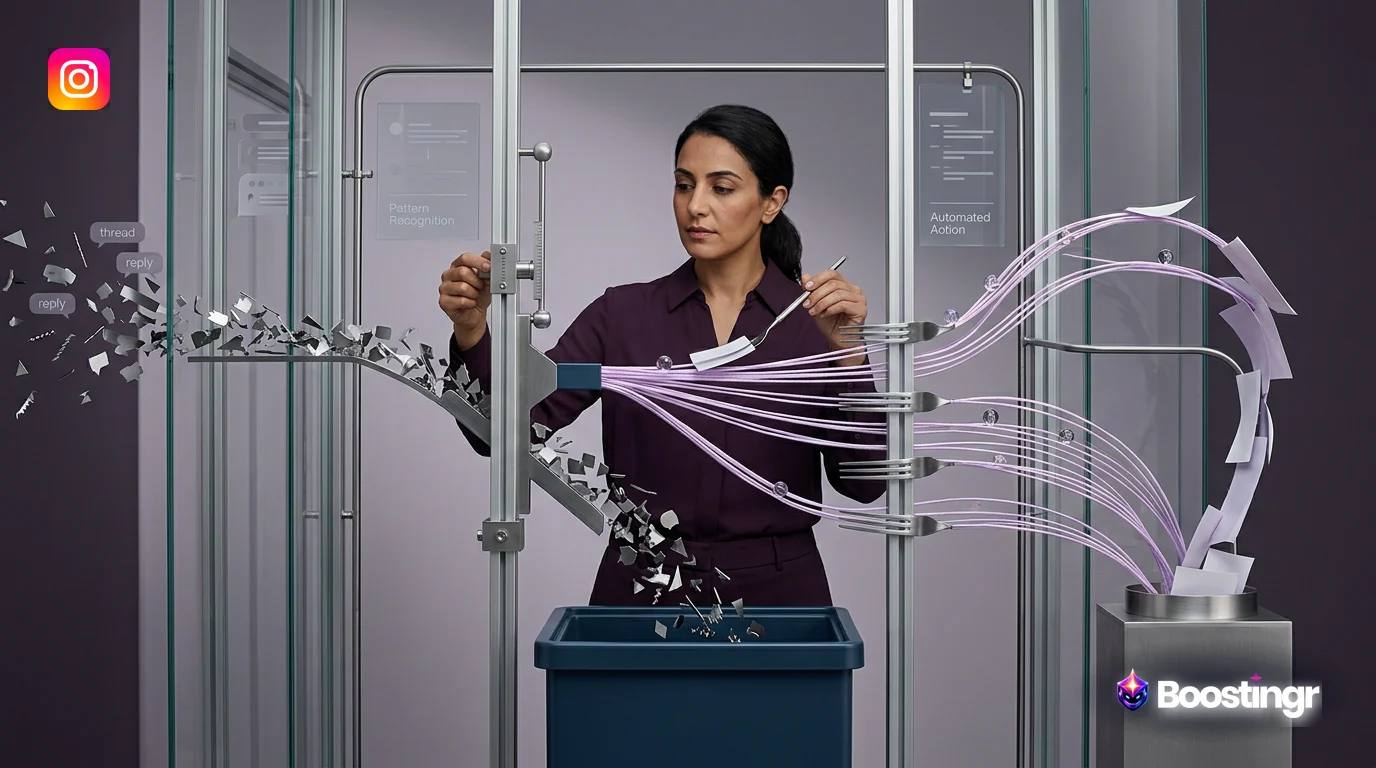
Troll detection for social media comments is the process of identifying and managing comments posted in bad faith to provoke, harass, or disrupt conversations. Modern AI-powered systems analyze language, context, user behavior, and intent—not just keywords—to accurately classify and automate actions like hiding, muting, or escalating troll comments, protecting brand safety and community health at scale.
The Rising Tide of Trolling and the Crisis of Manual Moderation
Every social media manager knows the feeling. You post a great piece of content—a new product launch, a heartfelt brand story, a helpful tip—and watch the positive engagement roll in. Then, it appears. A comment that's off, needlessly aggressive, or designed to derail the entire conversation. It's a troll.
Left unchecked, one troll comment can poison a thread, deter genuine engagement, and damage your brand's reputation. The traditional solution? Hours of manual moderation, scrolling through endless comment sections, and making split-second judgment calls. This isn't just inefficient; it's a recipe for team burnout and inconsistent enforcement.
Keyword blocklists and basic filters offer a fragile shield. Trolls are adept at circumventing them with misspellings, emojis, and nuanced language. You end up playing a never-ending game of whack-a-mole, always one step behind.
This is where a strategic shift is necessary—from reactive manual moderation to a proactive, intelligent workflow. This guide outlines how to build a sophisticated system for **troll detection for social media comments**, using AI to not just read comments, but to understand the people and intent behind them. With a platform like Boostingr, you can create an operating system for community management that protects your brand, fosters positive engagement, and even uncovers intelligence from your comment sections.
Understanding the Enemy: Common Troll Patterns and Behaviors
Effective troll detection begins with understanding the different forms they take. Trolls are not a monolith. They employ various tactics to achieve their goal of disruption. An AI-powered system must be trained to recognize these nuanced patterns beyond simple profanity.
* **The Classic Antagonist:** This is the most recognizable type of troll. They use direct insults, personal attacks, profanity, and inflammatory language to provoke an emotional response from the brand or other users. * **The "Concern" Troll:** This is a more insidious tactic. The troll feigns support or concern for the brand or its community while subtly sowing doubt, spreading misinformation, or making bad-faith arguments. Their comments often start with phrases like, "I love your brand, but..." or "As a loyal customer, I'm just concerned that..." * **The Gaslighter:** This troll aims to make you and your community question reality. They will deny previous statements, misrepresent facts, and deliberately twist the context of the conversation to create confusion and frustration. * **The Off-Topic Disruptor:** This user repeatedly posts comments that are completely unrelated to the content. Their goal is to hijack the conversation, promote their own agenda, or simply create chaos. This often overlaps with spam but is done with malicious intent. * **The Dogpiler:** This isn't a single troll but a coordinated group attack. Once a target is identified, multiple accounts (often bots or sock puppets) descend on a post to overwhelm the comment section with negativity, harassment, or a specific narrative.
Recognizing these distinct patterns is impossible for simple keyword filters. It requires an understanding of context, sentiment, and conversational history—the very things an advanced **troll moderation AI** is designed to analyze.
The Limits of Manual and Keyword-Based Moderation
For years, the standard toolkit for comment moderation has been a combination of human moderators and basic keyword blacklists. While better than nothing, these methods are fundamentally broken for the scale and complexity of modern social media.
**Scalability:** A successful ad or viral post can generate thousands of comments in hours. A human team simply cannot keep up. They are forced to either let moderation standards slip or turn off comments entirely, sacrificing valuable engagement.
**Emotional Toll:** The constant exposure to negativity, harassment, and abuse has a significant and well-documented negative impact on the mental health of human moderators. This leads to high turnover and burnout, making it difficult to maintain a consistent, experienced team.
**Context Blindness:** Keyword lists are rigid. They can't distinguish between a user using a slur and a user quoting that slur to condemn it. They can't understand sarcasm, irony, or evolving slang. This leads to two problems: false positives (hiding legitimate comments) and false negatives (missing clever trolls).
**Easy Circumvention:** Trolls are experts at avoiding filters. They use l33t speak (e.g., "H@te"), add extra characters (e.g., "stupiiid"), use emojis in place of words, or simply use nuanced language that contains no blocklisted words but is clearly malicious. A static list is always playing defense against a creative offense.
At Boostingr, we've observed that brands relying solely on these methods often see a high rate of both missed troll comments and accidentally hidden customer complaints, creating a poor experience for everyone.
The Boostingr Approach: AI-Powered Troll Detection for Social Media Comments
An intelligent workflow requires a system that understands comments, not just scans them. Boostingr acts as the central operating system for your comment management, deploying a sophisticated AI engine to create a robust, multi-layered defense against trolls.
This approach moves beyond simple keyword matching to a deeper, more human-like understanding of language. Here’s how a **troll moderation AI** works:
- **Sentiment Analysis:** The AI first gauges the emotional tone of the comment. Is it positive, negative, or neutral? This provides the first layer of classification.
- **Intent Detection:** This is the critical next step. A negative comment isn't always a troll. It could be a frustrated customer with a legitimate issue. Boostingr's AI is trained to distinguish between different intents, such as *Trolling*, *Customer Complaint*, *Spam*, *Purchase Intent*, or *General Question*. This is crucial for the strategic workflow of intent detection for comments.
- **Contextual Analysis:** The AI doesn't analyze a comment in a vacuum. It considers the context of the original post, the surrounding comments, and the user's own comment history. A comment that might seem benign on its own could be identified as trolling when viewed within the larger conversation.
- **Brand Memory:** This is where the system becomes truly intelligent. Every time a human moderator takes an action—like hiding a comment the AI missed or approving a comment the AI flagged—the system learns. This `Teach once, engage everywhere` principle means Boostingr's **troll detection for social media comments** continuously adapts to your specific brand standards and the evolving tactics of trolls.
This multi-layered analysis allows for a level of speed, accuracy, and scale that manual moderation could never achieve, freeing your team to focus on high-value engagement rather than fighting fires.
Building an Intelligent Escalation Workflow
A powerful AI is only half the solution. The other half is the workflow you build around it. The goal is not to block all negativity but to create a system that automatically handles clear-cut cases and intelligently routes the rest. This is the core of effective AI community management.
Here’s a step-by-step workflow you can implement with a platform like Boostingr:
**Step 1: AI-Powered Classification** As each comment comes in, the AI instantly assigns it a classification based on its analysis of sentiment, intent, and context. A single comment can have multiple labels, such as `Negative` + `Troll` or `Negative` + `Customer Support`.
**Step 2: Automated Triage & Action Rules** Next, you define automated rules based on these classifications. This is where you decide when to respond, hide, or escalate.
* **Action: Hide/Mute Immediately** * **Trigger:** Comments classified as `Troll`, `Spam`, `Hate Speech`, or `Harassment`. * **Logic:** There is no value in engaging with these comments. They do not contribute to the conversation and exist only to harm your brand and community. Hiding them immediately and automatically prevents them from being seen by the public, starving the troll of the attention they crave. Muting the user prevents them from commenting on your future posts.
* **Action: Route to Human for Review/Response** * **Trigger:** Comments classified as `Negative` + `Customer Support` or `Concern Troll`. * **Logic:** These are critical comments that require a human touch. A genuine customer complaint, if handled well, can be turned into a public win. A "concern troll" can sometimes be de-escalated with a calm, factual response that demonstrates transparency to other readers. The AI flags these and routes them to the appropriate team (community management or customer support) for a nuanced reply.
* **Action: Route for AI Reply** * **Trigger:** Comments classified as `Question` or `Positive Feedback`. * **Logic:** For common questions or positive comments, you can use a brand-safe AI Instagram reply bot that leverages Brand Memory to provide helpful, on-brand answers, increasing engagement without manual effort.
**Step 3: The Human-in-the-Loop Learning Process** No AI is perfect. The final step is the feedback loop. When the AI escalates a comment for human review, the action taken by your team (e.g., hiding it, replying, or marking it as safe) is recorded. This feedback is used to refine the AI model, making its **troll comment detection** more accurate over time. This is the essence of building a true AI community management operating system.
Comparison Table
| Feature | Manual Moderation | Keyword-Based Filters | AI-Powered Workflow (Boostingr) |
|---|---|---|---|
| **Speed** | Slow, dependent on team size | Fast | Instant, 24/7 |
| **Scalability** | Very Low | Medium | Very High |
| **Accuracy** | Prone to human error/bias | Low; many false positives/negatives | High; understands context & intent |
| **Context Awareness** | High (per comment) | None | High; analyzes conversation & history |
| **Adaptability** | Slow; requires retraining staff | Slow; requires manual list updates | Fast; learns from every action (Brand Memory) |
| **Moderator Wellbeing** | Very Poor; high burnout risk | High | Excellent; removes exposure to abuse |
| **Cost** | High (salaries, turnover) | Low (initial setup) | Efficient; scales without adding headcount |
Practical Examples and Use Cases
Let's see how this intelligent workflow plays out in real-world scenarios.
**Use Case 1: The Ecommerce Brand Launch** * **Scenario:** A sustainable fashion brand launches a new line made from recycled materials. The launch post on Instagram receives a flood of comments. * **The Trolls:** A group begins spamming the comments with claims that recycling is a scam and accuses the brand of greenwashing, using aggressive language. * **The Workflow in Action:**
* **Result:** The troll attack is neutralized before it can gain traction. Genuine customer concerns are addressed promptly and transparently.
- Boostingr's AI instantly classifies these comments as `Negative` + `Troll` due to the inflammatory language and off-topic, bad-faith arguments.
- The pre-defined rule for the `Troll` classification triggers, and the comments are automatically hidden from public view.
- Simultaneously, a few comments are classified as `Negative` + `Question` (e.g., "This seems expensive for recycled material, can you explain the cost?"). The AI routes these to the community management dashboard.
- A human team member crafts a thoughtful reply explaining the costs of ethical production and high-quality recycled fabrics, turning a potential negative into a positive brand story.
**Use Case 2: The B2B Tech Company on LinkedIn** * **Scenario:** A SaaS company posts a case study on LinkedIn about a successful client implementation. * **The Troll:** A commenter, likely from a competitor, leaves a dismissive comment: "Vaporware. Nobody uses this. My company's solution is 10x better." * **The Workflow in Action:**
* **Result:** The brand's credibility is protected from bad-faith attacks, and a high-intent lead is captured and actioned immediately.
- The AI detects the intent as `Troll` and `Competitive Sabotage`. It also notes the user has a history of leaving similar negative comments on other posts in the industry.
- The comment is automatically hidden. The user is muted.
- Meanwhile, another comment asks, "How does this integrate with Salesforce?" The AI classifies this as `Lead` + `Question` and routes it to the sales team's Slack channel via an integration, enabling a rapid follow-up. This showcases how AI can be used for more than just moderation, like with an Instagram lead capture tool.
Mini Case Study: How a Creator Protected Their Community with Boostingr
A popular wellness creator with over 500,000 followers was facing a significant challenge. Her comment sections were increasingly targeted by "concern trolls" who would question her credentials and the safety of her advice in a way that appeared genuine but was designed to create fear and doubt among her followers. Her small team spent over 15 hours a week manually deleting comments and trying to respond, leading to burnout.
After implementing Boostingr, she built a workflow to **detect trolls in comments** with nuance. The AI was trained to recognize the linguistic patterns of concern trolling—phrases like "I'm just worried for your followers" paired with unsubstantiated claims. These comments were automatically flagged and routed to a special queue. Her team could then review them in a single batch, hiding the clear trolls and occasionally using one as a teachable moment by responding publicly with facts and sources. Clear-cut harassment and spam were hidden automatically.
**Result:** Within 30 days, the creator's team reduced time spent on manual moderation by 90%. Visible troll comments dropped by over 95%, leading to a more positive and supportive community environment. The team was able to refocus their time on creating content and engaging with genuine fans.
Checklist: Implementing Your Troll Detection Workflow
Ready to build your own defense system? Here’s a checklist to get started.
- [ ] **Define What a "Troll" Means for Your Brand:** Create a clear, written policy. Is it just hate speech, or does it include bad-faith arguments, concern trolling, and off-topic promotions?
- [ ] **Choose an AI-Powered Platform:** Select a tool like Boostingr that goes beyond keywords to analyze sentiment, intent, and context.
- [ ] **Connect Your Social Accounts:** Integrate all your key social media profiles (Instagram, Facebook, YouTube, etc.) into a single management dashboard.
- [ ] **Configure Your Initial Classification Rules:** Start with the basics. Set up rules to automatically hide comments classified with high confidence as `Spam`, `Hate Speech`, and `Trolling`.
- [ ] **Set Up Escalation Paths:** Create workflows to route ambiguous or important comments (e.g., `Negative` + `Customer Support`) to the right person or team.
- [ ] **Train Your Team on the "Human-in-the-Loop" Process:** Ensure your moderators understand that their actions (hiding, approving, replying) are training the AI. Consistency is key.
- [ ] **Leverage Brand Memory:** Start building your library of brand-safe AI replies for common questions to further increase efficiency.
- [ ] **Monitor and Refine:** In the first few weeks, regularly review the AI's actions in the dashboard. Fine-tune your rules and provide feedback to the system to improve its accuracy.
- [ ] **Measure Your Success:** Track key metrics like the volume of automatically hidden comments, the reduction in manual moderation time, and changes in overall comment sentiment.
Key Takeaways
* **Trolling is a complex problem** that requires a sophisticated solution. Manual moderation and keyword filters are no longer sufficient to protect your brand and community. * **Effective troll detection is about understanding intent, not just words.** AI-powered systems can distinguish between a genuine complaint and a bad-faith attack. * **A workflow is more powerful than a tool.** The goal is to build an automated system that classifies, triages, and acts on comments according to your brand's specific rules. * **The best systems combine AI automation with human oversight.** Automate the obvious to free up your team's time for the nuanced cases that require a human touch. * **An intelligent moderation system is a learning system.** Platforms with Brand Memory, like Boostingr, become more accurate and efficient over time by learning from your team's actions.
Protecting your comment sections isn't about censorship; it's about curation. It's about creating a safe and productive space where your brand and community can thrive. By implementing an intelligent workflow for **troll detection for social media comments**, you can take back control, reduce team burnout, and turn your comment section from a liability into an asset.
Ready to see how an AI-powered workflow can transform your comment management? Sign up for Boostingr today or explore our pricing plans.
Original Diagrams
These original visuals explain the workflow in a faster, more defensible format than plain text alone and give the article first-party assets that are easier to understand and harder to copy.
Comment Processing Workflow
This workflow illustrates how every social media comment is ingested and passed through an AI engine for initial analysis. The system then routes the comment for automated action, human review, or immediate publishing based on its classification.
AI Decision Tree
An AI doesn't just look for bad words; it follows a complex decision tree to understand intent. This visual shows how the system weighs factors like user history, comment sentiment, and conversational context to determine if a comment is trolling.
Moderation Pipeline
Our intelligent moderation pipeline shows the journey of a potentially harmful comment from initial AI detection to final resolution. This multi-stage process ensures both speed and accuracy, combining automated actions with an escalation path for human review.
Intent Classification Flow
Not all negative comments are trolls, and this flow demonstrates how the AI model classifies the underlying intent. The system learns to distinguish between genuine negative feedback, disruptive trolling, and simple spam.
Brand Memory Diagram
The AI's effectiveness is amplified by a 'Brand Memory,' a persistent knowledge base of past interactions. This allows the system to recognize repeat offenders, whitelist trusted community members, and apply brand-specific moderation rules over time.
FAQs
**## Evidence, Experience, and References**
The methodologies and workflows described in this article are based on Boostingr's direct experience in developing and deploying an AI-powered comment management platform for hundreds of brands and creators. Our system processes millions of comments, providing us with a unique and extensive dataset on user behavior, troll tactics, and effective moderation strategies. Our AI models are built on established principles of natural language processing (NLP) and machine learning. We adhere to the terms of service and best practices outlined by social media platforms, leveraging official APIs for all interactions, such as the Instagram Graph API. Our commitment to quality and brand safety aligns with Google's guidelines on creating helpful, reliable, people-first content. For more information on SEO best practices, see Google's Search Essentials.
**## About the Author**
This article is written by the team of AI researchers, social media strategists, and community management experts at Boostingr. With years of experience in the trenches of digital engagement, our team is dedicated to building solutions that solve the real-world challenges faced by modern brands, agencies, and creators. We believe in transforming chaotic comment sections into valuable sources of community intelligence.
**## Last Updated**
October 2023
Search Intent and Topic Map
This guide targets readers researching troll detection for social media comments and maps the topic to practical evaluation and implementation decisions. Supporting concepts include troll comment detection, detect trolls in comments, troll moderation ai, ai comment management, brand safe ai replies, comment moderation automation. These terms are used only where they clarify the reader's question, not as repeated ranking phrases.
Evidence, Experience, and References
Boostingr's first-party operating perspective comes from designing comment workflows around intent, moderation, brand memory, escalation, and measurable next actions. Statistics are included only when a credible source is linked beside the claim. Relevant primary references include Meta's Instagram Platform documentation and Google Search documentation.
Practical evidence standard
Examples and case studies should explain the starting situation, workflow decision, observable outcome, and limitation. Unsupported numbers, invented customers, and guaranteed ranking claims must never be added.
About the Author
The Boostingr Team researches and builds AI-powered comment management workflows spanning moderation, replies, intent detection, brand memory, lead capture, and community intelligence.
Last Updated
Reviewed and updated by the Boostingr Team on 2026-09-03.