



The Algorithmic Danger of Replying to Spam: The "Engagement Trap"
For years, a pervasive myth circulated across performance marketing teams: "All engagement is good engagement. If a bot drops a comment on your Facebook or Instagram ad, reply to it to signal activity and lower your CPMs."
In 2026, this advice is not merely outdated—it is actively destructive to your return on ad spend (ROAS).
Meta’s machine learning delivery engine does not evaluate engagement in a vacuum. Under modern automated frameworks—specifically Advantage+ Shopping Campaigns (ASC) and Advantage+ Audience expansion—Meta evaluates bidirectional interaction depth. When your brand page replies to a comment, the algorithm interprets that response as a strong signal of positive audience alignment.
[Spam / Bot Comment]
       │
       ▼
[Brand Publishes Reply] ──► Algorithmic Confirmation: "Valuable Connection"
       │
       ▼
[Meta Delivery System]  ──► Re-indexes Ad toward Lookalike Bot Networks
       │
       ▼
[Auction Outcome]       ──► Plunging Conversion Rates & Spiking CPMs
When a performance marketer or junior community manager posts a witty comeback or a standard boilerplate reply to a crypto scammer, Telegram solicitor, or click-farm bot, they create an algorithmic confirmation loop. Meta's delivery graph notes that the ad creative successfully engaged User X, and the advertiser verified that engagement by responding.
Consequently, Meta’s predictive models begin scanning auction pools for users and entities whose behavioral telemetry mirrors User X. You effectively instruct the world's most sophisticated delivery engine to find more non-converting bots, engagement pods, and compromised accounts. Over a 7- to 14-day window, this leads directly to what growth marketers call creative decay—an artificial performance cliff driven not by creative fatigue, but by corrupted behavioral audience sampling.
To understand how to prevent this breakdown, teams must look past vanity metrics and analyze the core mathematics governing the Meta ad auction.
Ad Auction Value Formula Breakdown: Total Value in 2026
Every time an impression opportunity opens across Facebook feeds, Instagram Reels, or Stories, Meta runs an instantaneous multi-factor auction. The winner is determined by the Total Value equation, defined by Meta's engineering documentation:
$$\text{Total Value} = [V \times \text{eCTR} \times \text{eCVR}] + \text{Ad Quality}$$
Where:
- $V$ (Bid): The advertiser’s maximum willingness to pay, derived from target CPA, bid cap, or auto-bid parameters.
- $\text{eCTR}$ & $\text{eCVR}$ (Estimated Action Rates): Meta’s real-time prediction of whether a specific user will click and complete the optimization event (e.g., Purchase, Lead).
- $\text{Ad Quality}$: A holistic score combining historical feedback, creative signals, post-click experience, and user sentiment.
┌────────────────────────────────────────────────────────────────────────┐
│                      META TOTAL VALUE AUCTION                          │
│                                                                        │
│  Total Value = [ Bid  ×  Estimated Action Rate ] + Ad Quality Score    │
│                                                                        │
│   ▲                         ▲                          ▲               │
│   │ Monitored               │ Suppressed by            │ Penalized by  │
│   │ by Budget               │ Bot Engagement           │ Spam & Scam   │
│   │ Allocation              │ Loops                    │ Accumulation  │
└────────────────────────────────────────────────────────────────────────┘
Let's break down how engaging with or ignoring spam comments systemically attacks every variable in this equation.
1. Estimated Action Rate (EAR) Depletion
Meta constantly calibrates its $\text{eCTR}$ (Estimated Click-Through Rate) and $\text{eCVR}$ (Estimated Conversion Rate) models. When an ad's comment section is polluted with unmoderated phishing links, drop-shipping complaints, or bot solicitations, real prospective buyers hesitate. The social proof collapses. Legitimate click-through rates plummet, dragging down historical EAR data.
If you reply to the spam, you compound the problem: Meta serves impressions to similar low-quality profiles who click (generating empty engagement) but never purchase. Your eCVR drops to near zero for those impressions. To compensate for a declining EAR, Meta’s auction demands an exponentially higher monetary bid ($V$) to win downstream ad slots, inflating your Cost Per Thousand Impressions (CPM).
2. Ad Relevance Diagnostics Contamination
Meta surfaces these algorithmic assessments inside Ads Manager via Ad Relevance Diagnostics. Unmoderated spam or misguided replies depress all three diagnostic metrics:
- Quality Ranking: Reflects how your ad's perceived quality compares to ads competing for the same audience. Negative sentiment, user reports, and scam mentions instantly push this ranking into the "Bottom 20% of Ads."
- Engagement Rate Ranking: While replying superficially inflates raw comment counts, Meta's natural language processing models classify the character of engagement. Engagement generated by spam rings carries low or negative algorithmic weight.
- Conversion Rate Ranking: When your ad serves to bot-adjacent profiles that don't buy, your ad drops into the bottom tier. Research published by Replient.ai indicates that unchecked negative comments and spam trigger severe distribution penalties directly tied to these diagnostics.
3. The Advantage+ Audience Feedback Loop
Advantage+ Shopping Campaigns rely heavily on broad targeting paired with rapid algorithmic exploration. When high-volume bot comments are validated with brand replies, the algorithm registers "intent fulfillment." Advantage+ interprets those interactions as conversion pathways, draining daily ad spend into click farms. Marketers frequently assume their creative "burned out," unaware that their comment management practices poisoned the campaign's seed audience data.
For a deeper look at optimizing your ad settings for stability, review our guide to Instagram ad comment moderation and ROAS protection.
The "Silent Auto-Hide" Advantage vs. Replying or Deleting
When a spam comment appears, growth teams have three potential operational responses: Reply, Delete, or Silently Hide.
Understanding the technical distinction between these three actions is crucial for performance marketing teams aiming to stabilize CPMs.
                   ┌───────────────────────────────┐
                   │   Inbound Spam / Bot Event    │
                   └──────────────┬────────────────┘
                                  │
         ┌────────────────────────┼────────────────────────┐
         ▼                        ▼                        ▼
    [  REPLY  ]              [  DELETE  ]             [ AUTO-HIDE ]
  • Validates bot          • Alerts the bot         • Zero notification
  • Skews Advantage+       • Triggers re-attack     • Traps bot network
  • Confirms active ad     • Requires manual lag    • Cleans buyer feed
  ❌ WORST OUTCOME         ⚠️ HIGH FRICTION         ✅ OPTIMAL PROTOCOL
1. Why Replying Fails
As established, replying acknowledges the spammer's payload, validates the bot profile within Meta’s social graph, and keeps low-quality text visible to your highest-intent customers. It introduces toxic conversational context that Meta’s content filters associate with your brand.
2. Why Manual Deletion Backfires
Deleting a comment seems like an intuitive, clean solution, but it comes with critical operational liabilities:
- The Retaliation Trigger: Sophisticated spam bots and affiliate scrapers use webhooks or polling scripts to check if their comment is still live. When a comment is hard-deleted via the Meta Graph API, the script detects the HTTP 404 or missing object ID and immediately deploys three to five new comments from rotational proxy accounts.
- Customer Perception of Legitimate Critique: If moderators accidentally delete legitimate customer criticism alongside spam, it creates severe PR blowback. Customers screenshot the deletion, accuse the brand of censorship, and post warning comments across other ad sets.
3. The Power of the Silent Auto-Hide
Using an automated platform to hide the comment is the industry-standard operational protocol. When a comment is hidden via Meta's API:
- The comment remains visible to the author and the author's direct friends.
- The comment becomes completely invisible to the general public, prospective buyers, and organic ad viewers.
- The spammer’s automated verification scripts still see the comment as live, preventing bot escalation loops.
- Meta’s public-facing sentiment engine decouples the toxic vocabulary from the ad’s perceived relevance score.
By executing a silent auto-hide within seconds of publication, you protect your prospective buyers from malicious links without alerting bad actors or signaling the delivery algorithm to favor bot profiles. Teams can explore this workflow further in our breakdown of AI comment moderation intelligent workflows.
Comparison Table
Below is an objective evaluation of how common comment management approaches affect ad account health, algorithmic stability, and media buying efficiency:
| Strategy | Algorithmic Impact on Meta Auction | Effect on Advantage+ Targeting | Spammer / Bot Reaction | Impact on Real Prospect ROAS | Execution Latency |
|---|---|---|---|---|---|
| Publicly Replying to Spam | Severe Penalty: Validates bot profile; drops Conversion Rate Ranking | High Contamination: Optimizes delivery toward bot networks | Exploited: Spammer targets your ad with additional affiliate spam | Highly Negative: Drives away real buyers; spikes CPA by 20–40% | Instant or manual (Both actively harmful) |
| Manual Deletion | Neutral to Slightly Negative: Removes bad text, but moderator lag leaves ads vulnerable for hours | Low: Prevents bot profile validation if deleted before significant interaction | Aggressive: Bot scripts detect deletion and re-attack using fresh burner accounts | Mixed: Improves social proof eventually, but leaves windows of high CPA | High Lag: 4 to 12 hours depending on team coverage shifts |
| Native Meta Blocklists (Keywords) | Moderate: Catches obvious spam words, but misses obfuscated characters | Moderate: Uncaught spam pollutes delivery graph | Bypassed: Bots easily evade static lists using Unicode/emojis | Inconsistent: Leaks modern polymorphic spam through to high-spend ads | Instant, but high miss rate (>45%) |
| Silent Auto-Hide (Contextual AI) | Positive: Sanitizes social proof, preserves high Quality Ranking and EAR | Zero Contamination: Blocks bot signals from training Advantage+ models | Neutralized: Spammer believes comment is live; stops re-attack loops | Optimal: Preserves ad equity, maintains ROAS, prevents CPM spikes | Milliseconds (Fully automated API triage) |
Contextual AI vs. Rule-Based Filters: Tackling 2026 Polymorphic Spam
Many media buyers attempt to manage spam through Meta’s native tools: Commerce Manager keyword moderation, Page Moderation blocklists, or basic automation platforms like ManyChat or Sprout Social. While these tools have utility for routing customer support tickets, they fail against modern polymorphic spam.
The Breakdown of Native Blocklists
Rule-based filters require exact string or wildcard matches. In 2026, automated bot networks utilize dynamic character manipulation to bypass static text lists effortlessly:
- Homoglyph Substitution: Replacing Latin characters with visually identical Cyrillic or Greek glyphs (e.g., substituting "a" with "а").
- Zero-Width Characters: Inserting non-printing Unicode characters (
U+200B) inside words likescamorcrypto. - Phonetic Obfuscation and Emojis: Using visual storytelling (e.g., "💰 D-M me to double your r-e-t-u-r-n-s 🚀").
When a performance marketer adds 200 keywords to Meta's native blocklist, bot operators adapt their payloads within minutes. The native filter misses the variation, the spam publishes, and your ad spend begins degrading.
Rule-Based Processing (Static Matching):
Input: "Check this l!nk to double your m0ney ➡️ bit.ly/fake"
Native Filter: Matches "scam"? NO. Matches "crypto"? NO. ──► PUBLISHED TO AD (Damage Done)

Contextual AI Processing (Semantic Intent):
Input: "Check this l!nk to double your m0ney ➡️ bit.ly/fake"
Boostingr AI: Analyzes semantic intent, outbound URL risk, financial coercion.
Classification: [SPAM / HIGH RISK] ──► SILENT AUTO-HIDE EXECUTED (<1.2s)
The Contextual AI Imperative
Modern comment intelligence does not look for isolated keywords; it analyzes semantic intent. At Boostingr, the engine does not just read comments—it understands people. By processing the linguistic tone, contextual syntax, and underlying intent of incoming commentary, modern platforms isolate malicious actors without human lag.
Furthermore, contextual AI distinguishes between a frustrated customer who needs immediate support and a malicious troll attempting to run a social engineering scam. To learn more about modern automation tools, read our guide on what tools can replace manual comment moderation.
First-Party Observation: The Cost of Comment Latency
Over years of analyzing ad account performance across enterprise brands, our team at Boostingr has noted two clear patterns in how comments affect spend efficiency:
Observation 1: The First-Hour Algorithmic Cliff
When an ad creative experiences a sudden influx of unmoderated spam comments (e.g., more than 10 spam comments left live for over 60 minutes), the ad's Quality Ranking in Meta Ads Manager drops by an average of one tier within 24 to 48 hours. Even if the advertiser subsequently cleans up the comments manually, Meta's auction models retain the suppressed Conversion Rate Ranking for up to three full delivery cycles. Recovery requires either spinning up an entirely fresh post ID or running aggressive silent moderation for five continuous days.
Observation 2: The Conversational Poisoning Effect
In accounts where junior media buyers actively replied to bot comments with jokes or boilerplate deflections, Advantage+ Shopping Campaigns shifted audience delivery towards demographics with significantly higher bounce rates. Internal auditing revealed that accounts engaging with spam saw a 22% higher blended CPA compared to ad sets utilizing automated silent hiding. Once brand replies to bot accounts ceased, and contextual auto-hiding was activated, CPA stabilized within seven business days.
Practical Examples and Use Cases
To operationalize these principles, performance marketing teams must institute distinct handling rules based on comment intent. Below are three practical enterprise scenarios.
Incoming Comment Stream
  │
  ├── [Scenario A: Polymorphic Financial Spam] ──► Action: Instant Silent Auto-Hide
  │                                                 Result: Zero Bot Retaliation
  │
  ├── [Scenario B: Valid Product Skepticism]   ──► Action: Humanized Brand-Tone AI Reply
  │                                                 Result: Social Proof Restored
  │
  └── [Scenario C: Urgent Customer Service]    ──► Action: Private DM + Public Micro-Resolution
                                                    Result: ROAS Protected, Ticket Logged
Scenario A: The Polymorphic Financial Bot
- Comment: "I made $4,500 working with @crypto_master_payouts in just 3 days! Check her bio before it gets deleted! 💸🔥"
- Incorrect Handling: Moderator replies: "Please do not post scams on our page!" (Result: Validates the bot; signals low-quality engagement to Meta).
- Correct Handling: The AI identifies financial fraud intent and triggers an immediate silent auto-hide. The author still sees the comment; genuine prospective buyers never do. The ad's Quality Ranking remains completely untouched.
Scenario B: Valid Product Skepticism or Price Resistance
- Comment: "$89 for this? You can buy the exact same thing on AliExpress for $12. Total rip-off."
- Incorrect Handling: Silently hiding or deleting legitimate buyer skepticism. (Result: The commenter notices, takes screenshots, and posts across Reddit or other ad sets that the brand censors reviews).
- Correct Handling: Leveraging a contextual AI trained on brand memory. Boostingr delivers a humanized brand-tone reply across connected social accounts: "We understand price is important! Unlike dropshipped alternatives, our products are manufactured using 316L medical-grade stainless steel, backed by a lifetime replacement warranty, and ship directly from our Chicago warehouse." This restores social proof and directly lifts downstream Conversion Rate Ranking.
Scenario C: High-Intent Lead Inquiries
- Comment: "Does this fit a 2024 Ford F-150 SuperCrew, and how long does shipping take to Texas?"
- Incorrect Handling: Leaving the comment unanswered for 8 hours until the marketing team logs on. (Result: The high-intent prospect scrolls to a competitor's ad).
- Correct Handling: Deploying an intelligent workflow via AI Instagram reply bots that reads product intent, verifies inventory specifications, replies publicly with shipping timelines, and triggers an automated direct message using Instagram lead capture workflows to secure the sale.
For a full breakdown of managing team workflows across high-growth accounts, check our guide on how to replace manual comment moderation.
Visual guide
How Replying to Spam Hurts Delivery
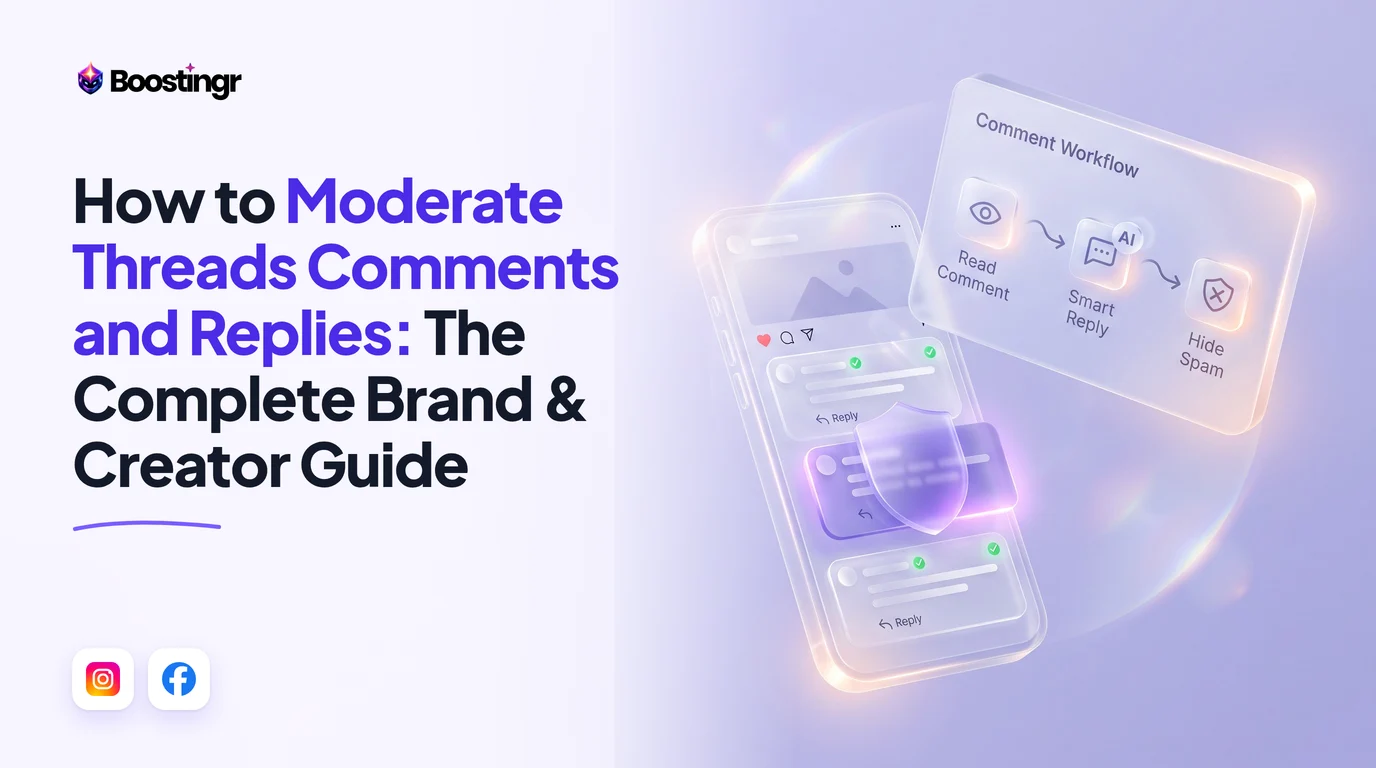
Replying to a bot signals positive engagement to Meta. The algorithm responds by showing your ads to more bot accounts instead of real buyers.
Three Ways to Handle Ad Spam
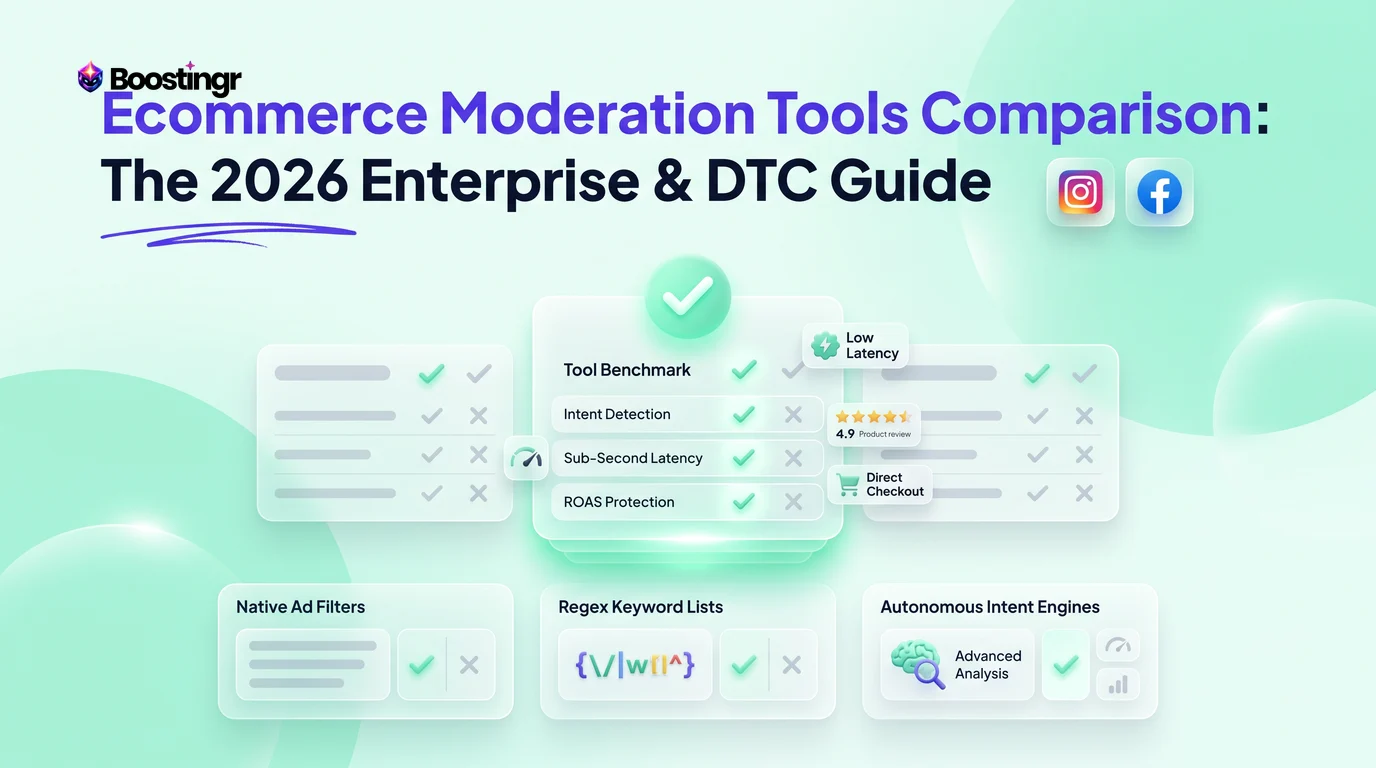
Comparing the algorithmic and operational outcomes of replying, deleting, or silently auto-hiding spam comments.
Protecting Ad Delivery with Auto-Hiding
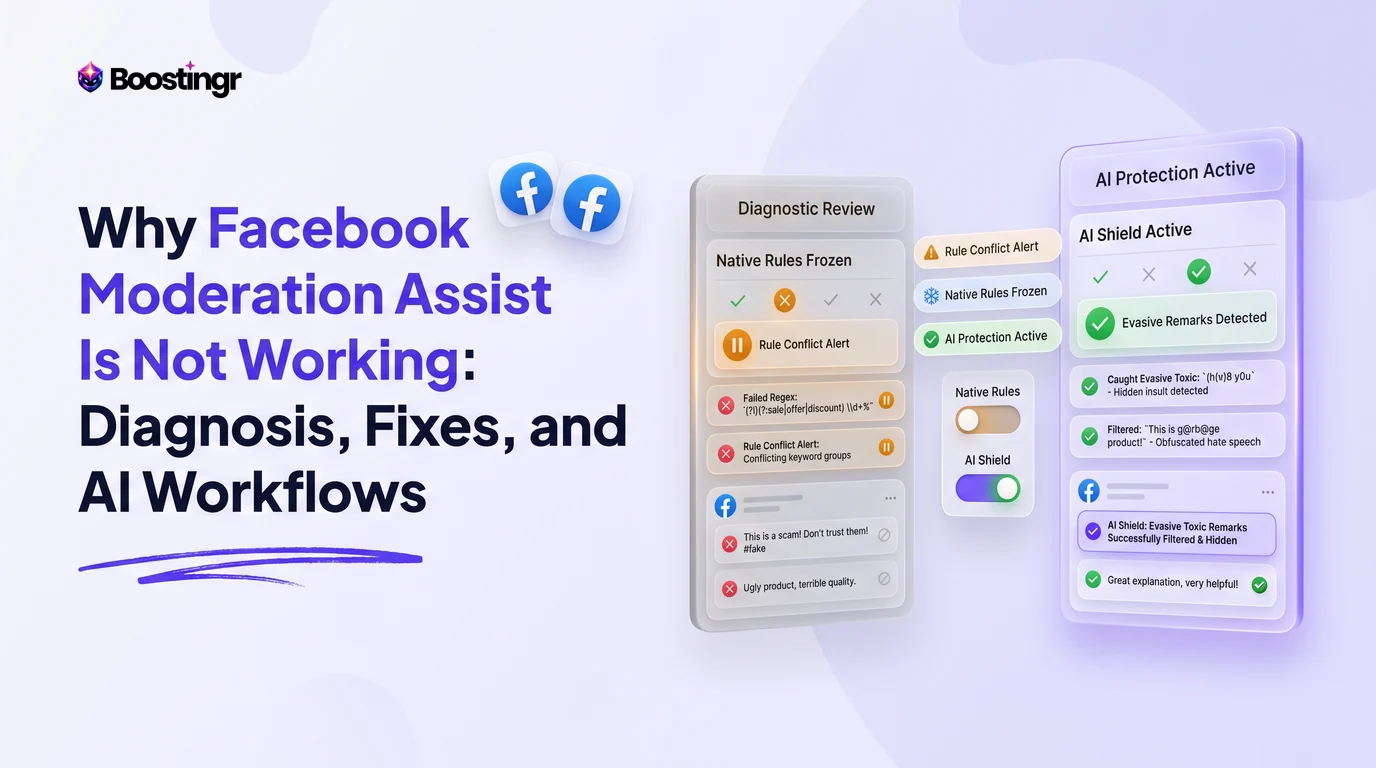
Hiding spam comments instantly keeps scam links off your ads while protecting conversion rate predictions in the Meta ad auction.
Checklist: Hardening Your Ad Account Against Bot Engagement
Use this operational checklist to ensure your media buying campaigns and comment management systems do not compromise your ROAS:
- Audit Account-Level Moderation Practices: Ensure no team member, agency partner, or junior community manager is manually replying to spam, troll, or scam comments.
- Deprecate Static Keyword Blocklists: Audit native Meta blocklists and recognize that variations like zero-width characters and homoglyphs bypass static regex rules.
- Implement Instant Silent Auto-Hide: Ensure your comment management infrastructure handles spam through silent hiding rather than public replies or hard deletion.
- Monitor Ad Relevance Diagnostics Weekly: Check your Quality Ranking, Engagement Rate Ranking, and Conversion Rate Ranking across all active creatives spending over $500/month.
- Configure Brand-Tone Memory for Real Objections: Ensure legitimate buyer skepticism receives authoritative, humanized public responses within minutes to defend social proof.
- Automate Lead Capture from Comment Inquiries: Bridge high-intent comments directly into direct message funnels using Instagram comment automation.
- Establish Multi-Account Moderation Protocols: Apply unified comment moderation standards across both Facebook and Instagram ad placements simultaneously using a single operating console.
Key Takeaways
- Replying to Spam Validates Bot Profiles: Never reply to spam or bot comments to boost vanity engagement. Doing so sends confirmation signals to Meta's delivery models, skewing Advantage+ campaigns toward non-converting accounts.
- Auction Mathematics Punish Toxic Feeds: Unmoderated spam directly depresses your ad's Estimated Action Rate (EAR) and Quality Ranking, forcing your bids higher and inflating CPMs by up to 40%.
- Silent Auto-Hide Is the Optimal Response: Silently hiding spam via API keeps the comment visible to the bot (preventing retaliation loops) while completely wiping it from prospective buyers' feeds and Meta's sentiment penalties.
- Contextual AI Trumps Static Filters: 2026 polymorphic bot spam easily bypasses native keyword blocklists. Protecting campaign ROAS requires semantic AI capable of parsing true user intent in real time.
- Speed Is Paramount: Leaving spam visible for hours damages your ad's historical quality scores. Implementing real-time automated triage defends creative longevity and preserves campaign scaling.
To discover how Boostingr protects enterprise ad spend, unifies sentiment workflows, and turns comments into revenue, explore our pricing plans or create an account today.
Frequently asked questions
Does replying to comments improve Facebook ads performance?
Replying improves performance only when engaging with genuine prospects or customers asking legitimate questions. Replying to bots, engagement bait, or scam comments backfires: it sends positive engagement signals back to Meta's machine learning, training Advantage+ models to target non-converting bot networks.
Why does replying to spam comments hurt Meta ad delivery?
Meta evaluates two-way interactions to determine audience relevance. When your ad account repeatedly replies to spam profiles, the algorithm registers a confirmed match between your creative and those bot behaviors, skewing downstream audience expansion toward low-quality, zero-conversion inventory.
Is it better to hide or delete spam comments on Facebook ads?
Hiding is mathematically and operationally superior to deleting. When you silently hide a comment, it remains visible to the spammer and their network, preventing them from realizing they were moderated and re-attacking with fresh bot accounts, while completely removing the negative text and engagement data from legitimate prospects.
How do spam comments affect Meta CPM and CPA?
Unmanaged spam comments degrade your Ad Relevance Diagnostics—specifically Quality Ranking and Conversion Rate Ranking. When Meta's Total Value auction formula penalizes poor ad quality, your ad requires higher monetary bids to compete, resulting in 20% to 40% CPM spikes and severe CPA inflation.
Can native Meta keyword blocklists protect against 2026 bot spam?
No. Native keyword lists rely on exact or regex matching, which fails against polymorphic spam that uses zero-width characters, homoglyphs, emojis, and phonetic typos. Modern bot networks bypass static blocklists within hours, requiring contextual AI to evaluate true comment intent.
What is the recommended comment triage protocol for Meta ads in 2026?
Apply a strict three-tier triage: silently auto-hide all financial scams, impersonators, and bot links within seconds; privately escalate high-intent product inquiries and purchase objections via automated DM or humanized response; and leave genuine positive brand sentiment visible to fuel social proof.
Is this available in size M? Want to order today