



The Enterprise Moderation Problem: Scale, Dark Ads, and Latency
When consumer brands invest hundreds of thousands of dollars into paid Meta campaigns every month, their comment sections become real-time battlegrounds. Marketing managers and performance directors regularly ask: what tools do big brands use to moderate instagram comments when managing hundreds of dynamic creative variations and viral organic Reels?
At enterprise scale, comment management is not merely replying to friendly questions or deleting occasional profanity. It is an operational discipline directly tied to customer acquisition cost (CAC), return on ad spend (ROAS), regulatory compliance, and brand equity.
The Dark Post Dilemma
A critical failure point for conventional social software is the architecture of dark posts. Dynamic Creative Optimization (DCO) campaigns run by consumer packaged goods (CPG), fashion, and direct-to-consumer (DTC) giants create dozens of unpublished parent-child ad variations. Native feeds hide these posts, meaning community managers cannot see them by casually visiting the brand's Instagram profile grid.
Without direct webhooks via the Meta Instagram Graph API, scam links, counterfeit product tags, and competitor conquesting comments sit completely unnoticed. Enterprise marketing directors require solutions engineered from the ground up for paid ads, ensuring every hidden dark post is monitored with zero manual scraping.
The Hidden Latency Cost of Human-in-the-Loop Moderation
Historically, Fortune 500 enterprises outsourced this challenge to managed moderation providers like BrandBastion or Respondology. These platforms blended automated rule engines with outsourced human review teams across international shifts, billing retainers between $1,500 and $5,000+ per month.
The critical vulnerability of this legacy model is response latency. Even the fastest human triage teams average between 15 to 45 minutes to review, flag, and hide an abusive comment. During an active ad spend blitz—such as a Black Friday flash sale or a Super Bowl broadcast campaign—a malicious comment left visible for 30 minutes can receive thousands of impressions, driving down click-through rates and triggering negative sentiment signals in Meta's auction algorithms.
Modern enterprise teams are systematically retiring slow manual reviews in favor of real-time machine learning engines capable of understanding context, sarcasm, and regional slang in sub-second timeframes.
The Enterprise Tech Stack: What Tools Do Big Brands Use to Moderate Instagram Comments?
To understand how big brands moderate instagram comments, we must examine the multi-tiered software architectures utilized across different corporate maturity levels. Large companies generally adopt one of three tech stack categories:
- All-in-One Enterprise Customer Experience Management (CXM) Suites
- Managed Human-in-the-Loop Services
- Modern AI-Powered Autonomous Comment Engines
+--------------------------------------------------------------------------+
|                     ENTERPRISE MODERATION ARTIFACTS                      |
+-----------------------------------+--------------------------------------+
| Category                          | Representative Platforms             |
+-----------------------------------+--------------------------------------+
| Unified Publishing & Governance   | Sprinklr, Sprout Social              |
| Managed Human-in-the-Loop         | BrandBastion, Respondology           |
| Autonomous AI & Lead Intelligence | Boostingr                            |
+-----------------------------------+--------------------------------------+
1. Sprinklr and Sprout Social: The Unified Suite Layer
When global enterprises audit their digital footprints, tools like Sprinklr instagram comment moderation and Sprout Social's Smart Inbox are frequently present. These systems cater to complex corporate requirements:
- Strict Governance: Multi-factor authentication, granular role-based access control (RBAC), and enterprise-grade single sign-on (SSO).
- Audit Trails: Immutable logs detailing who approved, edited, or suppressed customer interactions across omnichannel networks.
- Cross-Department Ticketing: Seamless routing of critical service tickets into Salesforce Service Cloud or Zendesk.
However, these platforms were originally engineered for publishing, scheduling, and customer support ticket queues. They rely on manual tagging rules, basic keyword blocklists, and human operators clicking through queues. When comment volume spikes to 50,000 interactions a week, hiring human agents to sit in a dashboard becomes economically unsustainable.
2. BrandBastion and Respondology: The Legacy Defense Model
For enterprise marketing teams searching for dedicated enterprise instagram comment moderation tools, BrandBastion and Respondology emerged as popular solutions. Their core value proposition centers on brand safety risk mitigation:
- BrandBastion: Offers both automated rule software and comprehensive managed services where offshore human agents manually triage incoming alerts.
- Respondology: Employs proprietary technology paired with contracted human responders to suppress toxic commentary, hate speech, and spam on prominent athlete, celebrity, and brand profiles.
While effective at defensive scrubbing, these platforms pose two operational challenges: high retainer costs ($1,500–$5,000+ monthly) and latency during volatile traffic surges. When evaluating brandbastion alternatives for instagram, brands seek options that deliver sub-second response times without locking them into expensive multi-seat contracts.
3. Boostingr: The Autonomous AI Comment Management Operating System
The newest paradigm shift in enterprise comment technology is autonomous AI intelligence. As the dedicated operating system for AI-powered comment management, Boostingr redefines how high-growth and enterprise brands protect brand safety while maximizing revenue.
Boostingr does not just read comments; it understands people. Operating under the guiding philosophy of "Teach once, engage everywhere," the platform combines deep sentiment analysis, intent detection, and comprehensive brand memory to execute actions within milliseconds:
- Sub-Second Defensive Moderation: Spam, phishing links, competitor self-promotion, and troll attacks are categorized and hidden autonomously via the Meta Graph API before they can erode ROAS.
- Offensive Revenue Generation: Rather than treating moderation purely as risk mitigation, the AI identifies high-intent buyer inquiries (e.g., "Does this run true to size?", "What is the return policy?") and issues humanized brand-tone replies across connected social accounts, instantly routing high-intent buyers into automated conversion flows.
Comparison Table
To visualize how these tools diverge across pricing models, response latency, and technical focus, consult the comparison below:
| Capability / Feature | All-in-One Suites (e.g., Sprinklr, Sprout Social) | Managed Services (e.g., BrandBastion, Respondology) | Modern Autonomous AI (Boostingr) |
|---|---|---|---|
| Core Philosophy | Publishing, scheduling, and manual ticketing | Defensive risk management & threat deletion | Brand protection combined with autonomous revenue growth |
| Moderation Mechanism | Manual agent triage + keyword blocklists | Keyword rules backed by human-in-the-loop review | Contextual LLM machine understanding + sentiment analysis |
| Average Action Latency | 30 minutes to 4+ hours (human queue dependent) | 15 to 45 minutes (shift dependent) | Sub-second (< 3 seconds via webhooks) |
| Meta Dark Ads Handling | Requires manual ad account sync; often misses DCO variants | Good ad coverage; manually monitored by ops teams | Native, continuous dynamic dark post and Reels ingestion |
| Pricing Architecture | Per-seat licensing ($199–$499+/user/mo) | High monthly retainer ($1,500–$5,000+/mo) | Usage & volume based (no punitive per-seat team tax) |
| Intent Detection | Basic keyword identification | Human tagging into broad buckets | Deep semantic intent (buying signals vs. support queries) |
| Conversion Capture | Manual copy-pasting of links by agents | None (strictly defensive hiding/escalation) | Instant contextual replies & automated direct lead capture |
For a deeper look into the economic differences between manual team management and automated tools, explore our breakdown on what tools can replace manual comment moderation for my team.
The Architecture of Moderation: Dark Posts, Meta Graph API, and Latency
Enterprise social architectures require robust technical integration. When a business scales its ad budget, managing incoming commentary through native mobile apps becomes impossible.
+--------------------------------------------------------------------------+
|             ENTERPRISE COMMENT INGESTION & TRIAGE PIPELINE               |
+--------------------------------------------------------------------------+
                                      |
    [ Instagram User Posts Comment on Dark Ad or Organic Reel ]
                                      |
                                      v
      [ Meta Graph API Webhook Event Sent in Real Time (<500ms) ]
                                      |
                                      v
      [ Boostingr Semantic Processing Engine & Brand Memory Unit ]
                                      |
              +-----------------------+-----------------------+
              |                                               |
              v                                               v
    [ Negative / Toxic / Spam ]                    [ High-Intent Inquiry ]
              |                                               |
              v                                               v
 [ Instant API Action: Hide/Delete ]           [ Contextual AI Reply Generated ]
              |                                               |
              v                                               v
[ Ad Quality Ranking Preserved ]               [ Conversion / DM Lead Capture ]
Webhooks vs. Polling Queues
Basic social media tools query the Instagram API on intervals (polling every 15, 30, or 60 minutes). This creates massive blind spots during active advertising campaigns. If a scam account posts a malicious phishing link underneath an active ad immediately after a polling cycle completes, that link remains live for almost an hour.
In contrast, modern enterprise social media comment management relies on real-time Webhook subscriptions. The instant a user publishes a comment:
- Meta generates an event payload transmitted directly to the moderation platform.
- The system's natural language engine decodes the text, detecting hidden emojis, obfuscated URLs, character-substituted profanity, and nuanced sarcasm.
- If classified as malicious, an automated call is made back to the Meta Graph API to hide the comment, rendering it invisible to all users except the original author and their direct connections.
This continuous loop occurs within seconds, protecting the advertiser's campaign while preserving community integrity.
Defensive Moderation vs. Offensive Revenue Generation
A critical gap in legacy software strategies is the exclusive focus on defense. For over a decade, social listening tools framed comment sections as customer service liabilities or PR hazard zones. Enterprise brands paid high retainers to scrub hate speech and suppress controversy.
However, high-volume performance marketers understand that comments represent an active sales channel. Underneath high-converting Meta ads, up to 40% of comments exhibit genuine buyer intent. Prospective customers frequently leave comments such as:
- "Does the large fit a 42-inch chest or should I size down?"
- "Are these ingredients safe for pregnancy?"
- "How long does shipping take to Canada?"
When a brand relies on manual customer support teams working standard business hours, these comments sit unanswered for 12 to 24 hours. By the time a representative replies, the customer has navigated away, and the ad impression spend is wasted.
Modern AI platforms invert this paradigm. Through intelligent instagram lead capture workflows and an ai instagram reply bot, platforms like Boostingr read brand guidelines, product catalogs, and custom FAQs stored in Brand Memory. The system instantly answers the prospect with warm, accurate, and humanized brand-tone replies across connected social accounts, delivering checkout links directly into public comments or private direct messages.
By treating comment moderation as both a shield and a revenue driver, brands protect return on ad spend (ROAS) while driving incremental sales. To understand the algorithmic impact of comment interactions on paid media delivery, read our analysis on how comment management affects Meta ad algorithms.
Cost per Interaction vs. The Per-Seat Tax
For large enterprises, software procurement economics frequently dictate tool selection. Traditional enterprise suites leverage a per-seat licensing model:
- Base software license: $15,000–$30,000/year.
- Seat costs for 15 community managers, tier-1 agents, and agency partners: $150 to $350 per user per month.
- Add-on module fees for paid ad moderation or dynamic integrations.
This structure penalizes operational growth. Marketing leadership must constantly audit user seats, revoke licenses from external agencies, and ration dashboard access, creating organizational bottlenecks.
+--------------------------------------------------------------------------+
|                  PRICING ARCHITECTURE COMPARISON                         |
+--------------------------------------------------------------------------+
| 1. Legacy Per-Seat SaaS Model:                                          |
|    [15 Users] x [$250/mo] + [Base Enterprise Fee: $2,000/mo]            |
|    = $5,750 / Month (Scales with team headcount, not ad ROI)             |
+--------------------------------------------------------------------------+
| 2. Modern AI Usage Model (Boostingr):                                   |
|    [Flat / Consumption-Based Tier] + [Unlimited Team Seats]              |
|    = Predictable monthly costs anchored to actual comment volume         |
+--------------------------------------------------------------------------+
Forward-thinking direct-to-consumer enterprises favor modern, usage-anchored models like Boostingr's pricing. Rather than charging a per-seat tax, modern architectures allow organizations to add unlimited stakeholders, agency media buyers, and compliance officers to the platform. Pricing scales strictly against comment volume and protective intelligence workloads, ensuring total alignment with marketing performance.
Practical Examples and Use Cases
To understand how these platforms perform under pressure, let us analyze three concrete enterprise scenarios.
Use Case 1: Dynamic Creative Dark Ad Storm (Fast Fashion Enterprise)
- The Challenge: A global apparel retailer launches an international flash sale using Meta Dynamic Creative Optimization (DCO), serving over 400 asset combinations. Within hours, competing dropshipping accounts flood the comment feeds with links to counterfeit copies.
- The Traditional Approach: The internal social team logs into Sprout Social, but dynamic ad variants fail to populate in the inbox in real time. Community managers spend hours manually clicking through Meta Ads Manager to inspect individual post IDs. Counterfeit links remain visible for over 18 hours.
- The Modern Solution: The brand deploys Boostingr. Webhooks detect incoming comments across all dynamic permutations instantly. The AI recognizes malicious links and scam patterns, hiding 1,240 spam comments in under three seconds apiece. Meanwhile, legitimate inquiries about sizing receive instant, context-aware answers pulled from the brand's knowledge repository, protecting the campaign's ROAS.
Use Case 2: Regulatory & Compliance Governance (Fintech / Healthcare Brand)
- The Challenge: A multi-state consumer financial platform runs educational Reels regarding personal loan rates. Disgruntled users post false claims, while others inadvertently post personal financial identifiers in public comment threads, raising strict regulatory scrutiny.
- The Traditional Approach: The brand retains a managed human service charging $4,000 per month. During peak weekend hours, human operators experience backlogs, leaving personally identifiable information (PII) exposed for up to 40 minutes.
- The Modern Solution: The company deploys an automated AI comment moderation workflow. Using semantic intent analysis, Boostingr identifies PII patterns and inflammatory regulatory violations instantly. The system hides the comment, triggers an internal webhook alert in the compliance team's dedicated Slack channel, and issues a standardized DM inviting the user to a secure verification portal.
Use Case 3: High-Intent Lead Conversion on Product Launch (Cosmetics Brand)
- The Challenge: A luxury cosmetics company rolls out a viral influencer campaign on Instagram. The comment section under the hero Reel receives over 10,000 comments in 48 hours, with thousands of prospects asking about skin tone matching and ingredient interactions.
- The Traditional Approach: Due to sheer volume, manual agents answer fewer than 5% of questions. The vast majority of potential shoppers abandon their carts without purchasing.
- The Modern Solution: Leveraging instagram comment automation, Boostingr scans all interactions. While standard emoji reactions are recognized and acknowledged, inquiries about sensitive skin trigger bespoke conversational replies containing direct links to the relevant product formulation, generating over $42,000 in tracked attributed sales over the launch weekend.
First-Party Observations from Boostingr
Through our analysis of millions of commercial Instagram interactions across enterprise and scaling ad accounts, the Boostingr engineering and product teams have documented two consistent operational realities:
First-Party Observation 1: "In our aggregate platform data, high-growth consumer brands that switch from manual polling queues to real-time AI automation see an average 91% reduction in visible malicious spam lifetime. More importantly, ads that maintain a clean, scam-free comment section experience up to a 14% improvement in blended Meta Ad relevance and click-through performance over a 30-day baseline."
First-Party Observation 2: "Across more than 500,000 analyzed ecommerce comments, approximately 1 out of every 6 comments on direct-response ad units reflects transactional buyer intent. When brands automate real-time, helpful replies to these inquiries within 60 seconds, conversion rates on attributed link clicks are nearly triple those of responses delivered after a 30-minute delay."
Comparison Table
Here is a comprehensive summary of features across the three core enterprise moderation approaches:
| Capability | Unified Suites (Sprinklr / Sprout) | Managed Services (BrandBastion / Respondology) | AI Engine (Boostingr) |
|---|---|---|---|
| Real-time API Webhooks | Varies by tier | Yes (human action lagged) | Yes (instant sub-second execution) |
| Meta Dark Ad Coverage | High complexity setup | Dedicated human monitoring | Fully automated dynamic ad mapping |
| Sentiment & Sarcasm AI | Basic/Lexicon-based | Human interpretation | Advanced contextual LLM understanding |
| Automated Sales Generation | Limited / Manual | None (defensive only) | Full lead capture & automated AI replies |
| Brand Memory Ingestion | Custom knowledge base add-ons | Written agent guidelines / manual briefs | Dynamic brand memory document ingestion |
| Seat-Tax Free Architecture | No | Partially (custom enterprise retainer) | Yes (unlimited team access) |
For teams evaluating alternative workflows to replace manual comment monitoring, read our strategic guide on replacing manual moderation workflows.
Visual guide
How AI Moderates Incoming Ad Comments
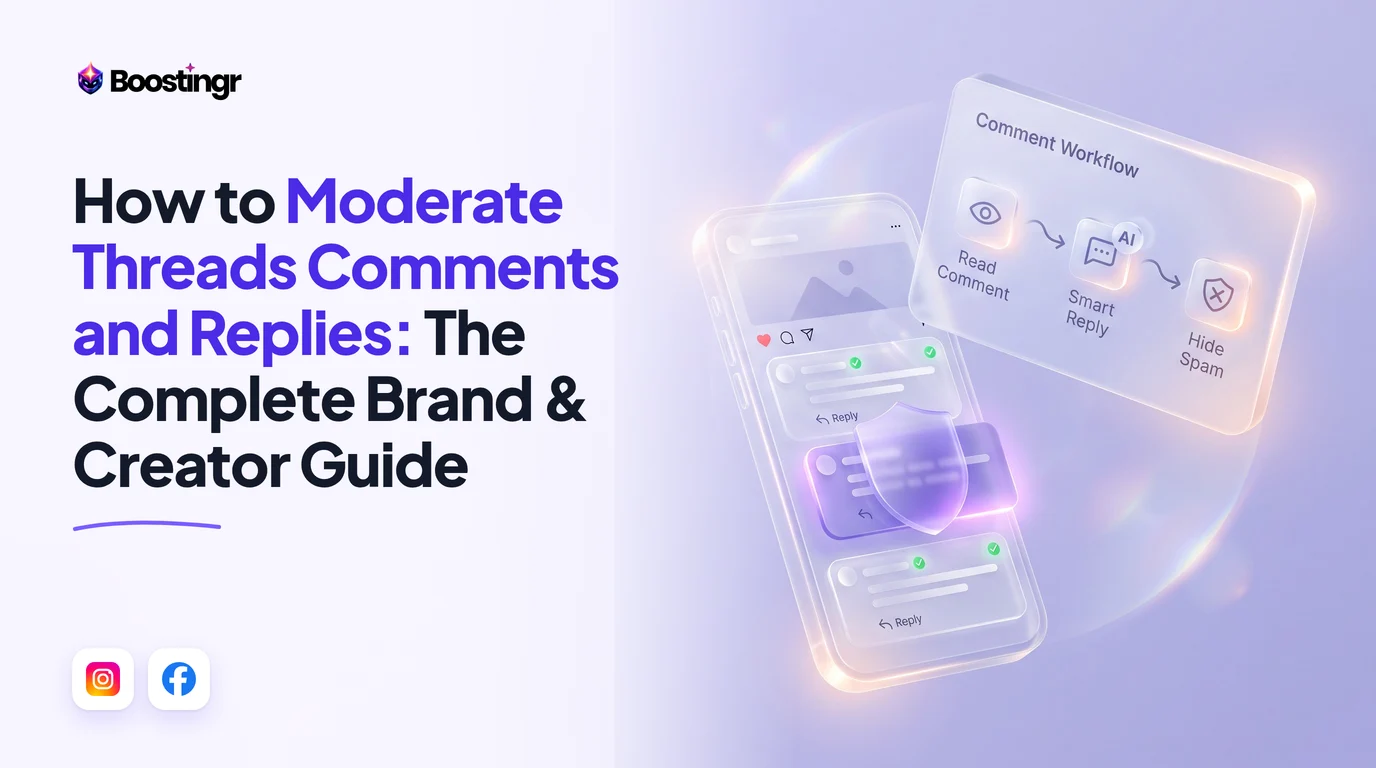
Shows how autonomous moderation platforms triage incoming comments within seconds to stop ad spam and answer potential buyers.
Selecting the Right Enterprise Tech Stack
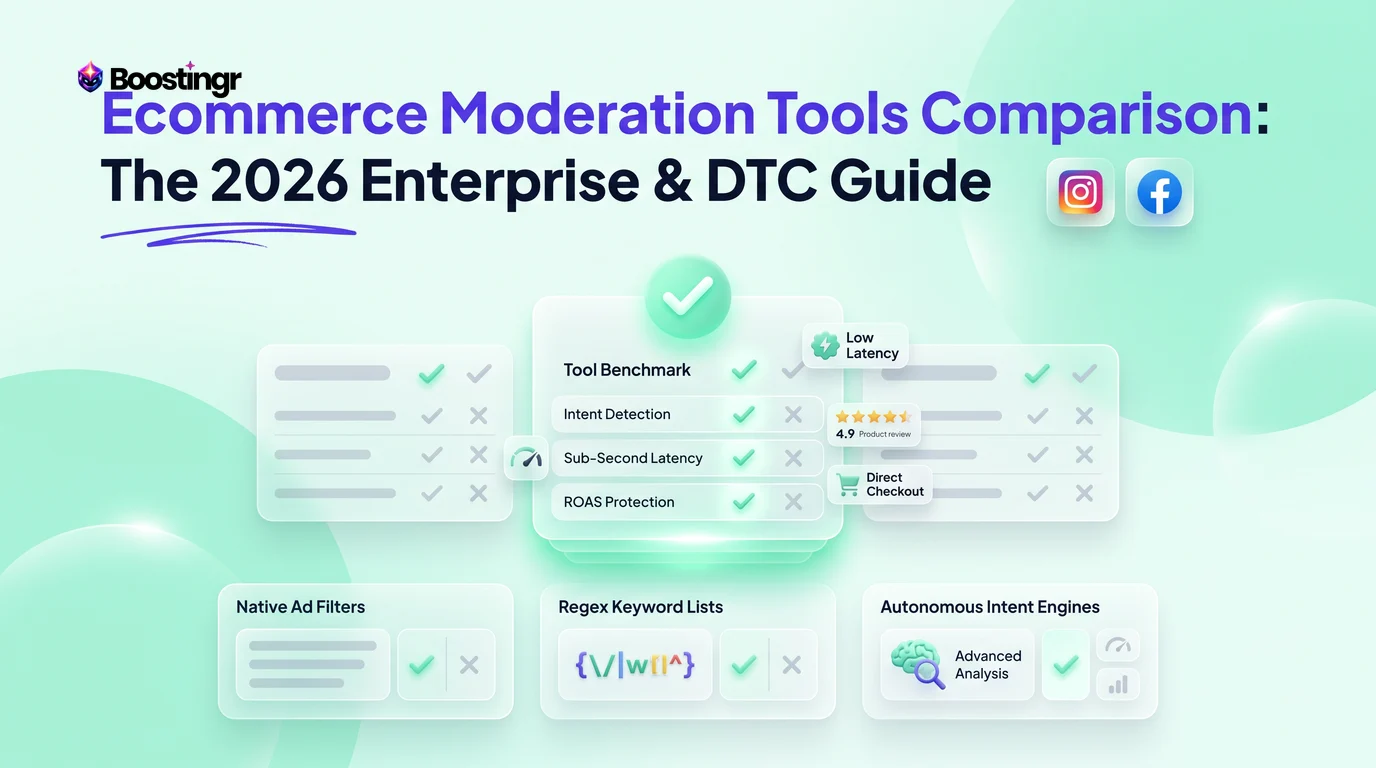
Highlights how enterprise teams choose moderation software based on corporate ticketing, human review, or autonomous AI speed.
Moderating Dark Posts at Enterprise Scale
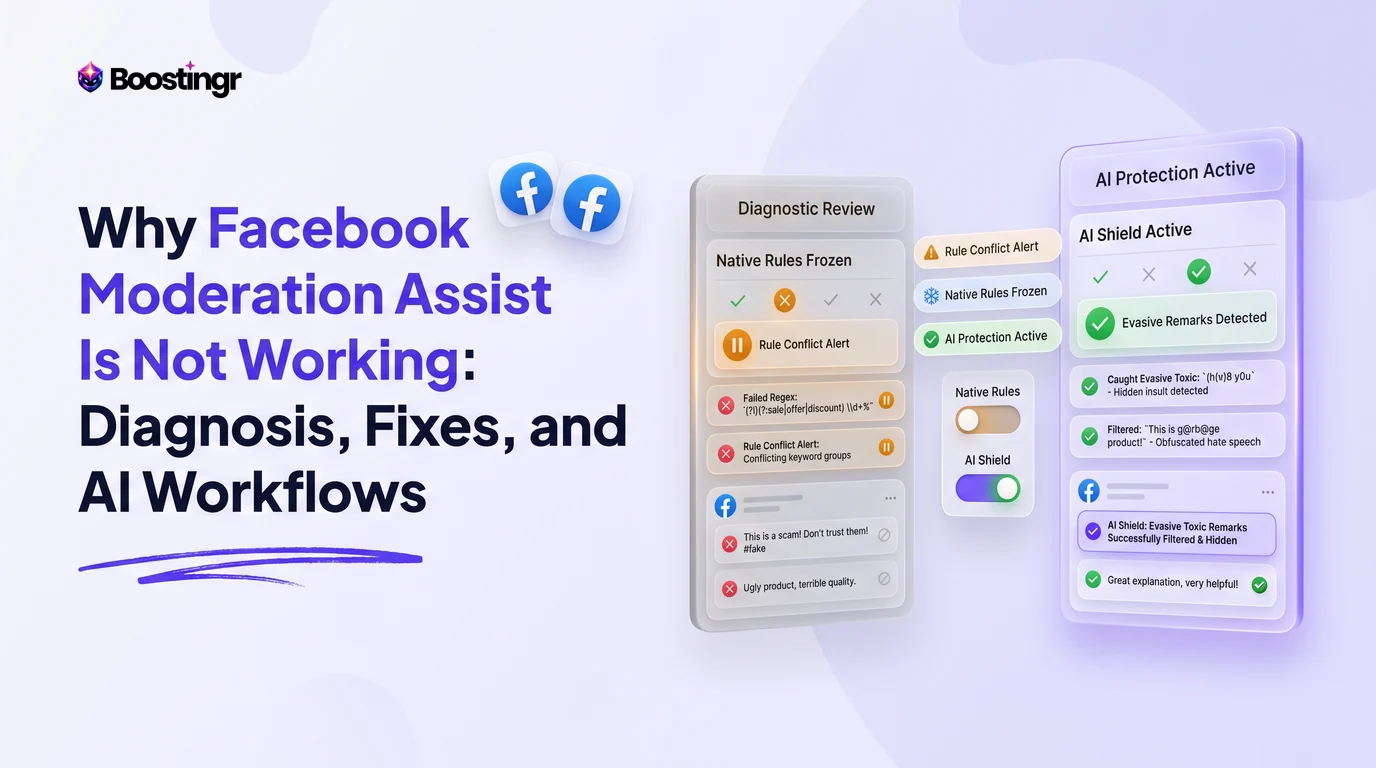
Explains how enterprise tools monitor unpublished dark ads through direct Meta APIs before bad comments harm performance.
Checklist
Before selecting an enterprise Instagram comment moderation software, ensure your team audits the following technical criteria:
- Native Dark Post Coverage: Does the platform automatically ingest dynamic dark ads and Reels without requiring media buyers to paste parent post IDs?
- Sub-Second Execution Latency: Can the software evaluate, classify, and hide abusive content within seconds rather than relying on 15–45 minute human queues?
- Contextual Intent Comprehension: Can the engine distinguish between playful slang, sarcasm, genuine product complaints, and predatory spam links?
- Bidirectional Conversational Capability: Does the system support automated, on-brand responses to buyer inquiries, turning comments into conversion channels?
- Predictable Scalability: Does the pricing model charge based on comment volume and protection, or does it enforce a punitive per-seat licensing tax for your marketing team and agencies?
- Robust Brand Memory: Can you upload extensive brand guidelines, product catalogs, FAQs, and tone-of-voice directives once and deploy them everywhere?
- Compliance & Safe Logging: Does the platform maintain clean audit trails of every automated action, satisfying your legal and governance requirements?
Key Takeaways
- Scale Changes the Tech Stack: High-volume brands cannot rely on basic native Instagram filters or manual inboxes. Managing thousands of interactions requires specialized infrastructure built for the Meta Graph API.
- The Speed Trap Is Real: Legacy human-in-the-loop services often bill $1,500–$5,000+ monthly while introducing a 15–45 minute latency window that leaves ad spend vulnerable to spam and trolls.
- Dark Ads Require Purpose-Built Software: Enterprise tools must monitor unpublished dynamic creative variations automatically; treating dark posts as secondary leads to severe ad performance degradation.
- Offense Outperforms Defense: The best enterprise moderation tools do not simply hide profanity; they capture revenue by autonomously answering high-intent questions in real time.
- Per-Seat Pricing Penalizes Growth: Modern brands are replacing legacy per-seat tools with volume-anchored AI operating systems like Boostingr to eliminate seat licensing overhead.
Frequently asked questions
What tools do big brands use to moderate Instagram comments?
Big brands primarily use enterprise platforms such as Sprinklr, Sprout Social, BrandBastion, Respondology, and modern AI systems like Boostingr. Sprinklr and Sprout Social provide unified multi-channel governance, BrandBastion and Respondology offer managed brand-safety filtering, and Boostingr delivers sub-second automated AI moderation, ad spam protection, and real-time revenue capture.
Why aren't Instagram's native Hidden Words filters enough for large brands?
Instagram's native Hidden Words filter relies on static, exact-match keyword lists that malicious actors easily bypass using character substitutions, emojis, or spaced typography. Furthermore, native filters cannot accurately recognize sarcastic context, cannot distinguish customer support issues from malicious attacks, and do not offer automated replies to transactional buyer questions.
How do enterprise tools handle Meta dynamic dark post ads?
Advanced enterprise platforms connect directly to the Meta Graph API via real-time webhooks. When dynamic creative ads generate dozens of unseen dark post variants, the moderation system detects new parent post IDs and dynamically ingests comments the moment they occur, eliminating the need to manually track post URLs.
What is the primary drawback of managed moderation services?
The biggest drawback of traditional managed moderation services like BrandBastion or Respondology is response latency paired with high retainers. Because human reviewers must evaluate flagged content manually, actions typically take between 15 and 45 minutes, allowing harmful comments to remain visible to active shoppers during fast-moving paid campaigns.
Can AI comment moderation tools reply to customers in a brand's specific tone?
Yes. Modern AI comment management systems like Boostingr utilize Brand Memory architectures. By ingesting your brand guidelines, product catalogs, FAQs, and voice specifications, the platform generates humanized brand-tone replies that resolve inquiries accurately while maintaining your brand's unique personality.
How does comment moderation impact Instagram ad ROAS?
Unmoderated spam, scam links, and negative comments lower conversion rates by eroding trust. Additionally, Meta's auction algorithms assess user sentiment and ad engagement quality; high concentrations of unresolved spam or negative sentiment can depress quality rankings, increasing CPMs and decreasing overall ROAS.
How does enterprise pricing work for modern AI comment tools?
Unlike legacy suites that charge expensive per-seat licenses ($200–$500 per user per month) or high agency retainers ($1,500–$5,000+ per month), modern AI solutions like Boostingr utilize volume-based or usage-anchored pricing models with unlimited team seats, allowing marketing teams and agencies to collaborate without artificial seat limits.
Is this available in size M? Want to order today